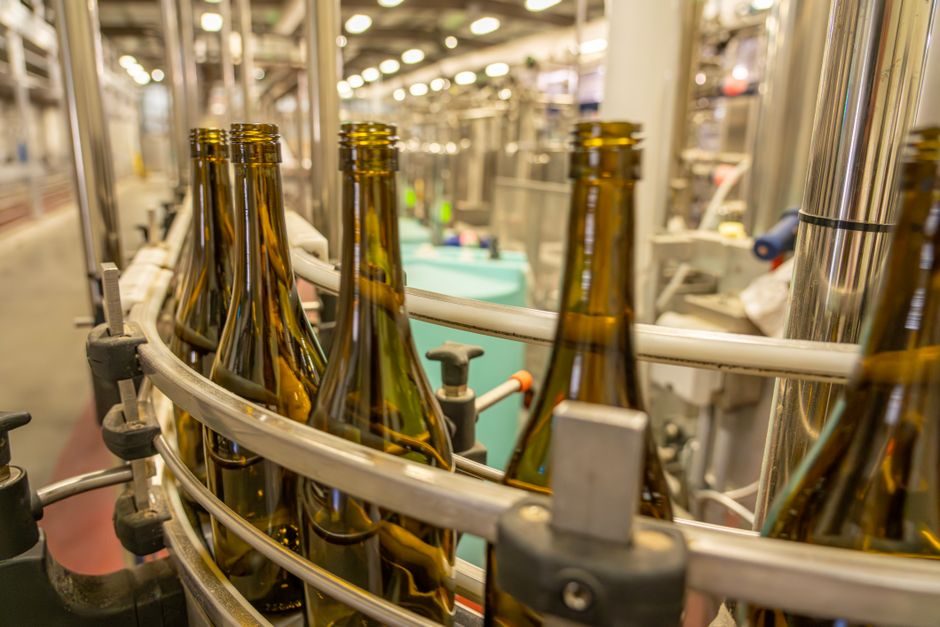
Roller conveyor line items in 2026 span a roughly 100x spread: a single Ø50 mm light-duty galvanized roller conveyor skate wheel can land near USD 30, while a heavy-duty aluminium-frame curved gravity section rated 1,814 kg (4,000 lb) lists around USD 4,000 per unit on OEM catalogs [S1][S3][S4].
Buyers comparing like-for-like quotes need to normalize against roller diameter (Ø typically 50/60/76/89 mm), pitch (75/100/150 mm), load per roller (10-150 kg), frame steel thickness (1.2-2.5 mm cold-formed), and whether the section is gravity, line-shaft, belt-driven, or motor-driven roller (MDR). Rollerconveyorshop.com and Longwei Automation both list modular gravity curves as the low-price tier (sub-USD 200/m for narrow carton handling), while driven MDR and chain-roller hybrids sit in the USD 800-2,500/m band [S3][S4].
Unit Price Bands by Roller Diameter and Load Class
A Ø50 mm x 300 mm PVC/steel sleeve roller for carton flow typically prices USD 4-9 each at 2026 factory-gate rates, while a Ø76 mm x 600 mm tapered conveyor roller rated 150 kg/roller reaches USD 25-45 each depending on bearing type (precision ball, roller bearing sleeve, or polymer) [S3]. The OEM reference point on the high end is UNEX Manufacturing's aluminium-frame curved gravity roller conveyor, listed at USD 1,800-4,000 per section with maximum load 1,814 kg (4,000 lb) and minimum load 125 kg (275 lb) [S1].
For pallet and drum handling, Ø89 mm x 1,150 mm heavy rollers with 600-800 kg point-load rating commonly price USD 60-110 each, and a full 3 m pallet conveyor section assembled from those rollers lands near USD 1,200-2,000 in galvanized cold-formed steel, or USD 2,200-3,800 in stainless 304 for washdown [S3][S4]. Rollerconveyorshop.com explicitly markets closed and rounded side profiles as standard in the low-price gravity range, which keeps frame fabrication cost down versus open-channel C-section [S4].
Gravity vs Line-Shaft vs MDR: Cost per Linear Meter in 2026
Gravity roller conveyor remains the cheapest architecture at roughly USD 120-280/m for Ø50-60 mm rollers on galvanized side frames in 2026, suitable for 5-15 m carton runs with workers loading and unloading [S4]. Line-shaft conveyors using Ø50 mm rollers driven by a rotating shaft through O-rings add roughly USD 350-650/m, justified for accumulator zones up to 30 m and zero-pressure accumulation without PLC controls.
Motor-driven roller (MDR) sections using 24V DC or 48V DC drive rollers with zone controllers carry USD 800-2,500/m installed cost in 2026, driven by the price of the drive rollers themselves (USD 180-380 each), the card network (Profibus, Ethernet/IP gateways), and the control cabinet [S3]. Chain-driven roller conveyors used for pallet handling or for towing carts on item industrial applications (item 0.0.463.53 chain-roller reference) sit in the USD 900-2,200/m band because of the larger Ø89 mm rollers, ANSI roller chain 40B-60B, and 1.5-3 kW gearmotor per drive station [S2][S3].
Frame Material Cost Multipliers: Mild Steel vs Aluminium vs Stainless
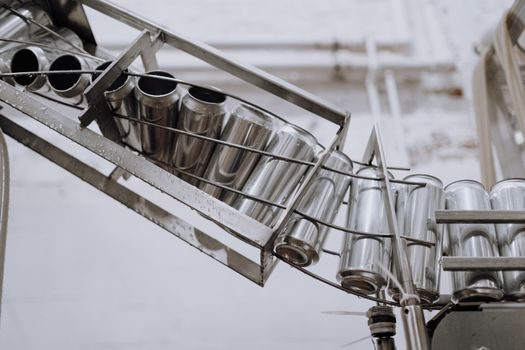
Frame material is the second-largest cost lever after roller spec. Cold-rolled mild steel side channels, 1.5-2.0 mm gauge, powder-coated RAL 7035, are the baseline and the cheapest option in 2026 at roughly USD 8-14 per meter of frame length for a standard 400 mm wide section [S4]. Hot-dip galvanizing after fabrication adds a 25-40% multiplier versus painted mild steel, justified for ambient operations with condensation or outdoor loading bays.
Aluminium 6063-T5 extrusions (the UNEX Manufacturing approach) command a 2.5-3.5x multiplier versus painted mild steel because the extrusion dies and the section weight (typically 1.8-2.4 kg/m) drive cost up, but aluminium pays back in cleanroom, food-grade, and lightweight ergonomic handling where total system mass matters [S1]. Stainless 304 frames carry a 3.5-5x multiplier and stainless 316 frames 4.5-6x, used for pharmaceutical, washdown, and corrosive chemical environments where the rollers themselves are also specified in 304/316 with sealed roller bearing units [S3].
What Pushes the Quote Off-Spec: Five Common Surcharges
(4) Motorized drive stations with SEW-Eurodrive or Nord gearmotors 0.37-3.0 kW add USD 450-2,200 each; (5) VFDs and IP54 control cabinets add USD 600-2,500 per line.
Buyers sourcing from Chinese one-stop suppliers like Longwei Automation can compress delivery to 15-25 days for catalog gravity sections and 30-45 days for MDR systems, but should lock roller concentricity (TIR ≤ 0.3 mm at Ø89), load test certificates, and roller material certificates (Q235B / SS400 / 304) in the purchase order to avoid the 8-15% rework rate common with unbranded Asian rollers [S3]. The ball-bearing and roller bearing choices inside the roller determine both noise and lifetime; precision 6204-2RS at USD 1.8-3.5 each versus cheap unbranded sleeve bearings at USD 0.4-0.8 each is the single most common spec the buyer's drawing room under-specifies.
Where the Spec Stops Being a Roller Conveyor
Roller conveyor selection collapses into other product categories at two clear boundaries: at pitch below 50 mm and roller diameter below 30 mm, the geometry becomes a skate-wheel conveyor with plastic or steel wheels on axles (Longwei categories 4-5), and a single skate wheel can list for USD 1.5-4 each versus USD 6-12 for a comparable Ø50 mm roller [S3]. At load above 1,500 kg/m of conveyor length and roller pitch above 200 mm, the design migrates to chain conveyor or to a roller conveyor hybrid with twin-strand ANSI chain, and quote logic should follow the chain-conveyor BOM rather than the roller BOM [S2].
Trackable 2026 signals to watch on the next quote cycle: (a) SEW-Eurodrive and Nord gearmotor lead times, currently 8-14 weeks for 1.5-3 kW right-angle gearmotors, which gate the MDR conveyor delivery date; (b) hot-rolled coil and 304 stainless surcharge trends, both still volatile against the 2025-08 baseline; (c) any tightening of European machinery safety on conveyor zones, which historically shifts the cost line into light curtains and safety PLCs rather than into the rollers themselves.