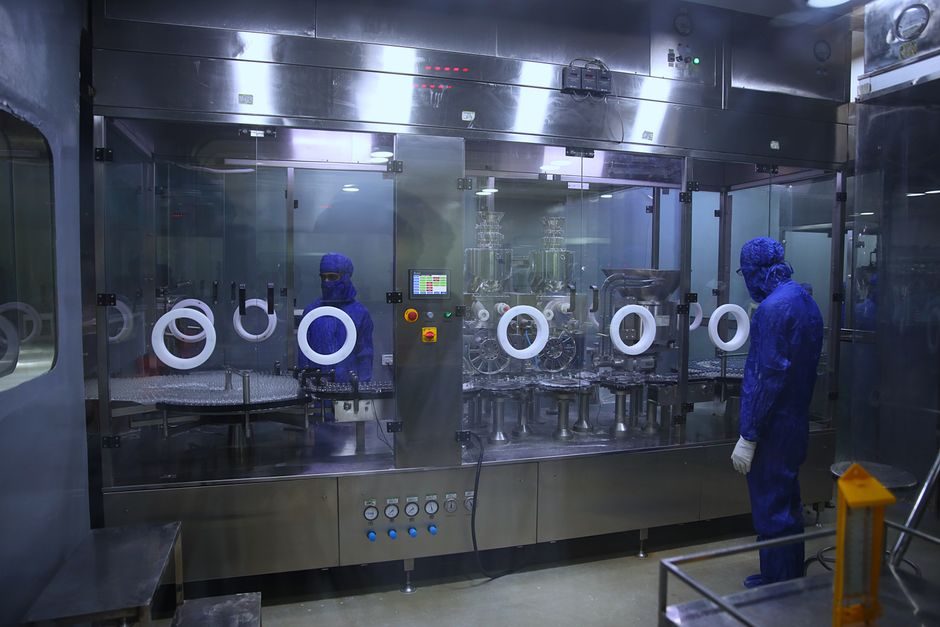
Lithium battery production line design in 2026 is structured around three cell formats — cylindrical (18650/21700/4680), pouch, and prismatic (including 587Ah large-format) — with separate upstream electrode preparation and downstream automated module/PACK assembly tracks [S1][S2][S8].
Turnkey Chinese equipment vendors now bundle slurry mixing, coating, calendaring, slitting, and NMP recovery into a single electrode prep line, then hand off to a cell-format-specific assembly line that ends with EOL testing, capacity grading, and aging cabinets [S2][S5]. For an overview of how cell-format choice drives upstream flow, see the automatic molding line and conveyor sorting line reference architecture used in adjacent discrete-assembly plants.
Cell-Format Selection: Cylindrical, Pouch, and Prismatic Trade-Offs
Cylindrical cell production lines are most standardised: vendors explicitly advertise turnkey lines for 18650, 4680, 21700, and 14500 form factors with winding, electrolyte injection, and formation steps [S8]. Pouch cell lines add lamination, hot-pressing, and high-precision notching stations, and are commonly quoted for EV applications where pack-level energy density is the primary KPI [S1][S2]. Prismatic lines split into EV-grade (cell-to-pack, or CTP, automated welding) and ESS-grade (energy storage system) variants, with the 587Ah prismatic battery module PACK line running on an AGV-based PACK section for tray transfer [S1].
For sodium-ion and solid-state pilot tracks, the same vendors offer parallel process modules, but the wet-coating and stacking steps diverge significantly from lithium-ion [S2]. A side-by-side comparison of the three main formats against four decision criteria is useful when sizing a new plant:
Cylindrical — lowest per-cell cost, mature winding process, easy thermal management at module level; weaknesses are lower pack-level energy density and harder large-format scaling [S2][S8]. Pouch — highest gravimetric energy density and flexible form factor; weaknesses are swelling management, lower cycle life under high SOC, and stricter dry-room dew-point control [S1][S2]. Prismatic (including 587Ah) — best fit for ESS and large-format EV packs, mechanical rigidity, and ease of laser welding at the cell-to-pack interface; weaknesses are higher capex per cell and tighter electrode coating uniformity requirements [S1][S2]. The selection drives the upstream molding line configuration and the downstream resin sand line-style fixturing used in PACK fixtures.
Electrode Preparation Block: Mixing, Coating, Rolling, Slitting
Electrode preparation is the wet-end common to all three cell formats and is built from a fixed sequence: slurry mixing machine, battery coating machine, electrode rolling press (calendaring), and electrode slitting press, with an NMP (N-methyl-2-pyrrolidone) recovery system for solvent capture when the cathode chemistry uses PVDF binder [S2]. Lithium Corp, founded in 1998 by a Tsinghua materials-science group, ships roller presses, film coaters, mixers, high-temperature furnaces, and glove boxes that map directly onto this wet-end sequence [S5].
For solid-state battery pilots, the calendaring step is replaced or augmented with isostatic pressing, and dry-room dew-point class typically tightens to below -40°C for sulphide-based electrolytes, though the exact threshold is project-specific and not universally codified [S2]. Winko International of Guangdong quotes a minimum order of 1 set with a 100 set/month supply ability for full lithium-ion battery production lines, an indicator that mid-tier Chinese vendors can deliver complete wet-and-dry blocks on short lead times [S3].
Module and PACK Assembly: Laser Welding, AGV Transfer, and EOL Test
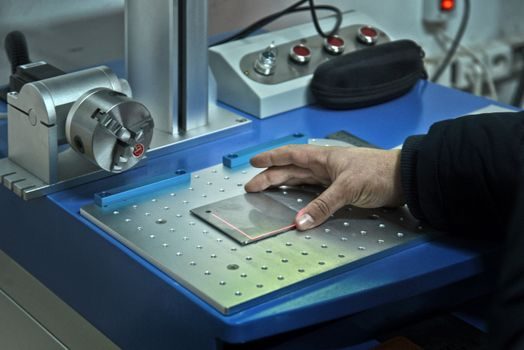
Module and PACK assembly in 2026 centres on laser welding for cell-to-busbar and cell-to-pack interconnects, with cell sorting (by voltage, capacity, and internal resistance) feeding the line upstream of taping and stacking [S1]. Huiyao Laser offers EV Cylindrical Battery Module and PACK Assembly Lines, ESS Prismatic Battery Module PACK Assembly Lines, EV Prismatic Battery Cell-to-Pack (CTP) Automatic Welding Lines, and Pouch Battery Module Automated Production Lines, each with explicit safety, reliability, and high-throughput positioning [S1]. The 587Ah prismatic line uses AGV-based tray transfer for the PACK section, which removes fixed conveyors in favour of flexible routing [S1].
SHINHOP Laser, with 20+ years of automated battery production experience, focuses on cell assembly and PACK production lines and pairs laser welding with cell stacking, taping, and EOL (end-of-line) testers [S9]. End-of-line steps standard across vendors include BMS (battery management system) testing, performance testing, aging testing, capacity grading, and leak detection [S1]. Wina Green Power Technology operates a 2 GWh/year production capacity and 100+ patent certificates, illustrating the scale at which a vertically integrated cell-and-pack builder can amortise a turnkey line [S4].
Smart-Factory Overlay: MES, AS/RS, and Conveyor Strategy
Beyond the process equipment, every 2026 turnkey package now ships with a smart-factory overlay: MES (manufacturing execution system), AGV/RGV routing, and AS/RS (automated storage and retrieval system, stacker-crane based) for buffer between cell formation and PACK assembly [S1]. Frey Battery (North America) lists material handling, high-level integration, explosion-proof lithium power, and aerial-lift, AGV, marine, and RV battery variants — all of which depend on the same upstream AGV/MES overlay for traceability [S6].
The process steps a buyer should expect a vendor to specify in the RFP are: cell format and capacity (Ah), target throughput (PPM or MWh/year), dry-room class, electrode coating width and line speed, laser-weld joint count per pack, EOL test coverage, and AGV/AS/RS buffer size [S1][S2]. For an in-depth look at how throughput targets of 20 GWh/year are translating into laser-welding station counts and PLC architecture, see the lithium battery Industry 4.0 reference. Capacity-expansion planning context, including 2025-2026 cell and pack buildouts, is covered in the lithium battery production capacity planning article.
Vendor Selection Criteria and Sourcing Constraints

Vendor selection in 2026 is driven by four measurable criteria: cell-format coverage, upstream-to-downstream integration depth, lead time, and after-sales service network. Xiaowei New Energy and Huiyao Laser both offer turnkey lines spanning cell production, module PACK, and laboratory/pilot plants, with sodium-ion and solid-state branches [S1][S2]. Tmaxcn (Xiamen) similarly covers prismatic, cylindrical, and pouch turnkey lines plus lab pilot plants, with WhatsApp and email direct contacts published on the product page [S8].
For overseas buyers, COENG (1st-coeng.com) positions itself as an end-to-end China-operations partner covering one-stop plant establishment, design solution, and full-chain service — useful for projects that need import-export handling and on-site commissioning [S7]. Payment norms in this segment are T/T (bank transfer) at order stage with a typical MOQ of 1 set for full lines and 100 sets/month as a mid-tier supply benchmark [S3].
Failure Modes and Design Constraints to Engineer In
Common failure modes in lithium battery production lines that designers must mitigate are: coating thickness non-uniformity (driving cell capacity variance), calendaring density drift (driving cycle-life variance), laser-weld spatter on cell-to-busbar joints (driving pack-level resistance growth), NMP solvent carry-over into the dry room (driving cell defects), and AGV traffic congestion at the formation-to-PACK buffer [S1][S2][S5]. Specific design responses are inline thickness gauging, closed-loop calendaring pressure control, weld-spatter vision inspection, sealed NMP recovery with dew-point monitoring, and AS/RS buffer sizing based on formation-cycle takt time [S1][S2].
Dry-room dew-point, fire-suppression gas selection (typically clean-agent or inert gas for formation cabinets), and explosion-proof ratings on AGV batteries and PACK test racks are non-negotiable design inputs and are explicitly listed in the cell-format and PACK-assembly vendor offerings [S1][S6]. For a 587Ah prismatic AGV-based PACK section, the explosion-proof lithium power and aerial-lift battery variants in the same product family indicate that vendors are designing for hazardous-location compliance from the cell-level up [S1][S6].
2026 Watchlist: Throughput, Sodium-Ion, and Solid-State Pilots
Three signals are worth tracking through the rest of 2026: first, the shift from 21700/4680 cylindrical lines toward 587Ah prismatic AGV-based PACK lines, which consolidates upstream and downstream capex into fewer stations [S1]. Second, sodium-ion battery production lines are now offered as a parallel process module by Chinese turnkey vendors, with the same wet-end equipment adapted to sodium-cell chemistry [S2]. Third, solid-state battery pilot lines are being quoted as a separate process track using isostatic pressing and stricter dry-room control rather than calendaring and standard dry-room dew points [S2].
The actionable next step for a buyer in mid-2026 is to lock the cell format and target throughput (cylindrical 18650/21700/4680, pouch, or prismatic up to 587Ah), then RFP a single vendor for the wet-end block and a second vendor for the module/PACK line, with explicit MES, AGV, and AS/RS overlay scope separated out [S1][S2][S7]. Trackable signals: vendor RFQ response times (currently 5-10 business days for turnkey packages), 2 GWh/year cell-maker expansions in progress, and the 20+ year automated production experience benchmark set by SHINHOP and similar laser-line integrators [S4][S9].