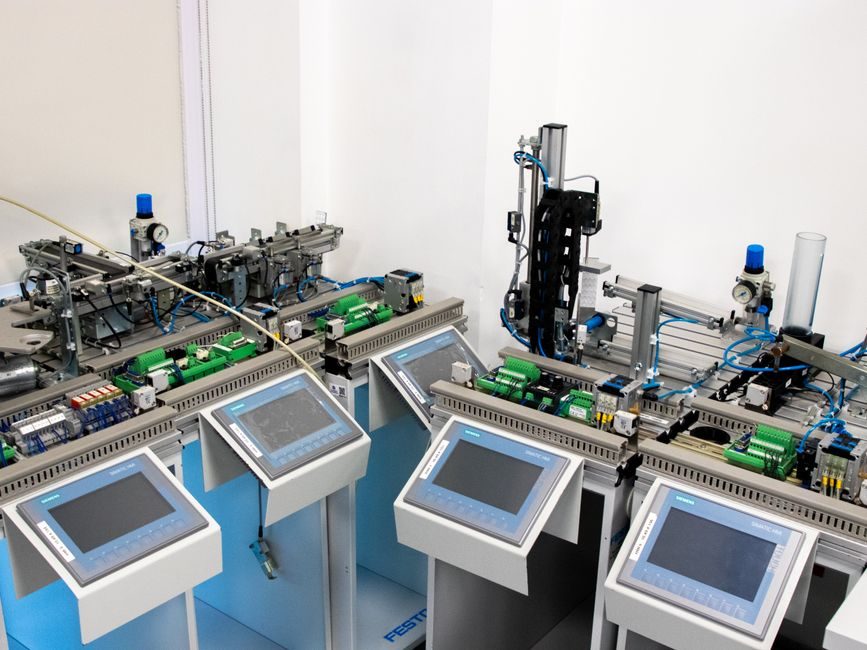
Continuous-wave laser welders have become the default joining tool across the six canonical lithium-ion pack-assembly steps — explosion-proof valve sealing, tab welding, soft-connection joining, safety-vent spot welding, case-cover sealing, and module/pack busbar welding — because beam size and HAZ control beat resistance spot on the reflective Al/Cu/Ni stack [S1].
Joint materials in commercial LiFePO4 and NMC lines are restricted to pure aluminum, nickel, aluminum-nickel, copper, aluminum alloy, and stainless steel, with pole-strip widths under 1.5 mm driving the move to fiber-laser sources rather than legacy Nd:YAG [S1].
Welding Process Map: Six Stations, One Beam Source Family
Explosion-proof valve sealing uses continuous-wave laser welding because the thin-walled rupture disc demands sub-millisecond heat input and a hermetic seam; pulsed alternatives produce spatter that compromises the burst pressure calibration [S1]. Tab welding pairs aluminum (positive) with Ni or Ni-Cu (negative) and requires smooth, low-profile seams — a constraint that maps directly to fiber-laser pulse shaping in current OEM cells [S1]. Electrode-strip spot welding of pure aluminum, nickel, Al-Ni, and (rarely) copper strips uses the same continuous-laser source family because the small spot and high beam quality suppress reflectivity losses on aluminum [S1]. Case-cover joining of aluminum-alloy and stainless-steel shells defaults to continuous-wave welding for throughput, while module and pack series-parallel busbar welding is the highest-power station in the line and typically dictates the cell factory's upstream PLC cadence [S1].
Cell Chemistry Choice: LiFePO4 Dominance in Fixed and Industrial Packs
LiFePO4 chemistry has become the default for stationary, marine, solar, telecom, and industrial-vehicle packs because the thermal-runaway threshold sits well above NMC and the calendar life routinely exceeds 2,000 full cycles at 80% depth-of-discharge [S2]. A 5 kWh LiFePO4 wall-mount unit with built-in BMS is now shipping in volume as home backup, and 48 V LiFePO4 strings are the reference architecture for telecom ESS racks replacing legacy VRLA [S2]. 12 V, 24 V, and 36 V portable LiFePO4 power stations with SLA-compatible housings add a second high-volume SKU class, and 100 Ah / 200 Ah prismatic cells are the standard building block at the Jiangxi mega-plant scale [S2]. For comparison, NMC remains preferred where gravimetric energy density outweighs cycle life — power tools, performance BEV packs, and aviation — but the cost-per-kWh and safety gap has shifted the stationary and industrial-vehicle design win decisively to LiFePO4 [S2].
Production Scale: 130,000 m² Plants, 20 GWh Annual Capacity
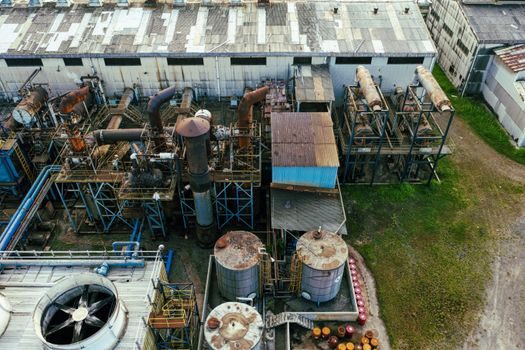
Jiangsu Frey Battery Technology runs 130,000 m² of workshop space and reports 20 GWh of annual production capacity, exporting to 30+ countries with cell, module, BMS, and full-system integration under one roof — a footprint that signals where Industry 4.0 cell lines have already crossed the gigawatt-scale threshold [S3]. The factory was founded in July 2010 by PhDs from China University of Mining and Technology and researchers from the Chinese Academy of Sciences, with PhD-led process control governing the high-rate lithium cell lines that feed BEV and mining machinery packs [S3]. Frey reports 16 years of continuous lithium-battery focus, an explosion-proof lithium supply line qualified for underground coal mines, and an industrial smart-charger family, all of which are built on the same multi-layer QA backbone the company advertises as eight independently managed teams [S3].
Controls and Motion: Where PLC and Servo Motor Sets the Cadence
Cell-to-pack throughput in a 20 GWh-class plant is bounded by tab-welder cycle time and module-busbar weld time, both of which are governed by PLC sequencing rather than by the laser source itself. Each welding station typically pairs a fiber-laser head with a 6-axis servo-motor gantry for seam tracking, plus a vision loop for seam quality and an in-line insulation tester for dielectric validation before the pack ships [S1][S3]. The transition from relay-logic to PLC is also what enables the closed-loop QA structure Frey advertises, because the PLC tags every weld with current, voltage, and travel data for traceability against the eight-team QA matrix [S3]. Where liquid cooling is added at the pack or container level, the same PLC platform drives coolant pumps, flow meter telemetry, and cell-level pressure sensor feedback — a stack that explains why vendors with motion, laser, and process-control coverage under one roof are out-competing single-discipline integrators [S1][S3].
Where the Line Connects to Wider Supply-Chain Stress

Cell factories are now downstream of the same chiller and liquid-cooling bottlenecks that the 2026 data-center build-out is fighting for, and any new LiFePO4 gigawatt line that wants to ramp on schedule has to book CDUs and coolant pumps against the same vendors that hyperscalers are pulling from — a constraint documented in current cooling-supply coverage of CDU bottlenecks and component sourcing Liquid Cooling Supply Chain 2026. The knock-on is that any LiFePO4 cell-factory capacity decision in 2026 has to be made in parallel with both cooling-side and downstream-robotics demand, rather than as a standalone pack build. [S1]
Spec Boundaries and Failure Modes Engineers Should Track
The hardest spec boundary in the cell line is pole-strip width below 1.5 mm: any welder unable to hold a stable keyhole on that width disqualifies itself for the tab station regardless of average power rating [S1]. A second boundary is the explosion-proof valve burst-pressure tolerance — laser weld spatter or under-fill drops the burst-pressure calibration out of spec, which is why pulsed Nd:YAG is no longer the default and continuous-wave fiber is [S1]. The third is upstream dust and humidity: LiFePO4 cell factories need dry-room dew points below −40 °C before cell stacking, and any process step that pulls the dry-room envelope (large welding enclosures, operator access) is where the line will lose yield. Compared against NMC lines, LiFePO4 dry-room tolerance is more forgiving on humidity but tighter on stacking alignment because the prismatic cell format is less tolerant of electrode shift [S2]. Against the 16-year-vintage discrete-cell factories still running, the new PLC-orchestrated lines add per-cell traceability, vision-based seam inspection, and a closed-loop weld-energy record that cuts field failure rates on the explosion-proof valve — the single most failure-prone joint in any pack [S3].
Selection Checklist for a New Industry 4.0 Lithium Cell Line
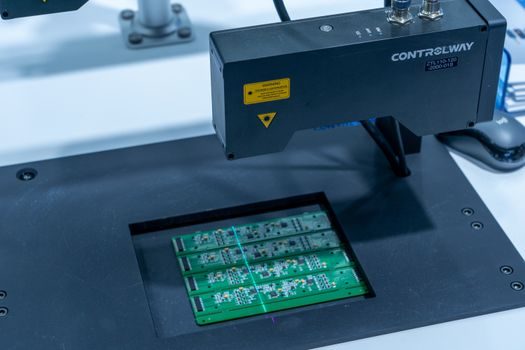
Three decision criteria separate the spec winners from the spec losers in 2026: (1) laser source family — continuous-wave fiber is the default, anything else requires a written justification; (2) motion and controls stack — PLC sequencing with servo-motor seam tracking and per-weld data logging is the floor, not the ceiling; (3) cell-chemistry focus — LiFePO4 for stationary, industrial-vehicle, and mining-EX packs, NMC only where gravimetric energy density dominates the design [S1][S2][S3]. On those criteria, multi-decade LiFePO4 specialists with 130,000 m² workshops, 20 GWh annual throughput, and 30+ country export coverage score higher than greenfield startups; conversely, vendors with no explosion-proof or mining-EX qualification should not be shortlisted for underground-coal-mine packs, regardless of cell performance [S3]. For factory planners, the next trackable signal is whether the new CDU and coolant-pump allocations can be confirmed before dry-room construction locks in, since any cooling-side slip directly delays the first-qualified-cell milestone.