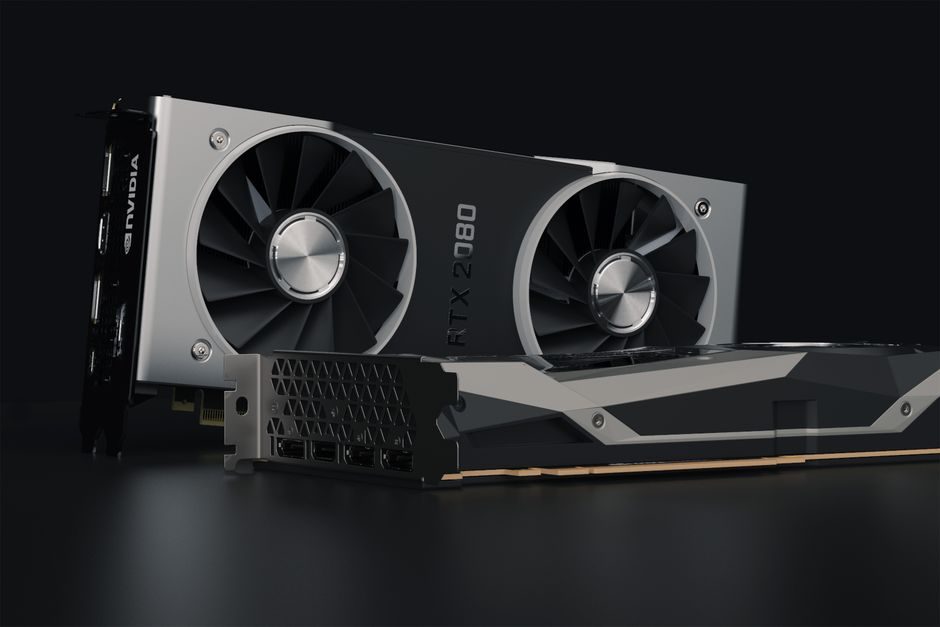
The single largest 2026-07 datapoint on tier-1 GPU supply is the SpaceX-to-Google capacity contract: 110,000 Nvidia GPUs bundled with CPUs, memory, and supporting components, with a hard 2026-09-30 delivery deadline, a 30-day cure period, and Google retaining ownership of the resulting AI models and training data [S1].
That contract value — reported as a 20.3 billion dollar compute deal — is the cleanest external gauge of how hyperscalers price a 2026-vintage H-class or B-class Nvidia node, and it sets a per-GPU envelope that procurement teams can benchmark against internal RFQs [S1][S2]. Coverage also shows the GPU-centric narrative is being explicitly contested: Intel CEO Lip-Bu Tan used Computex to argue that AI infrastructure will be a heterogeneous stack of CPU, GPU, ASIC, and custom silicon, not a single-vendor GPU story [S3].
Where the 2026 tier-1 GPU line actually sits
Direct tier-1 GPU supply in mid-2026 still resolves to Nvidia for western hyperscalers, with the SpaceX-mediated Google deal functioning as the largest single published procurement envelope of the year at 110,000 units [S1][S2]. Adjacent tier-1 compute — the CPUs, memory, and platform silicon that ride alongside every GPU in a rack — is now being re-priced in the same contract, which means procurement should treat the GPU line item and the host-CPU line item as a coupled bundle rather than separate RFQs [S2].
For sourcing teams, the tier-1 line in 2026-07 is: Nvidia silicon at the GPU slot, with Intel and AMD competing for the host CPU socket and an explicit Intel push to position itself inside the same AI capex envelope [S3]. Memory tier-1 supply — HBM for the GPU itself plus DRAM for the host — was bundled into the SpaceX contract as a deliverable, signalling that memory allocation, not just GPU allocation, is the binding constraint on 2026 AI build-outs [S1].
Decision criteria for a 2026 tier-1 GPU RFQ
Tier-1 GPU sourcing in 2026 should be scored on five criteria that the SpaceX-Google contract surfaces explicitly: delivery date, cure-period / termination rights, model and data ownership, bundled host compute, and memory allocation [S1][S2]. On delivery date, the contract pins 2026-09-30 as the outer bound with a one-month cure window before Google can exit, which is the cleanest published latency tolerance in the market right now [S1].
On bundled host compute, the deal covers CPUs and memory alongside the 110,000 GPUs, which means a tier-1 RFQ that asks for GPUs in isolation will under-spec the rack [S2]. On data rights, the contract explicitly reserves model and training-data ownership to Google, setting a template that any 2026 enterprise procurement team negotiating with a tier-1 GPU supplier should mirror in the master agreement [S1]. Intel's counter-position adds a fifth criterion — supplier diversity — because the company's stated goal is to push CPU, GPU, ASIC, and custom silicon into a heterogeneous rack rather than a single-winner topology [S3].
Vendor options lined up against the criteria
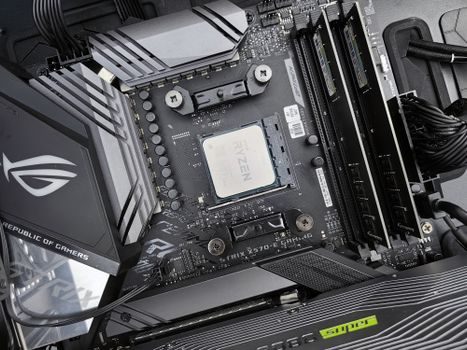
The viable 2026 tier-1 options are: Nvidia (H-class / B-class data-centre GPU with HBM and NVLink fabric), Intel (host CPU and the stated heterogeneous-architecture play), AMD (host CPU and Instinct GPU as the second-source GPU line), and the in-house ASIC / TPU programmes at Google and other hyperscalers [S1][S2][S3]. Against the five criteria above, Nvidia wins on raw delivery scale — 110,000 units in a single contract is not a number AMD or Intel has matched publicly in 2026 — and on software stack maturity, while Intel and AMD compete on host CPU and on supplier diversity inside the rack [S1][S3].
For Chinese and adjacent-ecosystem buyers, the practical reading is that Nvidia remains the only published 2026 tier-1 line for >100k-unit deliveries, while Intel's CPU-GPU-ASIC narrative is the explicit lever for anyone trying to break a single-vendor topology [S3]. Coverage of domestic compute in the same news window also flags a parallel constraint — "you either can't buy the card, or you get the card and can't run it" — which is the supply-chain framing of the same allocation problem that drove the 20.3 billion dollar SpaceX contract [S2].
Who the tier-1 GPU supply is FOR — and who it is NOT for
Tier-1 GPU supply in 2026 is built for hyperscalers and frontier-model labs running multi-thousand-GPU training jobs, evidenced by the 110,000-GPU tranche Google just booked and the explicit model-ownership clause that only matters when the buyer is training foundation models [S1]. It is not built for mid-tier enterprises that want single-rack deployments under 8 GPUs, because the contract terms — fixed delivery dates, cure periods, and bundled memory — assume the buyer is absorbing a full pod, not a single chassis [S1][S2].
It is also not yet a viable line for buyers who need a non-Nvidia topology at >10k-GPU scale, since the only published 2026 number of that order of magnitude is Nvidia-bound [S1][S2]. Teams that want Intel-host or AMD-Instinct diversity in 2026 are effectively second-tier buyers in the allocation queue, and the AI Chip Maker Map 2026 breakdown is the right reference for sizing that secondary lane. The AI Chip Supply Chain 2026 note adds the wafer and advanced-packaging side, which is the upstream bottleneck that determines whether any of these tier-1 GPU lines can actually ship in volume this year.
Real use cases the 2026 tier-1 line is being built for
The 110,000-GPU SpaceX-to-Google contract is sized for frontier model training, with model and data ownership reserved to the buyer — that combination only makes sense for foundation-model pre-training and large-scale fine-tuning, not for inference-only deployments [S1]. The 20.3 billion dollar headline value implies an order-of-magnitude cost per GPU in the high-five-to-low-six-digit USD range, consistent with H-class or B-class data-centre SKUs and a multi-year depreciation schedule [S1][S2].
A secondary use case surfaced in the same news cycle is the domestic Chinese "compute bridge" problem — building the silicon, software, and cluster-integration layer so that locally available accelerators can be deployed at scale rather than sitting idle after purchase [S2]. That maps to a different tier-1 question (domestic ASIC and custom-silicon allocation, not Nvidia allocation) and is covered in the Semiconductor Key Components 2026 reference, while the rack-level physical build-out — power, cooling, OEM tiers — sits in the Data Center Supplier Map 2026 note.
Limitations, failure modes, and contract-level risks
The single largest failure mode for a 2026 tier-1 GPU RFQ is missing the delivery date: the SpaceX-Google contract gives the supplier until 2026-09-30 with a 30-day cure period, after which the buyer can exit, which means any internal project plan that slips past that window has no contractual cushion [S1]. A second failure mode is unbundling GPUs from host CPUs and memory — the contract explicitly packages them together, so a buyer who negotiates three separate POs is taking on three separate allocation queues instead of one [S2].
A third risk is single-vendor lock-in: the Intel counter-position argues that a CPU-GPU-ASIC heterogeneous stack is the correct 2026 architecture precisely because GPU-only topologies leave the buyer exposed to a single allocation point [S3]. The 110,000-GPU number is also a ceiling, not a floor — a buyer who needs fewer than 1,000 units in 2026 should not be negotiating against this contract as a benchmark, because the contract terms (cure period, model ownership, bundled memory) only pencil out at hyperscaler scale [S1].
Sourcing standards and reference points
The 2026 tier-1 GPU conversation is not governed by a published IEC or ISO standard in the way that pressure instrumentation is — the binding reference points are commercial contracts, OEM product briefs, and Computex-stage public statements, all of which are time-stamped and quotable [S1][S2][S3]. The 110,000-GPU, 2026-09-30-deadline, 30-day-cure, model-ownership-reserved-to-buyer template is now the de-facto reference contract for 2026 tier-1 GPU procurement, and any new RFQ should be benchmarked against those four clauses directly [S1].
Intel's Computex statement that the next AI infrastructure will be a CPU-GPU-ASIC-custom heterogeneous stack is the second quotable reference point, and it functions as the published basis for any supplier-diversity clause in a 2026 GPU contract [S3]. For buyers who also need to specify the physical layer around the GPU rack — power, cooling, OEM integration — the Data Center Supplier Map 2026 and the Semiconductor Key Components 2026 note carry the rest of the bill of materials.
Trackable signals for the next 60-90 days: any disclosure of a second 2026 GPU contract at >50,000 units, any public revision to the 2026-09-30 SpaceX delivery milestone, and any follow-up Intel or AMD announcement that puts a specific CPU-GPU-ASIC heterogeneous reference design on a named foundry process node.
For component-level specifications, see pressure transmitter, flow meter, and industrial valve.