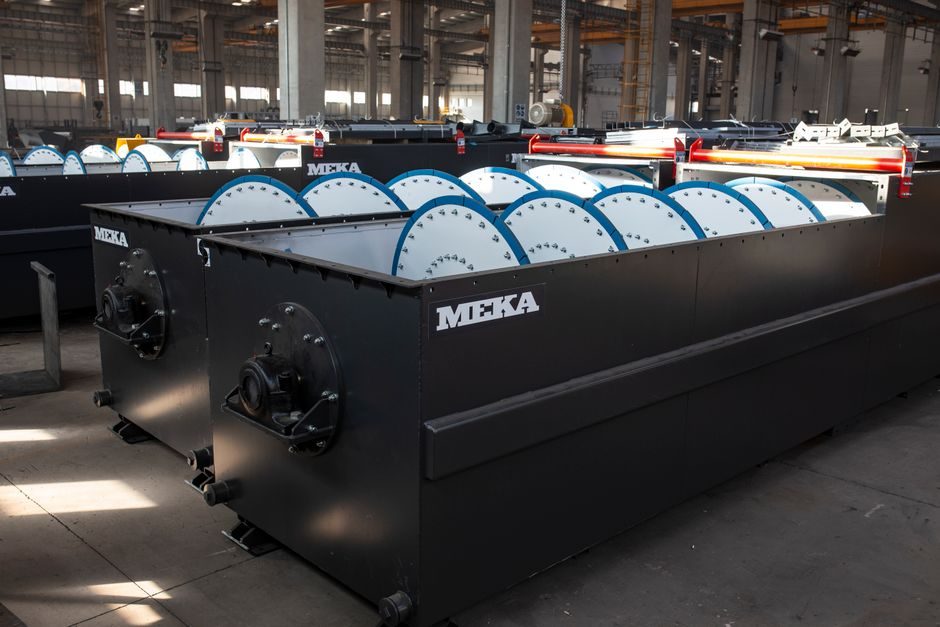
Lithium manufacturing splits cleanly into two chemical routes (evaporative brine processing and spodumene hard-rock concentration followed by acid or alkaline conversion) plus a downstream mechanical chain of electrode coating, calendaring, cell assembly, formation cycling, and pack integration. Industrial grades entering these lines are battery-grade lithium carbonate (Li2CO3) ≥ 99.5% purity and battery-grade lithium hydroxide monohydrate (LiOH·H2O) ≥ 56.5% Li content, the two feedstocks the global conversion plants actually ship [S2].
Reshored US activity as of 2026-06-21 is concentrated in fully automated battery pack manufacturing solutions at single sites, with the cell stage still imported or toll-manufactured and the upstream Li2CO3/LiOH conversion step largely still overseas [S1]. A 2016 process reference for the lithium grease sub-industry documented the four-stage reactor chain (fatty acid + 12-hydroxystearate → lithium soap → grease kettle → milling) and forecast N. America / EU / Asia capacity through 2020, providing the only dated process baseline in the source set [S2].
Brine route: solar evaporation to battery-grade Li2CO3
Brine-route Li starts with pumping lithium-bearing saline (typically 0.01–0.2 wt% Li) from salars into a multi-pond evaporation train where Na, K, Ca, and Mg salts selectively precipitate as the brine concentrates to ~0.5–1.0 wt% Li over 12–24 months. Magnesium is the chemistry-defining contaminant: high Mg/Li brines (>8) require an additional solvent-extraction or selective precipitation stage to bring Mg below ~50 ppm before carbonate precipitation, otherwise Li2CO3 purity stalls around industrial-grade 99.0% [S2].
Final conversion adds Na2CO3 to purified Li-rich liquor at 80–95 °C, precipitates battery-grade Li2CO3 ≥ 99.5%, washes and dries it to <0.25% moisture, and packages at 25 kg PE-lined bags or 1 t supersacks. The route is capital-light per tonne of LCE but cycle-time-heavy: a 2026 process engineer planning a greenfield brine project must reconcile 18–24 month pond ramp against the 6–8 month delivery window on the adjacent pressure transmitter rack and the flow meter skids tied to reagent dosing.
Spodumene hard-rock route: alpha-to-beta conversion and acid leach
Hard-rock Li starts with open-pit mining of spodumene ore (theoretical Li2O 8.03%, commercial ore 1.0–2.5% Li2O), three-stage crushing to ~6 mm, and ore-sorting or flotation to a 5.5–7.5% Li2O concentrate. The defining thermal step is decrepitation: alpha-spodumene (monoclinic, refractory) is heated to ~1050–1100 °C in a rotary kiln, converting to beta-spodumene (tetragonal, reactive) so the silicate structure yields to downstream acid attack [S2].
Two leaching branches exist. (1) Acid roast: beta-spodumene is roasted with H2SO4 at 250–300 °C, water-leached, and the Li-bearing liquor routed to impurity removal (Fe, Al, Ca) and Li2CO3/LiOH precipitation. (2) Alkaline / "limestone" roast: ore is mixed with limestone and roasted, then water-leached, recovering Li as LiOH·H2O directly — the preferred route for high-nickel NCM811 and NCA cathodes that need low-sulphate LiOH. Battery-grade LiOH·H2O must clear ≥ 56.5% Li, Na ≤ 50 ppm, Ca ≤ 30 ppm, Fe ≤ 5 ppm, SO4 ≤ 100 ppm; these limits, not the ore grade, are what binds the upstream crushing circuit to the cathode line.
Comparison: brine Li2CO3 vs spodumene LiOH·H2O for 2026 cathode lines
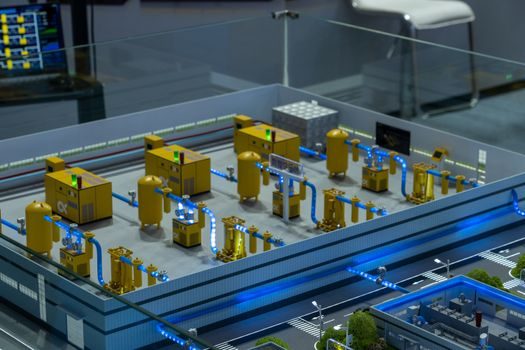
Selection between the two feedstocks is dictated by cathode chemistry, geography, and water/permit constraints rather than unit price alone. On four decision criteria — cathode fit, time-to-first-tonne, water/permit load, and reagent tie-in — the routes split as follows [S2]:
· Cathode fit: LiOH·H2O is required for high-nickel layered cathodes (NCM811, NCA) because the higher sintering temperature (~800–900 °C in air) demands the lower-decomposition Li source; Li2CO3 is acceptable for LFP and NCM523/622 where sintering is gentler. · Time-to-first-tonne: brine route 18–24 months for pond ramp, spodumene 6–10 months once the kiln is fired; spodumene wins on speed, brine wins on cash cost per tonne LCE. · Water/permit load: brine needs 400–600 m³ of water per tonne LCE in arid salars and faces social-licence drag; spodumene needs ~150 m³/tonne plus tailings management. · Reagent tie-in: the acid branch needs an on-site or pipeline H2SO4 supply plus industrial valve manifolds for acid handling; the alkaline branch needs limestone and a controlled-cooling kiln discharge.
For 2026 specifiers, the rule of thumb: LFP and NCM523/622 plants source Li2CO3; NCM811 and NCA plants lock in LiOH·H2O long-term. The two feedstocks are not interchangeable at the cathode line, and the process chain upstream of them is fundamentally different.
Downstream cell and pack: coating, calendaring, stacking, formation
From battery-grade Li salt the chain enters cathode precursor co-precipitation (Ni/Co/Mn mixed hydroxide at pH 10–11, 50–70 °C, N2 blanket), lithiation with Li2CO3 or LiOH·H2O at 450–950 °C in O2-controlled air, and electrode fabrication. Electrode fabrication is a multifunction process calibrator-heavy zone: slurry mixing (PVDF/NMP binder + carbon black + active material at 2000–4000 cP), slot-die coating on Al/Cu foil at 30–80 m/min, drying at 120–150 °C, and calendaring to 3.0–3.5 g/cm³ cathode / 1.5–1.7 g/cm³ anode density. A mis-set calender pressure shifts porosity ±2% and degrades rate capability, which is why coating-line OEMs ship inline beta gauges and laser-thickness sensors as standard. [S1]
Cell assembly is dry-room only (Dew point ≤ −40 °C, typically −60 °C) and stacks the cathode / separator / anode layers either by Z-stacking (pouch cells) or jelly-roll winding (cylindrical 18650/21700). Electrolyte filling (1.0–1.2 M LiPF6 in EC/EMC/DMC) happens in a vacuum chamber, followed by formation cycling: 24–72 h of low-current (0.1C) charge–discharge cycles to grow the solid-electrolyte interphase (SEI) layer. SEI quality is the single largest yield determinant — a 1% formation yield loss at gigawatt-hour scale is a 7-figure event, and the cells rejected here are the boundary between a 2026 gigafactory's gross margin and its scrap line.
Reshored US pack assembly: what actually exists on the ground
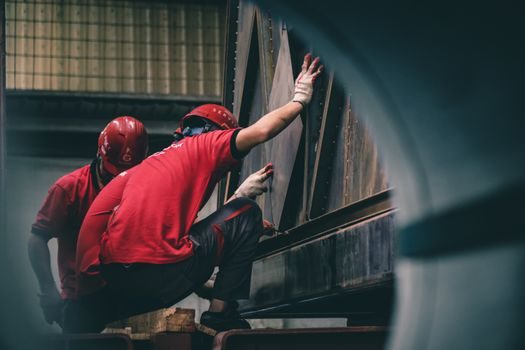
US "lithium manufacturing" as marketed in mid-2026 is, in most cases, fully automated pack assembly rather than cell production: the cell is imported (mostly KR/JP/CN) and the module-to-pack line, with BMS integration and end-of-line cycling, is what the US footprint covers [S1]. The pitch is "Custom & Scalable Reshoring Battery Manufacturing — Fully Automated Battery Pack Manufacturing Solutions" with process steps from incoming cell test to laser-welding, adhesive bonding of busbars, BMS flash, and pack-level Hi-Pot plus EOL cycling at 1C/1C to ≥ 95% capacity retention on the shipping floor [S1].
The practical implication for a 2026 buyer is that the cell BOM travels under a different HS code, lead-time, and IRA-eligibility question than the pack assembly line does. For projects where the upstream Li chemistry is the topic, the meaningful bottleneck is the Li2CO3/LiOH conversion plant (mostly CN, AU, CL), not the pack integrator; for projects where the additive manufacturing material feedstocks or V-process line for busbar/bracket tooling are the topic, the US footprint is a real on-shore play. The EV Battery Upstream and Downstream Chain walk-through covers how the cell side of this stack maps against the 3D Printing Smart Manufacturing and Automation trend on tooling and fixtures.
Failure modes and limits process engineers must price in
Six failure modes recur across the chain and each carries a measurable yield or cost penalty. (1) Mg co-precipitation in brine route dragging Li2CO3 purity below battery grade; (2) alpha-spodumene not fully converting at <1050 °C, leaving a refractory tail that drops acid-leach Li recovery by 8–15%; (3) cathode calcination over-temperature (>950 °C for NCM811) crashing capacity; (4) coating line humidity spike pulling moisture into the PVDF/NMP slurry and leaving pinholes in the electrode; (5) formation cycling with rest-step <12 h failing to stabilise SEI, raising first-cycle irreversibility to >10%; (6) pack-level laser-weld spatter on busbars triggering Hi-Pot failure on EOL. [S2]
Each of these is detected by a different instrument family — ICP-OES at the conversion plant, XRD at the kiln discharge, in-line laser caliper on the coater, ACIR meter on the formation rack, vision system on the welder — and the spec sheets for that instrument family are what a 2026 sourcing engineer should be reviewing before locking the Rare Earth Smart Manufacturing and Automation parallel chain, since rare-earth NdFeB magnet production shares the calcination / hydrogen-decrepitation steps and the same dry-room and SEI-quality logic carries over to the magnet line's hydrogen-decrepitation control envelope.
Trackable 2026 signals to watch: announced LiOH·H2O conversion capacity (US/Au additions), IRA 45X credit guidance on Li2CO3 vs LiOH·H2O classification, and any Chinese export-control movement on LiPF6 electrolyte salt. Cell-grade LiPF6 remains a single-source exposure; the next 90 days of Li2CO3 / LiOH·H2O spot price prints and the next 180 days of US pack-integrator EOL yield disclosures are the two cleanest forward indicators for a process engineer.