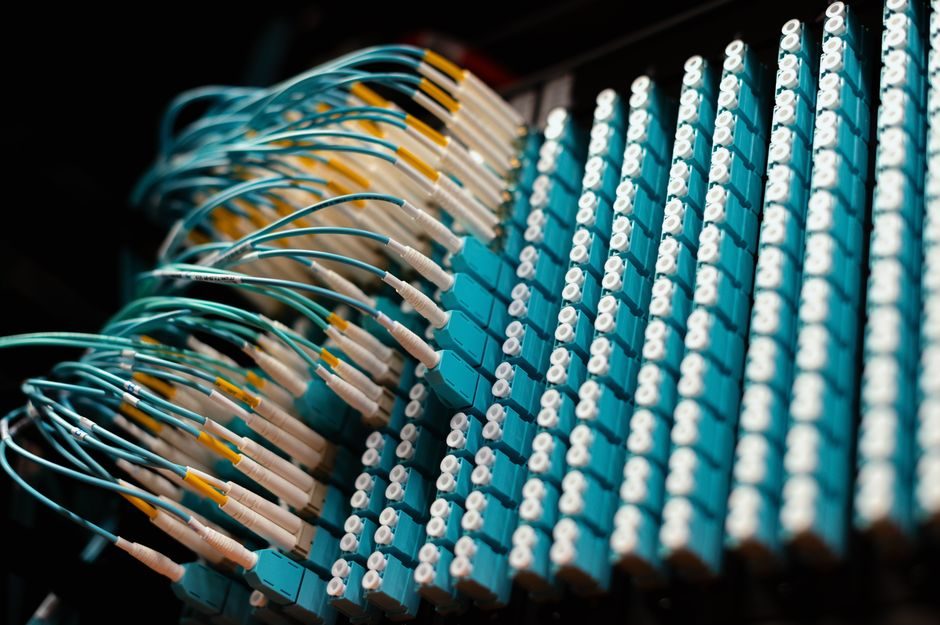
Server hardware sits between a tight upstream supply chain — x86_64 CPUs, server-grade mainboards, ECC DRAM, redundant PSUs and chassis — and a heterogeneous downstream demand base that runs virtualization stacks, transactional database engines and mainframe crypto offload [S1][S2][S3].
Upstream components converge on the i686-class 64-bit instruction set for commodity x86 platforms, while the mainframe side retains proprietary silicon such as the IBM z13 with dedicated cryptographic hardware [S1][S3]. Downstream, application servers such as Oracle Workflow layer business logic on top of an Oracle9i/10g-tier RDBMS, and that database tier is the real capacity driver for memory, disk and CPU cores [S2].
Upstream: CPU, Memory, Power and Board Stack
The upstream bill of materials for any 1U–4U server starts with an x86_64 host CPU that meets the i686-class instruction baseline, which is the floor Oracle VM Server enforces for hypervisor bring-up [S1]. Memory subsystems are specified as ECC DDR4/DDR5 modules in matched ranks; the failure to populate symmetric channels is a common reason a server is rejected by provisioning tools such as Sun N1 Service Provisioning System 5.2, which checks CPU, RAM and disk geometry before a master server is accepted [S4].
Power delivery is the second cost axis: server-class redundant PSUs (typically 1+1 or 2+2, 80 PLUS Titanium-rated) feed a 12 V main bus with hold-up sized for the platform's load step. Chassis backplanes expose NVMe/SAS3 lanes; provisioning guides also assume a hardware RAID controller (BBU or supercap-backed) for the boot volume [S4]. For deeper thermal and power stack context, the data center upstream chain breakdown walks through how those server PSUs tie into PDU, UPS and busbar tiers.
Downstream Workload Tiers: Virtualization, Workflow and Mainframe Crypto
Three downstream workload shapes dominate procurement. The virtualization tier (Oracle VM Server, KVM, VMware ESXi) treats the box as a hypervisor host and demands VT-x/AMD-V, NX, and a minimum of 4 GB RAM per logical pool plus dedicated cores for the control domain [S1]. The application-server tier (Oracle Workflow, middleware, ERP) requires a J2EE container fronting an Oracle RDBMS — Oracle Workflow documentation pins the database floor at Oracle9i Enterprise Edition and the application server at the matching Oracle Application Server release, which dictates the JDK and patch level [S2].
The mainframe tier (IBM z13) introduces a different upstream: CMOS CPUs with on-chip crypto, CEX cards for hardware acceleration, and Coupling Facility links for parallel sysplex scale-out [S3]. Procurement teams that mix x86 hypervisor hosts with z13 crypto co-processors are essentially running a two-tier architecture where the mainframe handles bulk encryption and the x86 fleet handles web/OLTP front-end load. For a broader industrial perspective on rack-level integration, the storage rack spec guide covers the U-height and load class decisions that surround these compute nodes.
Selection Criteria: Matching Server Class to Workload
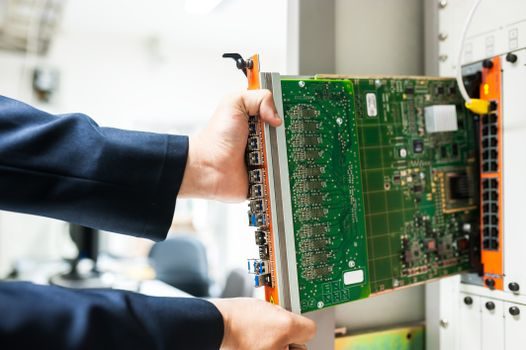
Match the platform to the workload profile using four levers. CPU instruction set and core count: x86_64 (i686-class or newer) for commodity virtualization and application servers; IBM z/Architecture (z13 or newer) for mainframe crypto, COBOL and high-MIPS batch [S1][S3]. Memory: ECC, populated in matched ranks, with provisioning tools verifying geometry before the master server is registered [S4]. I/O: SAS/NVMe backplane with hardware RAID for the boot and database volumes; CEX slots or PCIe crypto accelerators when bulk encryption is in scope [S3].
Power and service: redundant hot-swap PSUs, IPMI/BMC for out-of-band management, and a service tier that matches the SLA (24×7×4h for transactional, 9×5 next-business-day for batch). A representative comparison: | Platform | CPU baseline | Typical use | Key spec lever | |---|---|---|---| | x86_64 server (Oracle VM) | i686-class 64-bit, VT-x | Hypervisor host, virtualization | ECC RAM, core count, VT-x flag [S1] | | x86 app server (Oracle Workflow) | i686-class 64-bit | Middleware + RDBMS | RDBMS version, JDK, ECC RAM [S2] | | IBM z13 | z/Architecture + on-chip crypto | Bulk crypto, batch, sysplex | CEX cards, CF links, MIPS rating [S3] |
Specifiers who jump tiers — for example, trying to run mainframe-grade crypto on a single x86 box without PCIe HSMs — usually fail on throughput and auditability, not on raw CPU speed.
Real Use Cases and Sourcing Signals
Three procurement scenarios illustrate the chain. Scenario A — enterprise virtualization refresh: a buyer replaces end-of-life hypervisor hosts with current-generation x86_64 servers, validates the i686-class baseline and ECC population against Oracle VM Server requirements, and stages workloads on a Sun N1-style provisioning master before cutover [S1][S4]. Scenario B — workflow platform upgrade: the team moves Oracle Workflow from an Oracle9i-backed application server to a newer Oracle database release; the upstream server bill of materials is driven by the database's SGA/PGA footprint, not by the application tier [S2].
Scenario C — hybrid mainframe + x86: a bank keeps IBM z13 as the crypto anchor for card-issuance HSMs and runs the channel apps on x86_64 clusters, with the mainframe CEX cards absorbing the bulk PIN-block encryption [S3]. The 2026 sourcing signals to watch are DDR5 supply normalization, EOL timelines for older x86_64 SKUs that still meet the i686-class floor, and PCIe Gen5 crypto accelerator availability for the x86 side. Sidecar reference: a different but adjacent industrial chain map is laid out in the EV upstream/downstream 2026 piece, useful for cross-industry supply-chain comparison.
Limitations, Failure Modes and Sourcing Constraints
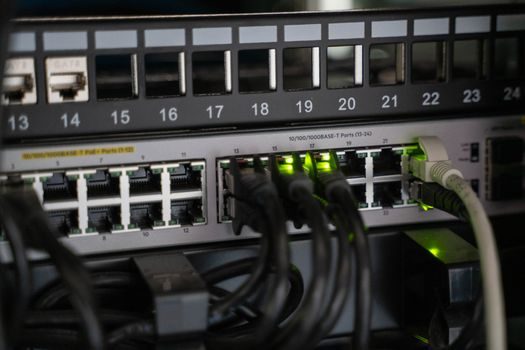
The chain has known choke points. CPU side: x86_64 SKUs below the i686-class floor are no longer accepted by Oracle VM Server 3.x, and EOL of low-core-count server parts is squeezing the entry-tier refresh budget [S1]. Memory side: when channels are populated asymmetrically, provisioning tools such as Sun N1 reject the master server at install time, delaying cluster bring-up [S4]. Power side: a single non-redundant PSU in a chassis labeled "redundant-capable" is a common field finding that invalidates the SLA.
Downstream constraints are equally concrete. Oracle Workflow still ties to the Oracle9i/10g database baseline, so a procurement team that tries to swap in a non-Oracle RDBMS breaks the certification matrix [S2]. On the mainframe side, IBM z13 crypto offload is constrained by the number of CEX cards and CPACF (Central Processor Assist for Cryptographic Functions) throughput — running the CEX slots at saturation leaves no headroom for batch work on the same LPAR [S3]. None of these are deal-breakers if the specifier reads the OS-level hardware matrix before placing the order, but they are the most common reasons a freshly racked server gets returned.
Standards Anchors and What to Verify on the Datasheet
The datasheet must declare the CPU architecture (x86_64 with i686-class floor for commodity servers, z/Architecture for the mainframe line), the memory type (ECC, rank, speed, channel population), the I/O topology (NVMe/SAS lanes, RAID generation, OCP NIC), the management plane (BMC/IPMI version, Redfish support) and the power envelope (PSU count, 80 PLUS rating, 12 V rail current) [S1][S3][S4]. The provisioning layer adds a second checklist: OS certification, hypervisor compatibility, and the database release that the application server will sit on top of [S2].
For adjacent industrial buying logic — material tiers, price bands and sourcing channels — the architectural hardware 2026 price-band map applies a similar spec-to-cost breakdown, even though the SKUs themselves are different. Standard floor for CPU acceptance on commodity servers in this scope is the i686-class 64-bit baseline published in the Oracle VM Server hardware guide; for mainframe crypto offload, the constraint set is the IBM z13 CEX/CPACF envelope documented in the IBM cryptographic hardware feature list [S1][S3].
Trackable next nodes: (1) the next Oracle VM Server release note will list any i686-class floor changes, and any x86_64 SKU drop from the matrix is a refresh-cycle trigger for shops still on the older line; (2) Oracle Fusion Middleware / Workflow certification matrices will publish the next Oracle database release added to the supported list, which is the real driver for downstream app-server memory and CPU sizing [S1][S2].
For component-level specifications, see architectural hardware, serial server, and pressure transmitter.