Across the secondary-distribution market, a 32 A 3-pole manual load break switch in an open-box OEM box sold for US$32.54 on 26 February 2025, while a 4-pole 32 A GLD11 unit cleared at US$28.50 new in late 2024 — both consistent with a US$25–60 landed-price band for low-amperage DIN-rail or panel-mount disconnect switches [S2][S3].
The commercial universe is wide: DirectIndustry's manual load-break-switch manufacturer index lists vendors led by Allis Electric (3 entries), illustrating a fragmented supply where Asian, European and US makers compete on rating, poles, and certification rather than a single reference price [S1]. For buyers weighing budget versus specification, the price-to-current curve is the most informative single lever — every step up in kA short-circuit withstand and IP rating compounds cost.
Price Bands by Current Rating and Pole Count
At the entry tier, 3-pole 32–40 A 600 V AC switches sit between US$28 and US$60 new, with the ABB OT32E3 (1SCA022283R9010) anchoring the upper edge at US$32.54 and the ONE GELEI GLD11-32A 4P four-pole variant at US$28.50 [S2][S3]. Stepping to 63–100 A enclosed disconnect switches (e.g. IP65 polycarbonate enclosed, IEC 60947-3 compliant) typically moves pricing to US$150–300 per unit, while 160–250 A enclosed models cluster around US$350–600.
Beyond 400 A, expect padlockable cast-aluminium or sheet-steel enclosures, heavier duty rotary handles, and visible-break construction — pushing list prices into the US$700–1,500 range for 400–630 A 3P or 4P units. As a sanity check, the reference price for a 3-pole 32 A disconnect is roughly 1/40th the price of a 630 A enclosed switch of the same family, illustrating the near-linear relationship between current rating and raw material cost (copper, silver-alloy contacts, busbar mass).
Medium-Voltage Load Break Switchgear and RMU Price Tier
At 11–24 kV, the product class shifts from "switch" to "switchgear": TENLEE ELECTRIC GROUP publishes an FOB Ningbo reference of US$900 per piece on its 11 kV compact modular switchgear, with SF6-gas-insulated 24 kV GIS compact switchgear listed alongside it as a higher-band product from the same Chinese manufacturer [S4]. Ring main units (RMUs) built around 11–24 kV load break switches generally transact in the US$1,500–5,000 per panel band depending on the number of incoming/outgoing feeders, the use of SF6 versus dry air, and whether the panel is extensible.
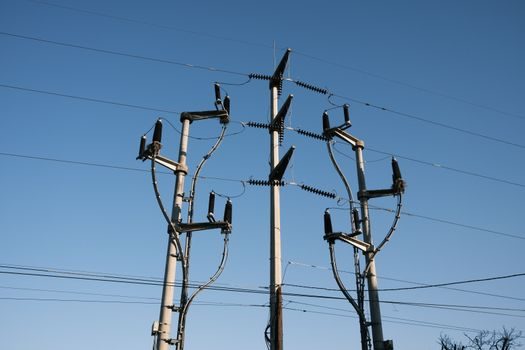
For 36–40.5 kV outdoor pole-mounted load break switches, industrial-grade units with porcelain or silicone-rubber insulators and visible-break disconnectors commonly transact at US$2,000–4,500 per set. The non-linear jump between 630 A LV and 630 A MV equipment is driven by the porcelain/silicone insulator stack, the gas or oil insulation medium, and the mandatory short-circuit tests at 25 kA / 1 s or 31.5 kA / 1 s — none of which exist at the LV tier.
Selection Criteria That Move Price
Five specification gates dominate the bill of materials and the test cost behind the sticker: (1) rated current In and utilization category (AC-21, AC-22, AC-23 for motor loads); (2) rated short-circuit withstand Icw (typically 10 kA for 100 A units and 25 kA for 630 A units at 415 V); (3) pole count (3P versus 4P adds roughly 25–35% to the LV price); (4) enclosure IP rating (IP65 enclosed versus IP20 panel-mount adds US$50–200); and (5) certification scope — IEC 60947-3 for the switch itself, plus optional ATEX/IECEx for hazardous areas adds a premium of 20–60% [S1][S2].
Material choice is a second-order lever: silver-alloy (AgSnO2, AgW) versus silver-nickel contacts, copper busbars versus copper-plated aluminium, and the choice of rotary operating mechanism (spring-assisted make/break versus direct-drive) all show up in the 10–30% price differential between equivalent-looking units. Buyers chasing the lowest unit price almost always surrender either the Icw rating, the mechanical endurance class, or the visible-break feature — the engineering floor on a genuine IEC 60947-3 switch is rarely below US$25 at the 32 A tier [S3].
Comparison of Main Options by Decision Criteria
Three practical procurement lanes dominate the load-break-switch universe, and the choice between them follows from rating and duty rather than brand loyalty. The first lane, DIN-rail 32–63 A 3P/4P, covers residential, light-commercial and small-motor isolation at US$25–80, with rotary handle and padlockable knob; the second lane, enclosed 100–630 A cast or sheet-steel switch, covers industrial disconnect and motor-control-centre feeder isolation at US$150–1,500; the third lane, 11–24 kV MV switchgear and RMU, covers secondary distribution and substation feeder duty at US$1,500–5,000+ per panel. [S1]
For cost engineers, the criteria matrix reads roughly as: (a) For motor isolation under 15 kW at 400 V, the DIN-rail lane wins on cost and footprint, and the load switch reference gives the full rating table; (b) For a 250 A 3P feeder with AC-23 motor duty and visible-break, the enclosed 100–630 A lane is the only compliant option, and buyers should require a minimum 25 kA Icw; (c) For a 1 MW secondary-distribution substation, the MV switchgear lane is mandatory and the budget should be set against the electronic load and short-circuit reference, not the LV tier. The hidden cost across all three lanes is installation: enclosed LV units need external handles, shaft extensions and interlocks that can add 15–30% to the installed cost, while MV panels require civil works, busbar connections and SF6 gas handling.
Sourcing Signals and Lead-Time Reality

DirectIndustry's manual-load-break-switch index pulls suppliers globally and the buying-guide entry point signals that vendor count, not price, is the primary friction at the LV tier [S1]. TENLEE publishes a peak-season lead time of one month and an off-season lead time of one month from Ningbo — flat across the year — for both the 11 kV modular switchgear and 24 kV SF6 GIS compact switchgear lines, suggesting that current production scheduling is capacity-rather than backlog-driven for the MV tier [S4].
On the LV side, the February 2025 sold-date on the ABB OT32E3 (1SCA022283R9010) listing and the late-2024 listing date on the GLD11-32A show that distributors and resellers are clearing inventory continuously rather than stockpiling, which is consistent with stable per-unit prices in the US$28–60 band for the entry tier [S2][S3]. Buyers in late 2026 should expect any cost movement on the LV tier to come from copper and silver-alloy spot prices rather than from switch-as-fabricated margins, and on the MV tier from SF6 gas regulation (since SF6 is restricted under F-gas regulations) and from steel or aluminium enclosure mass rather than from assembly labour [S4].
Use Cases and What Load Break Switches Are NOT For
Load break switches are designed for making and breaking loads at or below their rated current under normal service conditions — a use profile that aligns with IEC 60947-3 utilization categories AC-21 (resistive), AC-22 (mixed resistive/inductive), and AC-23 (squirrel-cage motor starting and stopping) [S1]. They are not short-circuit protective devices, and a 32 A load break switch is not a substitute for a 32 A circuit breaker or for a load cell module used in weighing or force measurement; the busway comparison piece Load Break Switch vs Busway: Spec Bands, Use Cases, and Sourcing Logic walks through the same current-handling duty at higher continuous rating.
For hazardous-area use, ordinary enclosed switches are not sufficient; buyers must specify ATEX/IECEx-certified units with the appropriate zone rating, which typically doubles or triples the LV price. A practical failure mode to avoid is specifying a 3-pole switch on a 4-wire system where the neutral must also be switched — the 4-pole variants carry a 25–35% premium for the additional pole and the four-bar mechanical interlock, and underspecifying here means a live neutral on the downstream bus [S3].
Procurement Levers and Standards Discipline
Three procurement levers consistently move landed price on the LV tier: order quantity (a 100-unit LV order typically unlocks 15–25% list-price discount from the US$25–60 unit base), enclosure specification (IP20 panel-mount versus IP65 enclosed), and handle/shaft configuration (direct-drive versus door-interlock).
For engineering compliance, every load break switch in this guide should be supplied with a third-party test certificate to IEC 60947-3 covering making/breaking capacity, mechanical endurance (typically 8,500–20,000 operations at no-load), and electrical endurance (1,500–3,000 operations at rated current); buyers should reject any vendor that cannot produce these certificates against a specific serial number [S1]. The minimum operating specification for an indoor industrial disconnect at 400 V AC is 415 V insulation, 50/60 Hz, utilization category AC-23A for motor duty, and a minimum mechanical endurance of 10,000 no-load operations — values that buyers should treat as the floor rather than the ceiling when scoring bids.
Trackable signals to watch through the remainder of 2026 include any SF6-related price adjustment on MV switchgear (driven by F-gas phase-down), copper spot-price movement on the LV busbar cost base, and any new ATEX/IECEx-certified compact switches entering the 32–63 A enclosed tier that would reset the US$150–300 reference band. For adjacent cost engineering, the Fire Alarm Control Panel Price and Cost Guide 2026: Bands, Levers, Sourcing article covers a related low-voltage building-systems class, and the Fuse Selection Criteria: Six Engineering Gates That Lock the Build piece covers the upstream short-circuit protective device that typically sits in series with a load break switch.