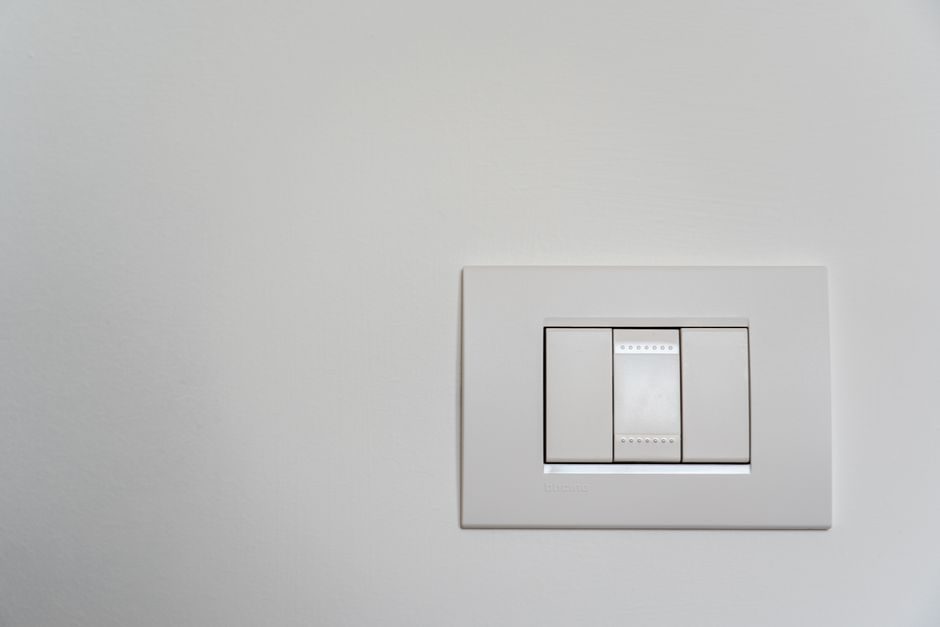
A manual load break switch is a single-piece isolation and load-make/break device, commonly available in ratings from 100 A up to 1600 A, with short-time withstand (Icw) bands running 5 kA to 25 kA for 1 s and mechanical endurance often above 8,000 operations [S1][S2].
A busway (busbar trunking) is fundamentally different: it is a prefabricated, factory-engineered distribution conductor system that replaces cable-and-tray, sized for continuous loads from roughly 100 A to 6300 A with tap-off units arranged at fixed intervals. Eight industrial suppliers on the manual load-break switch index show how fragmented the switch market is, with 15 listed products concentrated below 1600 A [S1].
Rating Stack: Current, Voltage, Short-Circuit Withstand
Load-break switches are typically engineered to IEC 60947-3 for low-voltage disconnectors, with utilization category AC-22A / AC-23A and 415 V or 690 V AC insulation, 50/60 Hz operation, and Icw bands of 5 kA, 8 kA, 12.5 kA, 16 kA, 20 kA and 25 kA for 1 second, depending on frame size [S1]. The switching device market itself still segments into air, SF6 gas, oil, and vacuum load-break families, with the SF6 type surviving in 24 kV / 36 kV / 40.5 kV MV networks because of its arc-quenching performance; for air-insulated units, 12 kV / 630 A and 24 kV / 1250 A are widely available standard frames [S2].
Busway systems cover a much wider current envelope: low-voltage feeder busways run 100 A-6300 A trunk rating with tap-offs at 16 A-1600 A, while MV busways cover 630 A-5000 A at 12 kV / 24 kV / 36 kV class. Typical Icw for a 4000 A / 690 V LV feeder busway is 65 kA for 1 s and 132 kA peak, more than double the headroom of a 1600 A switch [S1][S2].
Functional Role: Single Point Isolation vs Continuous Distribution Backbone
Use a load-break switch when the job is to manually isolate a defined load: a motor feeder, a transformer secondary, a capacitor bank, a sub-section of switchgear, or a generator output breaker for a standby set. Typical industrial sites specify them as "switch-disconnectors" mounted in motor control centres, capacitor switchboards, machine-tool panels, and PV inverter AC disconnects. [S1]
Use a busway when the job is to deliver power from the transformer secondary or main switchboard to multiple downstream loads, especially in facilities where load positions are expected to change: data centres, multi-tenant industrial buildings, automotive assembly lines, semiconductor fabs, and high-rise HVAC risers. A 4000 A trunk can replace roughly eight parallel 630 mm² copper feeders in a cable tray, freeing floor space and shortening retrofit shutdowns to hours instead of days. For lower-current branch distribution, a LV industrial switch installed in a tap-off box can serve the same role as a panelboard breaker but with visible isolation.
Decision Criteria: A Side-by-Side Comparison
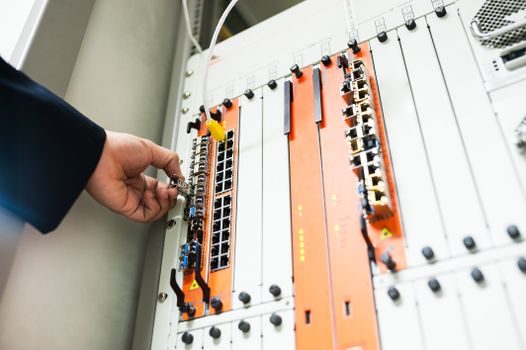
Four parameters dominate the load-break-switch vs busway decision: maximum continuous current, fault-withstand, physical footprint, and future flexibility. [S2]
On continuous current, a load-break switch caps out near 1600 A in standard air-insulated frames, while a busway spans 100-6300 A in a single product line; choose a switch for a single feeder, choose a busway when more than three parallel loads are fed from the same source. On fault withstand, switches are limited to roughly 5-25 kA Icw for 1 s, while LV feeder busways commonly provide 65-100 kA Icw and 132-220 kA peak — necessary when the upstream transformer is 2500 kVA or larger. On footprint, a 1600 A switch in a wall-mounted enclosure occupies roughly 0.6 m² of wall area, while a 4000 A busway elbow-and-run layout uses approximately 0.04 m² per metre of run. On flexibility, tap-off units can be added or removed on a busway without de-energizing adjacent sections (depending on busway type), while a switch is a fixed point in the network.
Application Profile: Where Each Device Earns Its Place
Manual load-break switches dominate low-voltage motor control, machine-tool isolation, and capacitor switching, and are also common as transformer secondary isolators in packaged substation layouts. For electronic load testing applications, the chosen switch must support make-and-break under load, not just no-load isolation, which narrows the field to AC-23A-rated frames with at least 8,000 mechanical operations. Heavy MV applications such as ring main units and wind farm collector circuits are dominated by SF6 or vacuum load-break switches at 24 kV / 36 kV [S2].
Busways dominate anywhere many tap-off positions are needed: data-centre power distribution to server racks, multi-floor commercial risers, automotive paint-shop and assembly lines, large warehouse LED lighting circuits, and battery cell production halls. A common spec is a 4000 A / 690 V IP54 feeder run with 100-1600 A plug-in tap-offs every 0.5-1.0 m. In retrofit projects, busways cut the cable-tray rework window from days to hours, a factor that often decides the specification in shutdown-driven industries such as semiconductor and pharmaceutical.
Standards, Sourcing, and Failure Modes
The relevant framework for the switch is IEC 60947-3 (low-voltage switchgear and controlgear, part 3) covering switches, disconnectors, and switch-disconnectors; utilization categories AC-21, AC-22, and AC-23 define the permitted switching duty. For MV switches, IEC 62271-103 covers the high-voltage analogue. For busways, IEC 61439-6 (low-voltage assemblies, busbar trunking) is the controlling part, and IP54 / IP55 ingress protection is typical for indoor feeder runs, IP65 for food-grade or wash-down areas [S1].
Failure modes differ. The most common load-break switch failure is contact erosion at the arc zone, accelerated by high inrush on motor feeders and by DC injection on PV inverter outputs; a 1600 A AC-23A switch rated for roughly 1,500 electrical operations will be exhausted in 5-10 years of typical service. The most common busway failure is thermal: a loose joint at a tap-off can drift above 90 °C, derating the trunk by 20-30%; thermal scanning is part of the recommended PM schedule. Operators should avoid specifying a 12 kV SF6 load-break switch on a 24 kV system, even with derating, and should never specify a load break switch for capacitor switching if its Icw is below 12.5 kA [S1][S2].
Cost, Lead Time, and Sourcing Geography
Manual load-break switch pricing in 2026 clusters in three bands: under $200 for 100-250 A enclosed disconnectors from the European import channel, $300-900 for 400-1000 A IEC 60947-3 frames, and $1,200-3,500 for 1600 A motor-rated switches with extended Icw. Busway pricing is per-metre and per-amp: a 630 A plug-in run is roughly $80-150 per metre, a 2500 A feeder run runs $400-800 per metre, and a 4000 A IP54 feeder run is $700-1,400 per metre, with elbow and tap-off units adding $200-2,000 each. [S3]
Lead time is the harder variable. Standard enclosed load-break switches up to 630 A ship in 4-6 weeks from European or Chinese stock; 1600 A custom frames often run 10-14 weeks. Busway runs are engineered-to-order: 2-4 weeks for engineering submittal approval, 6-10 weeks for fabrication of a 200-500 m order, 8-14 weeks for larger campus-scale projects. One Chinese OEM operates from a 320,000 m² plant specializing in high- and low-voltage power transmission and distribution equipment, which compresses lead time for SF6 load-break switches and the associated busway couplers [S2]. For related cable runs, see the hydraulic motor buying guide 2026 spec bands types and sourcing levers and the fuse selection criteria when sizing upstream protection.