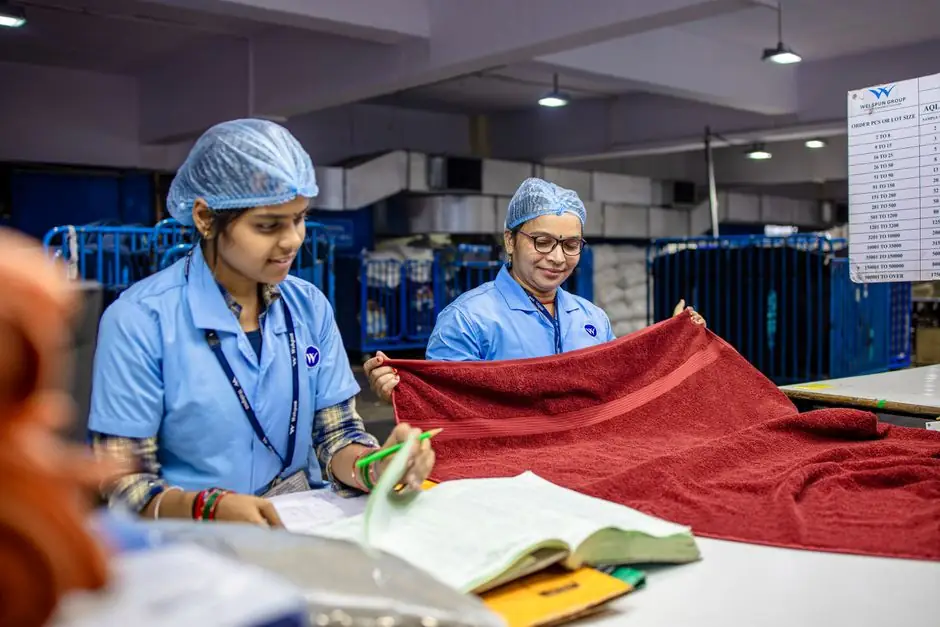
Textile-mill fasteners fail through three well-documented mechanisms: Junker-effect self-loosening under lateral vibration on spinning frames, thread stripping during high-cycle carding, and crevice corrosion in humid, lint-laden finishing rooms [S4][S7].
The locknut families that survive these conditions are nylon-insert (Nylock), all-metal prevailing-torque (Stover, hex flange), and matched jam-nut pairs, each rated against grades 5, 8, and 10 with finishes including zinc, black phosphate, and 316 stainless [S3][S6].
Vibration profile by textile process line
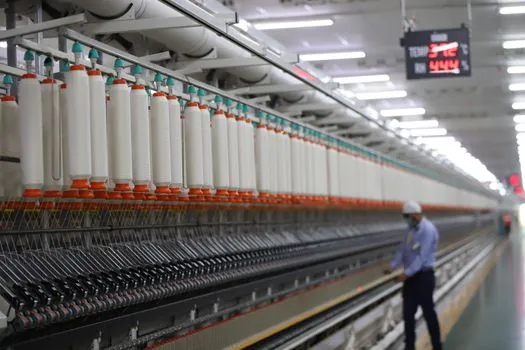
Spinning frames (ring, rotor, and air-jet) operate in the 50-300 Hz lateral-vibration band and produce the most aggressive Junker-effect loosening documented in mill audits, making single-nut prevailing-torque designs the default [S4][S7]. Carding and draw frames run at lower amplitudes but higher continuous duty, where all-metal Stover-type prevailing-torque lock nuts in grade 8 are routinely specified [S3][S6]. Looms (shuttleless, water-jet, projectile) impose combined vibration plus thermal cycling up to 80-90 °C near bearings, which is outside the safe range for standard nylon-insert designs and pushes selection toward all-metal prevailing-torque or two-way reversible nuts [S4][S8]. Wet-process finishing ranges, including dyeing and bleaching, push the limiting factor from vibration to corrosion, where grade A2/A4 stainless lock nuts or PTFE-coated prevailing-torque nuts dominate the BOM [S5][S6].
Locknut families, grade, and finish mapped to textile service
Common textile-grade locknut offerings on the US distribution market span nylon-insert (Class 10 steel, zinc or black-phosphate finish), all-metal prevailing-torque in grade 5 and grade 8, wedge-lock hex nuts in zinc-plated and stainless, and two-way reversible hex lock nuts, with per-piece cost scaling roughly with reusability and integrated-washer content [S3][S6]. Huyett's published selection table rates nylon-insert lock nuts as "low cost, sometimes reusable" with prevailing-torque installation; K-lock nuts as "low cost, sometimes reusable, free-spinning"; wedge-lock hex nuts as "highest cost, reusable, free-spinning with integrated washer"; and jam nuts as "medium cost, reusable, free-spinning but long assembly time" [S3]. All-metal prevailing-torque nuts are explicitly called out for vibration-prone assemblies where a nylon insert would degrade, while nylon-insert Nylocks are favoured where re-use is infrequent and temperatures stay below roughly 121 °C, the documented upper limit for the nylon ring [S3][S8].
Corrosion and contamination: the lint and humidity factor
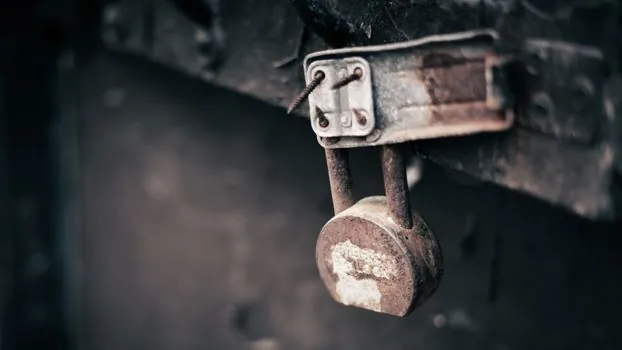
Textile finishing rooms routinely hold 60-90 % relative humidity and carry airborne fibre lint that packs into thread roots, accelerating both galvanic and crevice attack on plain zinc-plated fasteners [S5][S7]. For these zones, suppliers list 18-8 (A2) and 316 (A4) stainless lock nuts alongside zinc-flake and PTFE-coated carbon-steel prevailing-torque options as the corrosion-resistant tier [S5][S6]. Black-phosphate and oil finish remains common on grade G and Class 10 steel lock nuts in dry carding rooms, where phosphate provides break-in lubrication and a modest corrosion barrier; however, the same finish offers roughly an order of magnitude less salt-spray protection than zinc plating and is not a humid-area choice [S3][S4]. In dye-house service with intermittent acid/alkali exposure, 316 stainless prevailing-torque or PTFE-coated grade 8 prevailing-torque lock nuts are the conservative spec, and the nylon-insert variant is generally avoided because dye chemicals attack the nylon ring [S5][S8].
Reusability, torque, and assembly-time trade-offs
Mill maintenance economics make reusability a first-class spec: a wedge-lock hex nut rates "reusable, quick and easy to install, integrated washer, highest cost"; jam nuts rate "reusable, quick and easy to remove, no integrated washer, medium cost, long assembly time"; and nylon-insert Nylocks rate "sometimes reusable, difficult to remove" with prevailing-torque installation that lengthens teardown on every change-out [S3]. Prevailing-torque all-metal designs (Stover-type) typically sacrifice 10-20 % of the bolt's clamp load in re-use cycles before thread distortion relaxes below spec, while two-way reversible hex lock nuts are explicitly rated "not reusable" but can be flipped mid-strip to expose a fresh locking face [S3][S8]. For high-volume OEM machine builders shipping knitting and weaving lines, free-spinning K-lock or flange lock nuts are preferred because they feed through automated nut-runners without the prevailing-torque drag that stalls assembly tools [S3][S4]. For a related cross-industry view on joint design economics, the OEM vs ODM for measuring instruments discussion shows how downstream maintenance cost enters the OEM hardware spec the same way it does on a textile locknut BOM.
Comparison: four locknut options against four mill criteria
Lining the main candidates up against the four criteria that drive textile-mill selection, the structured picture is: nylon-insert Nylock scores low on corrosion (nylon ring attacked by dyes, limited above 121 °C) and low-medium on reusability, but lowest on cost and adequate on vibration; all-metal prevailing-torque (grade 8 Stover-type) scores high on vibration and high on temperature, medium on corrosion unless stainless, and low on reusability cycles; jam-nut pair scores high on reusability and corrosion (no polymer), medium on vibration (relies on two-nut preload technique), but highest on assembly time and stack height; wedge-lock hex nut scores high on vibration and reusability with integrated washer, but highest on per-piece cost and medium on corrosion depending on plating [S3][S4][S6][S8]. For mills standardising on a single SKU, grade 8 zinc-plated all-metal prevailing-torque in the 1/4-20 to 3/4-10 range covers the majority of spinning, carding, and weaving service, with 316 stainless prevailing-torque reserved for wet-process skids [S5][S6].
Failure modes and what to exclude
Specifying a plain hex nut on a high-vibration spinning-frame bearing cap is a documented misapplication: the Junker effect produces micro-slip at the thread interface, preload decays below the joint's clamp-load threshold, and the nut backs off within operating shifts, a pattern Boltcraft identifies as the dominant cause of fastener-related downtime in agricultural and heavy-industrial analogs of textile machinery [S4]. Nylon-insert Nylocks must be excluded from any zone that exceeds roughly 121 °C continuous service or contacts dye-house chemicals, because the nylon ring softens, loses prevailing torque, and the joint reverts to a plain-nut state [S3][S8]. Slotted hex nuts and castle nuts, while reusable, are too slow for textile line-side maintenance and are now mostly confined to low-volume heavy-equipment and shipbuilding OEM use, not mill-floor change-outs [S2][S3].
Sourcing, standards, and a trackable next signal
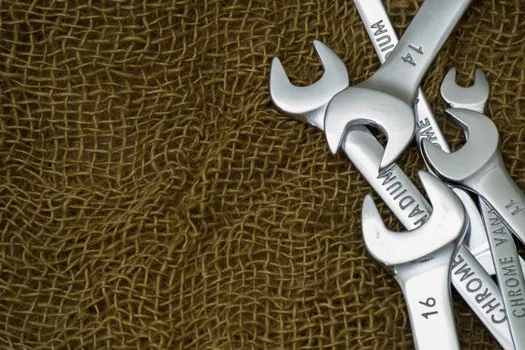
Domestic US locknut suppliers such as Lok-Mor publish their locknut manufacturing and testing in-house at a single Texas site and offer more than 20 locknut variants across prevailing-torque and free-spinning families for OEM, oil and gas, heavy equipment, and shipbuilding markets, giving textile-machine builders a parallel supply base to the distribution channel [S2]. Grade markings on the nut face (grade 5, grade 8, grade G, Class 10) and the ASTM/SAE mechanical-property stamps that accompany them remain the primary spec anchor, because vibration, corrosion, and reusability all flow from those markings before finish or material is even considered [S3][S6]. The verifiable next signal to track is mill-side adoption of wedge-lock and two-way reversible nut SKUs in the 2026 MRO catalogues, since both types are explicitly flagged as "reusable" or "flip-to-renew" in supplier tables and would shift the prevailing-torque dominance if their cost-per-cycle numbers improve through 2026 [S3][S8].
The underlying component specifications are covered under lock nut, pressure transmitter, and flow meter.