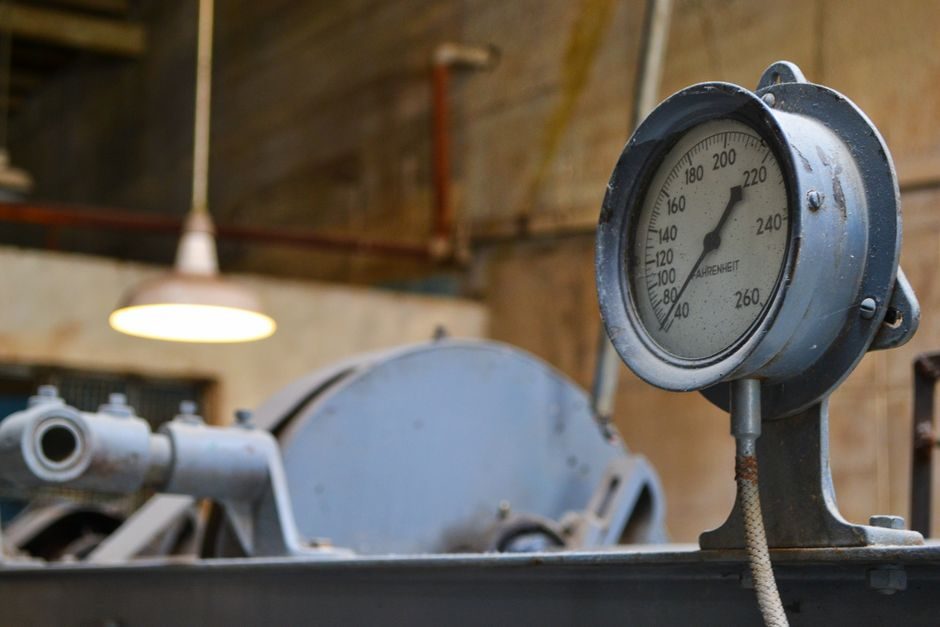
Low pressure die casting (LPDC) fills a mould by pressurising a sealed furnace with air or inert gas in the 15-100 kPa band, pushing molten aluminium or magnesium up a riser tube into a reusable steel die [S5]. Compared with high-pressure die casting cells that close at multi-MPa injection, LPDC runs at sub-atmospheric-to-low gauge pressures, which gives denser castings, slower fill, and longer die life on thicker automotive and structural parts [S4].
For buyers writing 2026 RFQs, the load-bearing spec axes are: clamping force tier, platen/die size, alloy (Al, Mg, brass), furnace type (gas-fired, electric resistance, induction), control architecture, and compliance with GB 24391-2009 safety requirements for sealed-crucible and sealed-furnace designs in horizontal or vertical parting [S6]. Manufacturers active in 2026 catalogues span Bühler Group, Kurtz, Shibaura Machine, Yizumi, OTTO JUNKER, and Lanson — a field the DirectIndustry supplier index places in the 9-11 product listing range per top-tier maker [S1].
Pressure, Clamping Force, and the LPDC Operating Window
Per the Springer reference work definition, LPDC uses regulated air pressure between 15 and 100 kPa above atmosphere to drive fill, well below HPDC intensifier pressures measured in MPa [S5]. Typical LPDC platen clamping force sits in the 200-2,500 kN band for alloy wheels, knuckles, and suspension arms, while small-tonnage cells for electronics housings run 80-400 kN. Cross-referencing the aluminum die casting machine class, 80-90 ton (≈800-900 kN) units are widely quoted on Alibaba for 2026 with FOB price bands of $10,000-22,000 for new Chinese-built cells.
Gravity die casting shares the slow-fill, reusable-die approach but uses no pressurisation beyond a small metal head, so LPDC machines necessarily include a sealed furnace, pressurisation line, pressure regulator, and a riser tube sized to the fill height. That riser tube is the single most failure-prone consumable in a LPDC cell, and 2026 build sheets for OEM lines now specify cast-iron or silicon-carbide risers for >2 m fill heights.
Alloy, Furnace, and Die-Steel Choices
LPDC processes aluminium, magnesium, and copper alloys; magnesium LPDC cells must run under SF6/N2 or CO2/Ar cover gas to suppress oxidation, and buyers targeting lightweight structural parts should look for the magnesium die casting machine configuration [S3]. Furnace choice drives both OpEx and emissions: gas-fired crucible furnaces are the cheapest up front, electric resistance furnaces give cleaner decks and tighter melt-temperature control, and induction furnaces shorten melt-cycle time for high-mix cells.
Die steel is a parallel cost driver; the economics of H11/H13 tool-steel selection, heat treatment, and rework costs are laid out in the tool & die steel price and cost guide 2026, which sets the per-kg premium for ESR-grade die blocks at a measurable uplift over standard mill stock. For low-volume LPDC lines, gravity die casting machine cells remain a lower-capex alternative if the part tolerates open-top fill.
Safety Compliance: GB 24391-2009 and Beyond
GB 24391-2009 "Low pressure die casting machine — Safety requirements" defines the basic safety obligations for designers, makers, users, and suppliers of LPDC equipment with sealed crucibles and sealed furnaces, both horizontal- and vertical-parting configurations [S6]. The standard mandates interlocks on the pressurisation circuit, furnace over-pressure relief, hydraulic-system cooling per GB/T 7932 rules, and electrical-system segregation — the same baseline European builders satisfy under the EU Machinery Directive 2006/42/EC. A supplier quoting "GB 24391 compliant" should be able to furnish a test certificate naming furnace pressure-relief setpoint, interlock chain, and hydraulic-heat-exchanger spec.
For process engineers specifying LPDC cells in 2026, the safety-clause review should treat the pressurised furnace as a pressure vessel: a 100 kPa setpoint is low, but a sealed furnace at 1,100 °C melt with multi-litre aluminium inventory is a high-consequence asset. Vacuum-assisted LPDC variants such as the vacuum die casting machine class add an evacuation stage before fill to cut gas porosity; these cells require both GB 24391 mechanical-safety compliance and a vacuum-integrity test at commissioning.
Selection Criteria: LPDC vs HPDC vs Gravity
Three cast paths dominate the buy decision. LPDC delivers medium-density, heat-treatable aluminium parts with 0.5-3 bar fill and shot weights typically 5-50 kg per cycle; HPDC delivers thin-wall, high-volume parts at injection pressures measured in tens of MPa and shot weights 0.5-10 kg; gravity die casting delivers low-volume, simple-shape parts with minimal equipment cost. Where mechanical properties and weldability matter, LPDC's slower fill and lower gas entrapment generally win on fatigue and pressure-tightness testing. [S1]
A spec-based comparison for 2026 sourcing looks like: LPDC fill pressure 15-100 kPa, HPDC injection 30-100 MPa, gravity <5 kPa metal head only; LPDC die life 100,000-200,000 shots for aluminium wheels vs HPDC 80,000-150,000 for structural housings; LPDC capex 1.5-3× HPDC capex at equivalent tonnage because of the sealed furnace and pressurisation skid; LPDC cycle time 4-12 min vs HPDC 30-180 s. The 2026 buy signal is to look at total-cost-per-shot, not headline machine price.
Automation, Controls, and 2026 Cell Integration

Current LPDC cells ship with PLC-based control of furnace pressure ramp, melt level, die-cooling water flow, and shot timing; the 2026 step-change is the move toward robotic sprue cutting, robotic demould, and inline X-ray or thermal-image inspection feeding the cell's MES. The industrial robot smart manufacturing spec and buyer guide for 2026 covers the reach-and-payload envelope a 6-axis robot needs to extract a 30 kg wheel from a 1,500 kN LPDC platen at 200 °C without stopping the cell. [S2]
Buyers should insist on OPC-UA or Modbus-TCP data export from the LPDC press, a pressure-ramp profile recorder, and a furnace-pressure trend log stored for at least 12 months — these three signals are how OEM automotive and Tier-1 aerospace suppliers audit porosity and process capability (Cpk) on critical safety parts. A second practical lever is to standardise the die clamp pattern across cells; this shortens changeover and lets one cell absorb another's die inventory during downtime.
Vendor Landscape, Price Bands, and Lead Time
European and Japanese makers — Bühler (5 listings), Kurtz (9), Shibaura Machine (7), OTTO JUNKER (3) — dominate the high-tonnage aluminium wheel and structural-part segment with cycle times at the faster end of the LPDC band; Chinese makers — Yizumi (5), Lanson (11), Tederic (1), Changzhou JinKang (1), Ningbo Dongfang — fill the small-to-medium tonnage band at price points that DirectIndustry's 2026 catalogue puts in the $10,000-22,000 range for 80-90 ton aluminium cells [S1]. Buyers targeting alloy wheels for passenger vehicles typically specify 1,500-2,500 kN clamping force and a 24-30 inch platen envelope.
Lead times in mid-2026 sit at 4-6 months for Chinese-built 80-400 kN cells ex works, 8-12 months for European 1,000-2,500 kN structural-part cells, and 12-18 months for turnkey LPDC wheel lines with robots, melt furnaces, and post-machining. To benchmark your steel and consumables spend against the LPDC die-block line item, the carbon steel price and cost guide 2026 gives the spot bands and MOQ tiers for the structural steel framing inside the press. A 2026 RFQ should carry: tonnage, platen size, alloy, shot weight, cycle time target, automation scope, and an explicit GB 24391-2009 compliance line.
Failure Modes, Maintenance Windows, and Limitations
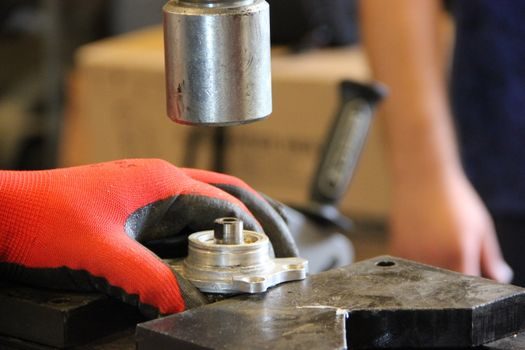
Three failure modes dominate LPDC field data: riser-tube erosion causing inclusion defects, furnace pressure-leak tripping the safety interlock mid-cycle, and die-cooling channel fouling raising cycle time and scrap rate. Operators report riser-tube replacement every 6-12 months on a three-shift wheel cell, furnace seal inspection every 1,000 cycles, and die-cooling flush every shift on water-based systems. LPDC is not the right fit for very thin-wall (<2 mm) parts — fill is too slow to feed a thin section — and is not the right fit for high-volume, <50 g zinc toy hardware where die casting machine hot-chamber HPDC cells win on cycle time. [S3]
Buyers should also weigh floor load, ceiling height, and melt-furnace footprint: a 2,000 kN LPDC wheel cell with integral 1-tonne crucible furnace is a 4-5 m tall, 30-40 m² installation with a 60-80 tonne floor-load envelope. Spare-parts kits for 2026 cells should include one riser tube, one pressure regulator, one furnace seal kit, and one hydraulic-pump rebuild kit as a baseline; for OEM-grade runs, add a spare die-cooling manifold and PLC I/O card set.