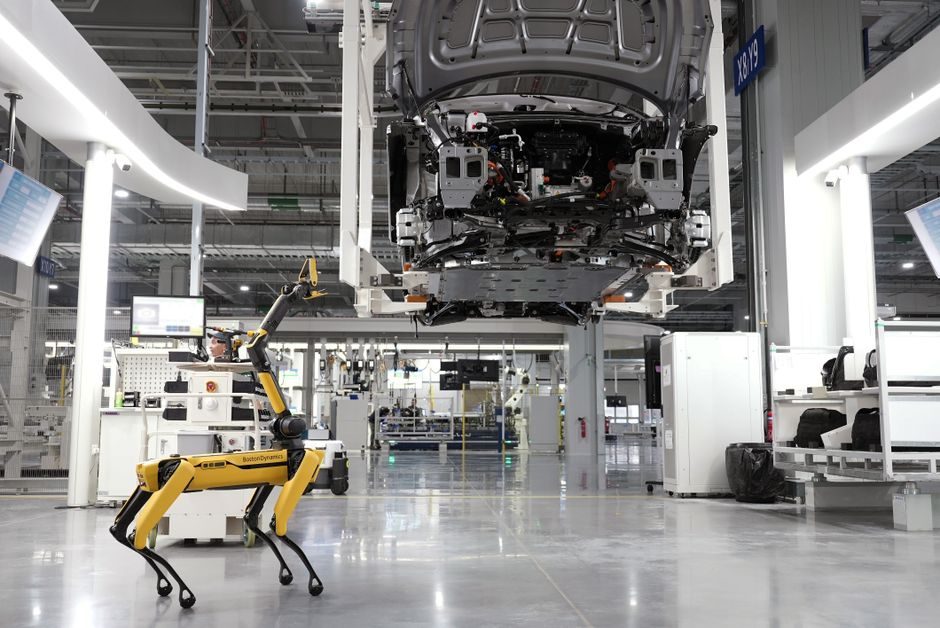
Global industrial robot installations passed 540,000 units in 2024, with China, Japan, the United States, the Republic of Korea and Germany accounting for roughly 70% of new deployments [S3]. On a typical 2026 automotive body-in-white line a single OEM now runs 600-1,000 robots, more than triple the density of a comparable line from 2010 [S3].
For a process engineer, 2026 is less about whether to automate and more about which robot class, which controller protocol, and which safety rating match the cell. The decision binds capital, cycle time and floor space for the next 10-15 years, so the spec sheet — not the brochure headline — drives the purchase.
Robot Classes by ISO 8373 and Real Cell Fit
ISO 8373 defines an industrial robot as an automatically controlled, reprogrammable, multi-purpose manipulator programmable in three or more axes, and the 2026 reference market still follows that taxonomy [S1]. Articulated 6-axis arms remain the workhorse in automotive welding and machine tending; SCARA robots dominate electronics pick-and-place at 100-200 cycles/min; delta robots lead food and pharmaceutical high-speed packaging; cartesian gantries hold the largest share by unit count in palletising and CNC loader cells [S1][S3].
Selection rule of thumb that holds up on a 2026 bid sheet: pick the robot with the smallest envelope that still covers the working volume plus 20% margin, because reach over-spec inflates price, footprint and the guarding cost by 30-50%. A 6-axis articulated arm with 10 kg payload and 1.4 m reach suits most machine-tending cells; below 6 kg, a SCARA is usually faster and cheaper; above 20 kg with long reach, only articulated or collaborative variants remain practical.
Payload, Repeatability and Working Volume Trade-offs
Repeatability for an articulated industrial arm sits in the ±0.02 mm to ±0.10 mm band, while SCARAs land in ±0.01 mm to ±0.05 mm and deltas at ±0.05 mm to ±0.10 mm [S1]. A buyer who treats repeatability as the headline number usually over-spends — what matters is the combination of payload, reach, IP rating and controller bus.
For heavy stamping cells, 6-axis arms in the 20-50 kg / 1.7-2.0 m reach class dominate because they clear the press bolster without re-fixturing; in PCB assembly the 1-6 kg SCARA class wins on cycle time and footprint. The EV supply chain squeeze in 2026 is pushing more automotive-tier robots into magnet and SiC handling, where IP67 and cleanroom-class greases start to swing the spec back toward hermetic units.
Controller Protocols: PROFINET, EtherNet/IP and the 5G-APL Move
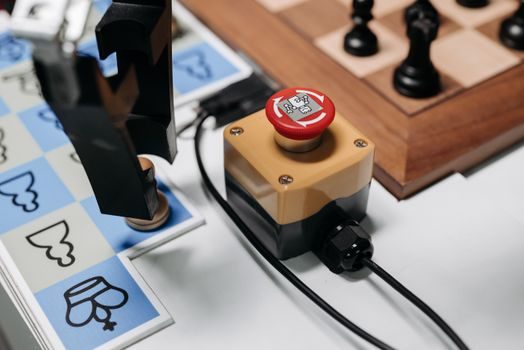
Most 2026 controllers ship with PROFINET and EtherNet/IP as standard; EtherCAT appears in high-speed packaging where sub-1 ms deterministic I/O matters [S4]. ABB's robotics and discrete automation business — published as an open API repository on GitHub on 2026-05-26 — exposes REST and OPC UA interfaces alongside the legacy fieldbus, which is the direction the wider market is moving [S4].
Buyers who plan to scale a cell should refuse any controller that lacks OPC UA Pub/Sub over TSN, because brownfield upgrades over the next 5-7 years will be Ethernet-based, not fieldbus. Spec note for a 2026 cell: require at minimum PROFINET IRT or EtherNet/IP DLR for ring redundancy, plus an OPC UA server for cloud telemetry. Skip vendors whose controller cannot publish a tag dictionary; the integration cost over a 10-year life outweighs a 5% robot price discount.
Collaborative Robots: ISO/TS 15066 Cage Removal Reality Check
Collaborative robots (cobots) stay limited to roughly 35% of new industrial robot shipments in 2026, concentrated in payloads under 16 kg, because most heavy-payload cells still fail the ISO/TS 15066 biomechanical limits on quasi-static and transient contact [S1]. Power- and force-limited operation, speed-and-separation monitoring, and hand-guiding are the four collaborative modes; only the first two dominate real cells.
A cobot cell genuinely earns its place when the part mix changes more than twice a year and the operator must enter the workspace frequently — otherwise a fenced articulated arm with a 1.2 s cycle still wins on cost-per-part. Cobots are NOT a fit for stamping above 1.5 m, heavy palletising, or any application where the end-effector mass plus payload exceeds the biomechanical threshold at the rated TCP speed. For stamping and press-automation cells in particular, the cast-iron frame of the press sets the cycle-time floor and the robot is matched to it, not the other way around.
Vision, AI and Inline Quality: Spec Criteria Buyers Miss
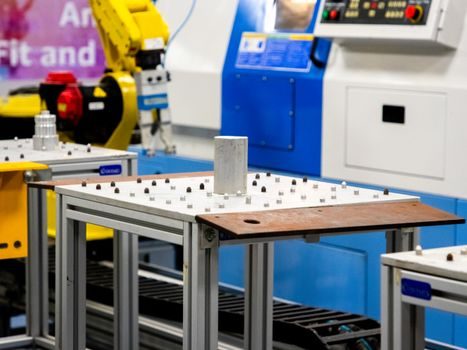
Smart cameras paired with robots moved from optional to default in 2026 cells, with 2D part localisation as the minimum and 3D bin-picking on the rise for unstructured totes [S1]. A buyer should specify vision protocol (GigE Vision, USB3 Vision, or CoaXPress for high-speed lines), lighting package, and on-camera vs PC-based processing, because the integration hours — not the camera price — drive the cell cost.
The additive manufacturing cell sits next door to a robotic cell in most 2026 factories, and the same inline-metrology stack (laser line probe, structured light, CT for critical parts) is now being bolted onto robot wrists. Buyers who treat vision as a separate tender usually pay 20-40% more in integration than buyers who co-spec the robot and the smart camera against a single acceptance test.
Safety, Standards and the 2026 Compliance Stack
Robot cell safety is governed by ISO 10218-1 (robot) and ISO 10218-2 (cell), with ISO/TS 15066 the collaborative extension and IEC 60204-1 covering electrical equipment of the machine [S1]. For 2026 European builds, EN ISO 13849-1 performance level (PL) d with category 3 is the de-facto floor for safety-rated stop and speed control; a cell quoting PL c is functionally obsolete for a new build.
The smart valve positioner literature, oddly, is a good parallel — HART/IP diagnostics reduce unplanned downtime by a similar margin to a safety-rated scanner that prevents one lost-time incident per 5 years.
2026 Selection Criteria at a Glance
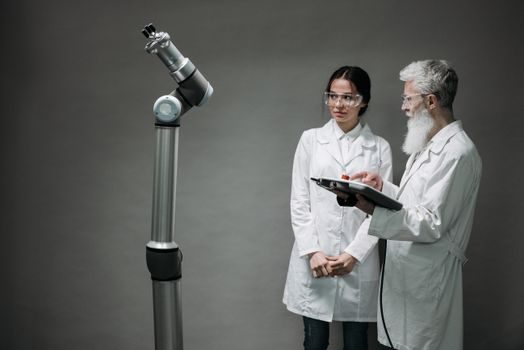
Six criteria filter a 2026 industrial robot shortlist: payload (kg), reach (mm), repeatability (mm), IP rating, controller protocol stack, and functional-safety PL. Articulated 6-axis arms win on payload+reach flexibility, SCARAs on repeatability+cycle time, deltas on speed+footprint, cartesian gantries on cost for simple 3-axis moves, cobots on flexibility in low-payload mixed cells. [S1]
Decision shortcut: if the cell is fenced, high-payload, and 10+ year lifecycle, specify a 6-axis articulated on PROFINET IRT with PL d; if the cell is small-batch electronics, specify a SCARA on EtherNet/IP with PL d; if the line is high-speed packaging under 3 kg, specify a delta with EtherCAT and IP66; if the part mix is variable and payload is under 16 kg, evaluate a cobot but budget for a 15-20% throughput haircut versus a fenced equivalent.
Vendor Landscape and Open-API Reality
The 2026 industrial robot OEM tier one remains FANUC, Yaskawa, ABB, KUKA (Midea) and Kawasaki; tier two includes Epson, Stäubli, Omron, Hyundai and the Chinese majors (Estun, Siasun, Inovance); tier three and stamping-automation specialists such as Fuxin supply dedicated press-tending arms for the home-appliance and automotive-grade sheet-metal industries [S1][S5]. ABB's discrete-automation API repository, published openly on 2026-05-26, signals where tier-one is heading: programmable interfaces, OPC UA, and cloud-ready telemetry as table stakes, not premium add-ons [S4].
Buyers evaluating tier-two and tier-three Chinese or Taiwanese suppliers should require the same fieldbus certifications and a documented PL d safety chain, not just a CE sticker; the hardware price advantage is real, but integration and lifecycle support gaps typically close the gap within 18-24 months. For press-shop and stamping automation cells, specialist vendors such as Fuxin ship turnkey swing-arm and 3-in-1 feeder packages that are worth short-listing when the workpiece is fixed but the press line is not [S5].
Tracks to watch: TSN-5G rollout at major auto-OEMs, the ISO/TS 15066 biomechanical-limit update, and the move of AI vision from PC-based to controller-embedded inference.