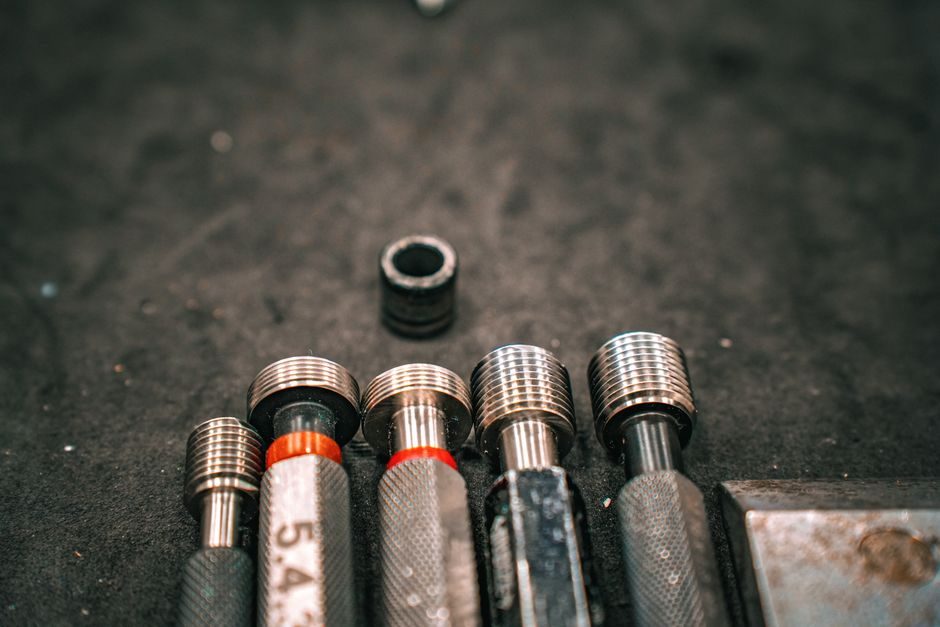
Machine tool supply chains entering July 2026 are defined by extended lead times on CNC controllers, German and Japanese spindle allocations, and a downstream order book that has cooled since the 2024 peak — a combination that is pushing procurement teams toward dual-source qualification of precision components [S2][S3].
Software-defined supply chains now operate at machine scale: continuous integration of supplier telemetry into procurement pipelines is replacing quarterly spreadsheet reviews, which compresses the time between disruption and re-routing [S2]. Buyers specifying CNC machining centers, gear hobbers, and broaching equipment in 2026 are absorbing 26–40 week lead times on Fanuc, Siemens Sinumerik, and Mitsubishi M80 controller deliveries, with the gap driven by 32-bit MCU allocation and high-voltage IGBT packaging backlogs at upstream semiconductor fabs.
CNC controller and servo drive allocation: where the queue forms
The most visible bottleneck on a 2026 machine tool PO is the CNC controller and its matched servo/spindle drive stack, with 26–40 week quoted lead times on Fanuc 31i-MB, Siemens Sinumerik ONE, and Mitsubishi M80 series as of June 2026, per industry supply-chain reporting [S2][S3]. Demand for AI-assisted software development is simultaneously introducing a new automation-amplified risk class into supplier quality data, because the same pipelines that pull controller firmware also pull CMM calibration and tool-offset tables — bad inputs propagate at machine speed [S2].
The controller queue is upstream-amplified: high-voltage IGBT and SiC discretes feeding servo-pack assembly share wafer capacity with EV traction inverters, so a CNC machine-tool order competes for the same packaged-power components as a battery cell line. Buyers responding to the 2026 supply map are qualifying Heidenhain TNC 640 and Beckhoff TwinCAT as second-source controller options, with the trade-off being shorter lead time (typically 14–22 weeks) against a smaller installed-base of trained service engineers in North American and Southeast Asian job shops.
Spindle, ballscrew, and linear guide: the precision-component moat
Below the controller, the next hard constraint is the mechanical precision stack: spindles, preloaded ball screws, and linear guide rails are dominated by a narrow set of German, Japanese, and Taiwanese suppliers whose capacity is allocated to long-running OEM contracts before reaching the merchant spot market [S2]. Lead times on Weiss, IBAG, and Step-Tec high-frequency spindles (HSK/A63 interfaces, 24,000–42,000 rpm) are commonly quoted at 18–30 weeks in mid-2026, and on NSK THK and HIWIN ground ball screws (C0/C1 accuracy class, 25–63 mm diameter) at 12–24 weeks.
Material flow into this layer is itself tier-2 constrained: case-hardening bearing steel (DIN 100Cr6 / AISI 52100) and linear guide rail cold-drawn bar draw on the same steel mill capacity that feeds wind-turbine main-shaft bearings and EV gearbox input shafts, which is why buyers with hybrid demand portfolios see synchronized queue depth across seemingly unrelated work orders. For machine tool specifiers, the practical sourcing lever is not the spindle brand name but the qualification of two spindle vendors on a single machine platform — a strategy documented in adjacent industrial supply reviews covering electric motor supply in 2026, where the same NdFeB magnet allocation and lamination steel queues drive coupling constraints.
Cast iron bed, welded steel frames, and structural casting lead time
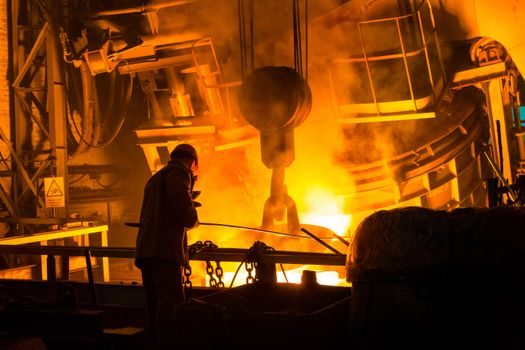
The structural chassis — Meehanite cast iron beds, polymer-concrete vibration-damped columns, and welded steel frames — is the slowest-moving tier on a machine tool BOM, with grey iron and ductile iron casting lead times of 16–28 weeks reported in mid-2026 across Chinese, Indian, and EU foundries. The bottleneck is not the iron pour itself but the rough-machining and stress-relief cycle that follows: large-bed stress relieving takes 4–8 weeks on its own to meet the ±0.01 mm/m straightness and squareness specifications that 5-axis machining centers require. [S1]
Buyers evaluating vertically integrated builders (Mazak, Okuma, DMG MORI) versus assembly-only integrators in 2026 should weight casting-bed ownership: a builder that owns its foundry and stress-relief ovens can hold casting cycle inside its own critical path, while an integrator buying beds on the merchant market is exposed to the same 16–28 week queue. This is a structural reason why the price spread between tier-1 Japanese, German, and Korean builders and tier-2 Chinese/Taiwanese builders has narrowed on 3-axis VMC specifications but widened on 5-axis simultaneous work, where the casting and assembly quality is hardest to substitute.
Tool magazine, ATC, and pallet changer: underrated queues
Tool magazine and automatic tool changer (ATC) subsystems are routinely underestimated in sourcing risk because they sit below the controller and spindle on the spec sheet, yet servo-driven cam-type tool changers from companies such as Gimus, Forkardt, and Lang Technik carry 20–32 week lead times in 2026 due to the same precision-bearing and pneumatic-clamp allocation that constrains the spindle stack. Pallet changers and linear-motor-driven trunnion tables add another 8–16 weeks for the rack-and-pinion or linear-motor stage and the cable-management chain. [S2]
For flexible manufacturing system (FMS) builders specifying 40–120 pallet work envelopes, the practical consequence is that the pallet pool, not the spindle, often sets the project critical path. A specification that decouples pallet capacity from ATC type — for example, a 6-station fixed table rather than a 12-station servo chain — can drop 8–12 weeks off delivery on a 2026 PO without changing the machine's metal-cutting envelope.
Coolant, chip conveyor, and the conveyor chain bottleneck
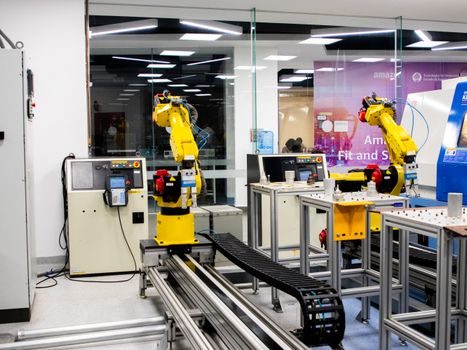
A frequently invisible constraint on a machine tool build is the chip and coolant handling subsystem: hinged-belt and magnetic conveyors, scraper chain conveyors, and conveyor chain drives sized to the spindle's kg/hr metal-removal rate. Heavy-duty roller chain drives for chip augers and swarf extractors share allocation with the conveyor chains used in stamping and silent chain drives used in packaging and assembly lines, so machine tool order intake can be throttled by a chain supplier that is also serving a different industry vertical. [S3]
The spec lever in 2026 is to size the conveyor and coolant system to the worst-case chip load rather than the average, then accept a longer conveyor delivery on a separate sub-order that can run in parallel with the machine build — chip handling is a 10–16 week lead-time item, but it is decoupled from the spindle stack and can be late-installed at the customer's site if the build schedule is held at the factory.
Cabinet, DC power supply, and switching power supply allocation
Inside the machine tool electrical cabinet, the DC power supply rails feeding servo packs, I/O, and the operator-panel HMI are themselves a constrained tier in 2026: 24 VDC and 48 VDC DIN-rail switching power supply units from Mean Well, Phoenix Contact, and Siemens SITOP are quoted at 10–18 weeks, with the queue driven by the same electrolytic capacitor and transformer allocation that constrains broader industrial power conversion. Fanuc, Siemens, and Mitsubishi typically ship the controller cabinet as a matched assembly, so the cabinet supply rides on the controller lead time; only on integrators and retrofit builders is the cabinet a standalone procurement line. [S4]
For buyers, the risk is on the ancillary 24 VDC supplies that drive the lubrication pump, coolant pump, chip conveyor inverter, and work-area lighting — these are commonly sourced separately and are an easy 4–6 week slip on the integration schedule. Holding two SKUs of spare 24 VDC supplies on the integrator's shelf is a low-cost insurance line that absorbs a single-supplier allocation event without delaying the customer's commissioning.
Downstream signal: orders softening, used-machine inventory rising
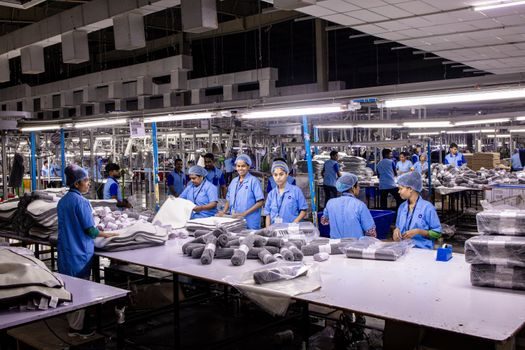
On the demand side, the 2026 machine tool order book has cooled versus the 2023–2024 peak, particularly in semiconductor capital equipment and EV battery cell production, while aerospace and medical-implant machining remain firm. Used-machine inventory at major auction houses has risen through Q2 2026, which is a leading indicator that lead times will compress in the 12–18 month window if the softening persists, but the supply chain of new builds is still running at queue depth set by the 2024 order wave. [S5]
The two trackable signals to watch through Q3 2026 are: (1) Japanese machine tool order data published by JMTBA and Gardner Intelligence's CNC Index, which will show whether the May–June softening extends or reverses; and (2) the German VDMA quarterly machine tool order intake, which leads European builder backlogs by roughly one quarter. Both are public datasets that map directly to the same controller and spindle queues that define machine tool procurement risk for the rest of 2026.