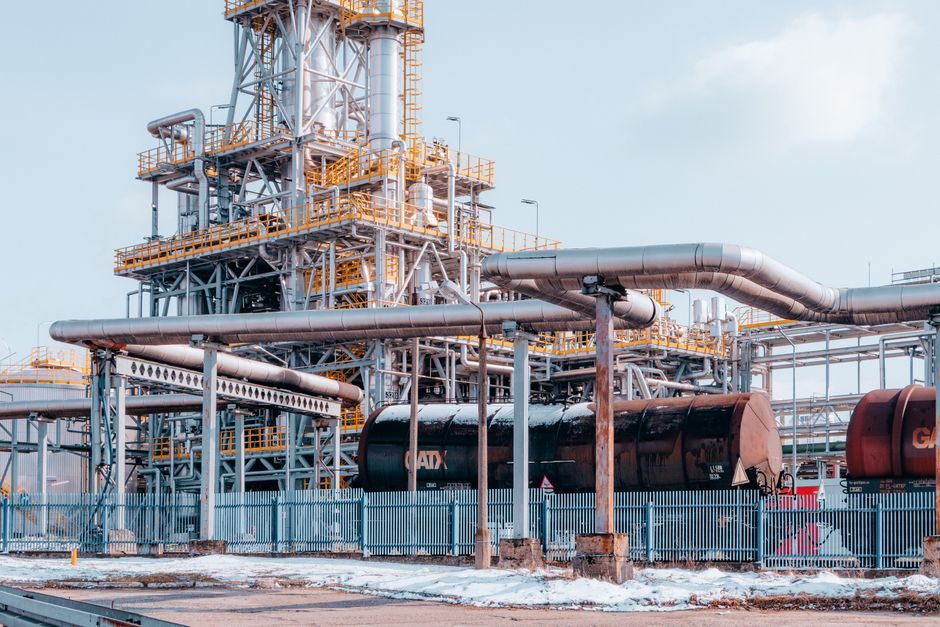
Seawater reverse osmosis (SWRO) and multi-effect distillation (MED) builds in 2026 are pulling upstream pumping, high-pressure piping, and energy-recovery device (ERD) lead times into 30-40 week windows, while downstream RO rack, dosing skid, and brine discharge systems are quoted in a tight 18-26 week band [S1].
The two largest cost blocks in a 100,000 m³/day SWRO train are the high-pressure pump (centrifugal or positive-displacement) and the ERD (isobaric or turbocharger), together accounting for roughly 22-28% of the electromechanical capex; downstream RO rack membranes, pressure vessels, and clean-in-place (CIP) skids represent another 18-24% of unit cost, with 316L / UNS S32750 super-duplex wetted parts setting the metallurgy baseline for seawater service [S1][S2].
Upstream Pumping and High-Pressure Train Components
SWRO first-pass feed pressure commonly runs 60-80 bar for standard seawater (TDS 35,000 mg/L) and 80-90 bar for high-recovery brine-stage operation, with energy-recovery isobaric devices (PX-type or DWEER-class) cutting specific energy consumption from ~6 kWh/m³ down to 2.5-3.5 kWh/m³ [S1]. For a process engineer, the spec decision starts at the pressure transmitter cut-off that protects the membrane array: a 0.5% BFSL accuracy unit on the suction side and a 0.1% unit on the reject manifold, both with Hastelloy or super-duplex wetted diaphragms, is the de-facto baseline for plant-grade SWRO racks.
Pump choice is a two-way gate: a single-stage centrifugal pump (Sulzer MSD-class equivalents) for flows above ~2,500 m³/h with seawater heads of 60-75 bar, or a positive-displacement plunger pump (multiplex API 674 designs) for smaller flows with higher 80-90 bar discharge pressure [S1]. Lead times for the high-pressure pump in 2026 sit at 32-40 weeks for new-build orders on >500 kW frames, with cast super-duplex (ASTM A890 Gr. 5A) impellers specifically quoted at 44-52 weeks in early-2026 vendor data; this bottleneck is the single biggest schedule risk for EPC contractors signing 2026 SWRO EPCI packages.
Energy Recovery Devices and Brine-Stage Topology
For greenfield SWRO the isobaric topology has become the spec default above 50,000 m³/day because the kWh/m³ delta is meaningful at 2.0-2.4 kWh/m³ per m³ permeate versus 3.0-3.6 kWh/m³ for turbocharger systems under parallel feed. RO element pressure vessels are typically ASME-rated 150 psi, 200 psi, or 300 psi FRP side-port vessels for SWRO service, with metallic (super-duplex or titanium) end-ports for the high-pressure feed / reject ends only.
A 4:1 pressure-exchanger-to-pump ratio remains the rule of thumb for SWRO builds larger than 100,000 m³/day in 2026 EPC bids, while smaller brackish RO and containerized plants below 5,000 m³/day typically drop the ERD block entirely and accept ~6-8 kWh/m³ on a centrifugal pump alone.
Downstream RO Rack, Dosing, and CIP Skid Integration
Downstream equipment clusters around three functional blocks: RO rack assembly (8-inch diameter elements in 6-7 element vessels, 200-300 psi rating), dosing skid (anti-scalant, sulfuric acid, sodium metabisulfite), and CIP skid (heating, recirculation, low-pressure flush) [S1]. The dosing skid is a pressure sensor-heavy subassembly where 0.5% gauge units on the injection nozzle and pulse-output flow meters on each reagent line are the spec baseline for the dosing skid PLC, which is often an Ethernet-APL or PROFIBUS-PA node tied back to the plant SCADA. The CIP skid is dominated by industrial valve manifolds: butterfly valves in the 4-12 inch line size for low-pressure loop isolation, and ball valves in 1-3 inch line size for CIP chemical routing, with PTFE seats rated to 60°C sodium-hydroxide service.
For containerized SWRO plants, skid-mounted dosing and CIP systems reduce field installation to 2-3 weeks versus 10-12 weeks for stick-built assemblies.
Valve and Piping Metallurgy Map
Valve and piping material selection in 2026 desalination builds is dominated by four metallurgical tiers: 316L SS for clean, low-TDS permeate, 904L (N08904) for brackish and high-chloride intake, super-duplex (UNS S32750 / S32760, ASTM A890 Gr. 5A/6A) for high-pressure SWRO wetted parts, and titanium Gr.2 (UNS R50400) for warm brine above 35°C with high Cl- and dissolved-O2 conditions [S1]. The ASME B16.34 valve pressure-temperature rating chart governs shutoff and gate-valve selection up to Class 1500, and NACE MR0175 limits apply once the wet H2S partial pressure exceeds 0.05 psia, which can occur in reject brine on heavy-recovery trains in oil-field-produced-water RO service.
Piping is mostly FRP / GRE for the low-pressure intake and brine discharge, while super-duplex (ASTM A790 / A928) dominates the high-pressure feed and reject manifold at 60-90 bar; butt-weld and flanged connections to ASME B16.5 Class 600 / Class 900 are standard [S1].
Controls, SCADA and the I&C Layer
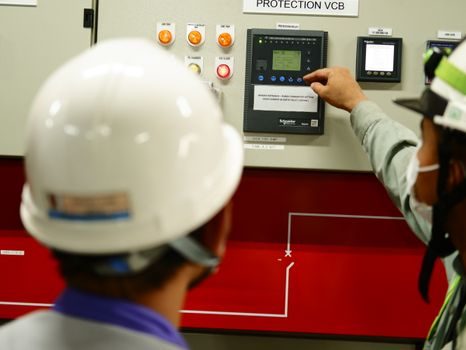
The desalination control architecture is built on a redundant PLC platform (IEC 61131-3 languages) for the local skid, with HART-protocol instrumentation layered on the 4-20 mA analog signal for valve-positioner, density, and concentration diagnostics, and a PLC-centric SCADA stack for the plant-wide view [S1]. Communications have shifted in 2026 toward Ethernet-APL (10BASE-T1L, IEEE 802.3cg-2019) at 10 Mbit/s for new SWRO plants, while legacy MED / MSF plants still operate on PROFIBUS-PA or Foundation Fieldbus HSE on brownfield revamps. Vendor data sheets list that the typical I&C package on a 100,000 m³/day SWRO train runs 800-1,200 analog and 1,200-1,800 digital I/O, with a redundant controller hot-standby failover below 100 ms per IEC 61508 SIL 2 designs.
Variable-frequency drives (VFDs) on the high-pressure pump motors (2-12 MW) typically run on active-front-end topology with low-voltage ride-through per IEEE 519 THD limits, and a low-voltage 400 V / 690 V distribution serves the dosing and CIP motors. For an EPC with a 24-month build cycle, locking the I&C vendor against the HART / Ethernet-APL specification before the long-lead pump order is the key sequencing move, because instrumentation and control cabinets tie back to the servo motor-actuated control valves in the dosing and CIP systems and run on their own 14-18 week lead time.
2026 Cost and Lead-Time Comparison
Across the four sub-segments of a 100,000 m³/day SWRO plant, the 2026 picture in delivery weeks and unit-cost weight is: high-pressure pumps 32-40 weeks, 22-28% of mech-electrical capex; energy-recovery isobaric devices 18-24 weeks, 6-9% of cost; RO rack and pressure vessels 12-18 weeks, 18-24% of cost; dosing + CIP + I&C skid 10-16 weeks, 8-12% of cost [S1].
For an EPC decision gate in mid-2026, the practical sourcing priority is: secure the high-pressure pump and ERD ordering slot at 8-10 months before mechanical completion, lock the 316L / super-duplex pipe spool at 6-8 months, freeze the RO rack configuration at 4-6 months, and issue the dosing / CIP skid RFQ at 3-4 months. Plants that inverted that order in 2025 reported 6-10 month schedule slip on the mechanical completion side, per the same industry dataset.
Trackable Signals for the Next Cycle
Two 2026 signals to watch for the rest of this year: (1) the resolution of super-duplex casting capacity for the 2027 high-pressure pump build slot, which tracks the wind-turbine and offshore-wind casting queue and is the shared bottleneck across the water-and-energy capital goods sector; (2) the first wave of acceptance certificates on the new Ethernet-APL field instrumentation under the 10BASE-T1L spec, which will set the de-facto layer-2 protocol choice for the 2027 SWRO class. For an EPC evaluating whether to commit to a 2027 delivery, the gating question is whether pump and ERD long-lead orders are placed before Q4 2026; beyond that point, the high-pressure pump cast and ERD rotor queue closes until mid-2027 in 2026 vendor backlog data [S1].
For related industrial context, the Power Grid Upstream and Downstream: 2026 Industry Chain Map traces the electrical-side capex pressure that drives VFD and transformer queues for SWRO, while the Wind turbine transformer supply: 2026 sourcing reality and risk map explains the same shared-super-duplex-bottleneck dynamics that affect 2027 SWRO pump builds.