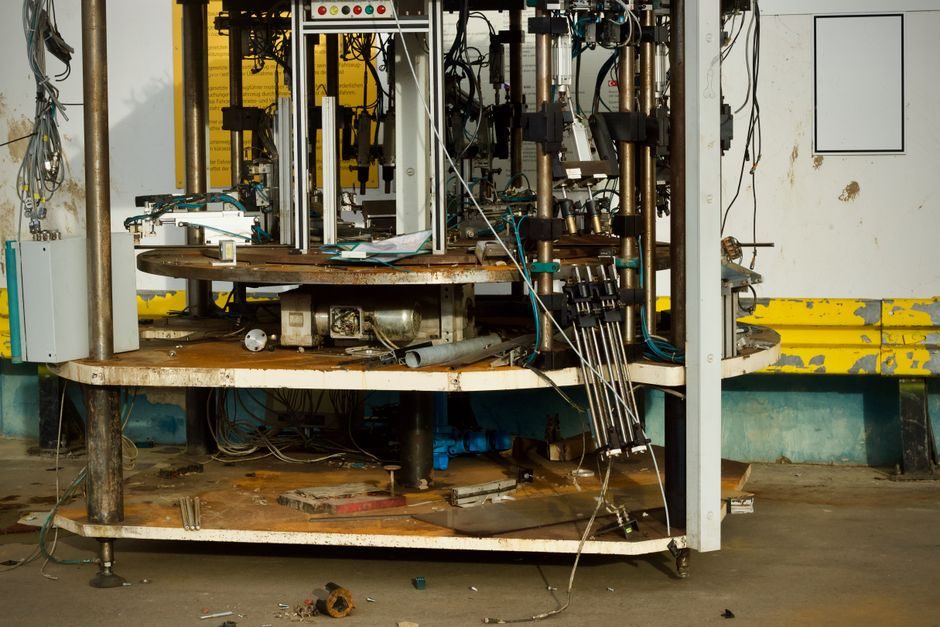
Magnesium die casting machines in the 2026 OEM catalog span roughly 300 kN to 9000 kN of locking force, with hot-chamber architectures dominating the 300-1600 kN band and cold-chamber cells carrying 1600-9000 kN structural and EV housing work [S1][S4]. Selection is driven by part projected area, alloy feed form (ingot vs liquid Mg), and shot weight per cycle, not by marketing tier.
Buyers evaluating a magnesium die casting machine in mid-2026 should treat the decision as a six-gate spec lock: locking force, shot system architecture, injection profile, die interface, controls, and safety/atmosphere. The market is mature enough that feature variance is now smaller than integration variance.
Hot-Chamber vs Cold-Chamber: Architecture Decides the Cell
Hot-chamber magnesium die casting machines integrate the gooseneck and shot plunger inside a sealed molten-metal bath, with cycle rates commonly 30-50% faster than equivalent cold-chamber cells on small thin-wall parts [S2]. For magnesium alloys such as AZ91D and AM60B, hot-chamber is the dominant cell type below roughly 1600 kN because the alloy's low melting point (~620 degC) and chemical affinity for iron make submerged-pump operation practical and durable [S1].
Cold-chamber die casting machines remain the only viable architecture for shot weights above ~4-6 kg and for any magnesium part that demands vacuum-assist or large structural geometry; the 2026 OEM map lists Bühler, Yizumi, Kurtz, Shibaura, OTTO JUNKER, and Lanson as the principal suppliers in this band, with Bühler alone carrying five listed magnesium-capable cells on the global catalog as of 2026-05 [S1].
Locking Force, Projected Area and the 4-Gate Sizing Logic
A practical magnesium-cell lock force gate uses projected area (cm^2) multiplied by an alloy-specific injection pressure: AZ91D and AM60B typically run 30-50 MPa, so a 600 cm^2 part at 40 MPa resolves to 2400 kN theoretical, then is upsized 20-30% for margin and flash safety, landing near a 3000 kN (300 tonne) machine class. This mirrors the same spec-first arithmetic used in Aluminum Die Casting Machine Sizing: A 4-Gate Spec-First Guide, except magnesium's lower density allows thinner walls and therefore smaller projected areas at equivalent stiffness. [S1]
Buyers should reject any quote that quotes tonnage without a stated injection pressure and fill-time target; OEM data sheets from the 2026 catalog index cells by kN first, shot weight second, and injection velocity third [S1]. Three concrete gates then sit on top: tie-bar spacing vs die footprint, platen daylight vs die stack height, and ejection stroke vs part draw depth. A 9000 kN cell with 1100 x 1100 mm tie bars can still reject a 1400 mm die.
Shot System, Plunger Diameter and Injection Profile

Magnesium shot sleeves on hot-chamber cells run 40-100 mm plunger diameters with stroke tuned so the fill fraction stays below ~75% of the chamber length; over-fill causes air entrapment and porosity that no vacuum stage will rescue [S2]. For cold-chamber magnesium work the sleeve is sized to the full shot plus 10-20% cushion, and shot velocities are commonly 2-4 m/s in the slow phase, 4-6 m/s in fast phase, with intensification pressure reaching 60-100 MPa for thin-wall EV cross-car beams.
Real-time profile control via closed-loop servo-hydraulic or servo-electric injection is now standard on every 2026 magnesium-capable cell from the listed OEMs; the differentiator is shot-to-shot reproducibility on flash and weight, where premium cells hold +/-0.5% weight Cpk while entry cells sit at +/-2% [S1]. For buyers comparing this to the aluminum die casting machine class, magnesium's lower specific heat allows faster intensification but demands tighter atmosphere control.
Atmosphere, Vacuum and Safety Stack
Magnesium melt protection typically uses a cover gas mix of SF6 alternatives (Novec/3M Novec 612 or HFC-134a blends) or pure argon/dry-air mixtures, with consumption scaled to cell size; a 4000 kN cold-chamber magnesium cell burns through cover gas at roughly 0.5-2 L/min in steady state [S2]. Vacuum-assist die casting drops entrapped gas below 5 mbar absolute and is required for any structural part that will see post-T6 heat treatment, since porosity above 1% volume fraction causes blistering above 200 degC.
Any quoted magnesium cell in 2026 must include melt-level interlocks, leak-test interlocks on the gooseneck, and a documented lockout sequence for the plunger; this is consistent with industry safety guidance for vacuum die casting machine cells where vacuum stages add mechanical and electrical hazard surface [S1]. Buyers should also verify the cell is rated for magnesium service, not just adapted from an aluminum platform, because crucible material and pump metallurgy differ.
Controls, Integration and Cell Footprint

2026 magnesium cells ship with PLC or industrial-PC controls (Siemens S7-1500, Beckhoff CX, or B&R X20 are common platforms in the OEM catalogs) and OPC-UA interfaces for MES tie-in [S1][S4]. Yizumi's 2026-05 product page positions YIZUMI CONNECT and LEAP-series closed-loop process monitoring as the headline control differentiator on its magnesium cells aimed at SERES and Baowu structural programs [S4].
Buyers planning a greenfield magnesium cell should budget 1.5-2x the machine footprint for melt handling, shot-end enclosure, robotic extraction, trim press, and inline X-ray or leak test; this is similar to the layout logic used in Low Pressure Die Casting Machine Suppliers: 2026 OEM Map, Spec Bands and Sourcing Reality and differentiates a tonnage price quote from a turnkey cell quote. Energy and air consumption per shot are the next two verification points once the cell is scoped.
Comparison Snapshot: 2026 Magnesium Cell Classes
Three practical magnesium machine classes line up against typical 2026 application bands: Class A hot-chamber 300-1600 kN for consumer-electronics and small structural brackets (cycle 6-12 s, shot 0.1-1.5 kg); Class B cold-chamber 1600-4000 kN for automotive seat frames, steering columns, instrument panels (shot 1.5-6 kg, cycle 30-90 s); Class C cold-chamber 4000-9000 kN for EV front/rear underbody, battery trays, and large cross-members (shot 6-15 kg, cycle 60-180 s) [S1][S4].
Trackable Sourcing Signals for the Next 6 Months
Two verifiable signals worth tracking into 2026 H2: the Yizumi SERES/Baowu magnesium program (LEAP and YIZUMI CONNECT branding on the OEM page as of 2026-05-22) signals continued Chinese-OEM push into structural magnesium cells above 4000 kN [S4]. Second, the 2026-05-30 DirectIndustry OEM directory listing still shows 13 companies and 52 products under "die casting machine," indicating catalog churn has been modest since the 2024-2025 cycle [S1]. Buyers should re-pull the OEM directory and magnesium-specific product pages at the next quarterly gate and re-bid any cell quote older than 90 days, since gravity die casting machine and zinc die casting machine cross-quotes can distort magnesium-specific tonnage pricing.