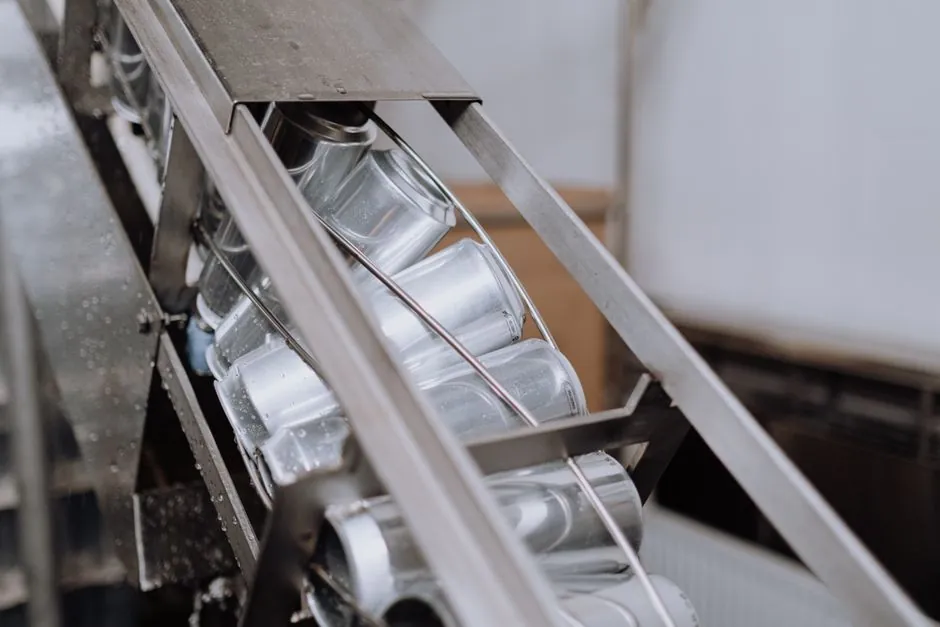
The answer is a split decision: automation can absorb the repetitive, factory-style tonnage that dominates automotive and structural beam lines, but it cannot substitute for human welders on the 6G pipe joints, confined-space refinery repairs, and one-off field assemblies where the AWS projects a 330,000-worker US deficit by 2028 [S1].
Heavy fabrication is where the gap hurts most. The American Welding Society (AWS) estimates that 320,500 new welding professionals will be needed by 2029, with more than 157,000 current welders approaching retirement age, while the European Welding Federation (EWF) reports a shortage of around 300,000 qualified welders across Europe [S4]. Robots handle identical, flat-position, high-volume joints in a controlled cell; field conditions, code-critical accountability, and physical access break that assumption every time a pipe goes into a trench [S1].
What Automation Already Wins, and Where It Loses
Fully-automated cells load, fixture, weld, and inspect parts with minimal human involvement, and they dominate mass-fabrication environments where the joint geometry repeats hundreds of times per shift [S5]. Repetitive MIG and spot welding in automotive plants, plus Ficep-style beam-line cutting and drilling in structural steel, are the segments that have already been converted: throughput rises, manual handling of heavy beams drops, and the same people produce more tonnage per shift [S2][S5].
Field welding is a different problem. Pipeline work happens on remote rights-of-way, in all weather, in every position including 6G, on 36-inch pipe joints with variable fit-up, wind, and temperature; refinery and pressure-vessel work happens in confined spaces on corroded joints that vary joint to joint and must pass X-ray inspection under code-critical regulatory standards [S1]. Those jobs pay USD 60,000 to 150,000, while the factory MIG jobs that robots absorb sit at USD 30,000 to 45,000, which is why losing the factory line to a robot does not free a welder to climb into a ditch [S1].
Cobot Welding: Multiplying the Welder You Already Have
Collaborative robots are positioned as augmentation, not replacement: the cobot holds torch angle, travel speed, and pattern while the skilled welder handles setup, fit-up variation, and quality decisions, with the documented effect of doubling or tripling the output of a single welder when one operator oversees multiple cells [S4]. Compared to fully-automated cells, cobot systems need a lower up-front investment, fit small and medium shops, and are far easier to introduce into a workforce that fears displacement [S5].
The productivity math is the lever. A cobot can run the consistent torch work for long stretches while the operator steps in only for the joint that varies, which is the standard pattern for bridging a welder shortage without the capex of a full robotic line [S4][S5]. Practical targets on semi-automated cells are documented at 1× to 3× output per operator, depending on joint mix and how much of the day is identical repetition versus judgment calls [S4].
Where AI Adds Value Beyond the Arc
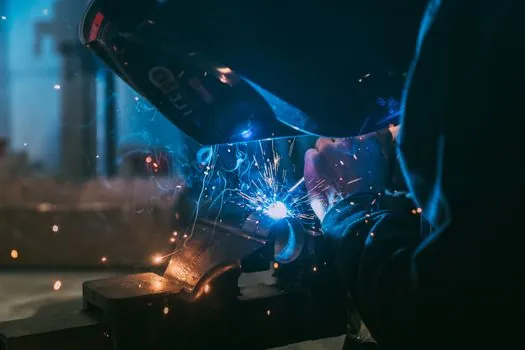
AI-powered weld inspection detects defects faster than manual visual inspection, raising first-pass yield and reducing rework hours that a tight welding labor pool can barely afford to schedule today [S1]. Augmented-reality welding helmets overlay heat input, travel speed, and arc length directly on the welder's view, acting as a consistency aid on long runs rather than a replacement for the human reading the puddle [S1].
AI is also being used upstream, in welding procedure development and material selection, and downstream in seam tracking and adaptive control on robotic cells [S1][S2]. For heavy fabrication, the practical value sits in inspection and adaptive control: a fabricator that cannot hire enough certified weld inspectors gets faster, more consistent defect detection, and a robotic cell gets the seam-tracking tolerance needed for the slightly variable joints that show up even in shop work [S1][S2].
Options Compared Against Heavy-Fabrication Decision Criteria
For a heavy-fabrication buyer choosing how to deploy capital against the welder shortage, four practical options line up against four criteria: capex per cell, flexibility on joint variability, fit for field/6G work, and productivity multiplier per existing welder. [S1]
Fully-automated robotic cells score low on capex efficiency and joint flexibility but high on throughput per shift, making them the right call only for high-volume, identical-joint production such as automotive sub-assemblies and repetitive structural components [S5]. Cobot welding cells land in the middle on capex, high on flexibility, and document 2× to 3× productivity per operator, which is the sweet spot for small and medium heavy-fabrication shops trying to cover a retirement-driven deficit without a full line rebuild [S4][S5].
Manual welding augmented with AR helmets and AI inspection keeps the highest flexibility and lowest capex, fits field/6G and one-off repair work that no robot can enter, but offers only modest per-welder output gains [S1]. Outsourcing or wage inflation alone provides limited relief, frequently increases operational cost, and does not address the structural 157,000-worker retirement wave, so most forward-looking shops treat it as a stopgap, not a strategy [S4].
Limitations, Failure Modes, and the Standards That Still Bind
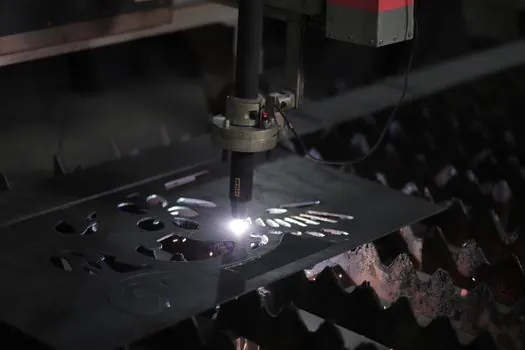
Welding automation has real failure modes that engineers have to plan around. Traditional industrial robots need specialized programmers, large-scale systems are often inflexible to mix changes, and the up-front investment can be significant enough to require rental or lease structures rather than direct purchase [S5]. Workforce resistance is itself a deployment risk: if the team reads the cobot as a replacement instead of a multiplier, adoption stalls [S5].
Code-critical work is still human-only. Refinery, pressure-vessel, nuclear maintenance, and structural field welds must pass inspection under regulatory standards, and a robot in a controlled cell cannot meet the joint-by-joint judgment those welds require [S1]. That is also why field pay scales are 2× to 4× factory MIG rates: the certification, the access, and the accountability have not been automated yet [S1].
What to Track Over the Next Two Quarters
Watch the AWS quarterly shortage updates against the 82,500-per-year and 330,000-by-2028 baselines, and the EWF tracking against its 300,000-welder European gap, since those are the demand-side numbers any capex case has to beat [S1][S4]. On the supply side, monitor cobot cell shipment data from the major automation vendors and any published updates to cobot welding productivity multipliers in mixed-joint heavy-fabrication cells, because the productivity-per-operator math is what actually closes the gap on the shop floor [S4][S5]. For readers new to the equipment side, the TIG welder and stud welder reference pages cover the process fundamentals that any automation spec has to respect, while the broader arc welder and electroslag pressure welder entries map where fully-automated cells have already displaced manual work.
For related coverage, see AFP vs ATL in Aerospace Composites Layup: Geometry, Throughput, and 2026 Market Sizing.