
A magnetic base drill and a rotary drilling rig solve fundamentally different problems: the magnetic drill is a portable annular cutter (typical mass 10-30 kg, magnet adhesion 800-2,500 kgf) for holes in structural steel, while a rotary drilling rig is a crawler-mounted foundation rig weighing 24,500-24,948 kg per published OEM data [S1][S3].
The two machines share the word "drill" and overlap on a rotating bit, but their hole diameters, depths, power classes, and feed mediums differ by orders of magnitude, and the right choice follows the workpiece and the ground, not the brand badge on the nameplate.
Definition and Operating Envelope
A magnetic base drill is a portable electro-permanent or electromagnetic machine that clamps to ferrous workpieces via a rear-mounted magnet and feeds an annular cutter or twist drill through the plate; the magnet base is the defining feature and the reason the tool can be operated on vertical steel, overhead beams, and tank shells where a vise is impossible. Common duty ratings are 1,100-1,800 W input with 3-12 speed mechanical gearboxes, magnet adhesion 8,000-25,000 N (roughly 800-2,500 kgf), annular cutter capacity 12-150 mm, twist-drill capacity up to 23 mm, and total mass 10-30 kg including the magnet base. [S1]
A rotary drilling rig is a heavy foundation rig that combines a rotary head, kelly bar or top-drive, crowd system, and crawler undercarriage to drill large-diameter holes into soil and rock for piling, diaphragm walls, anchors, water wells, and geothermal loops. Published OEM data shows the RTD28 with 95-152 mm hole diameter, 287-309 kW CAT C13 engine, 24,500 kg mass, and 20.6 m3/min @ 23 bar air supply for DTH work [S1]; the RTD45 raises that to 127-165 mm diameter, 30.97 m depth, 403 kW CAT C15, and 24,948 kg [S3]. The Casagrande FD Hydromill extends the envelope to 36-120 m depth with 2,800-3,150 mm excavation length for diaphragm wall panels [S2].
Decision Criteria and Capability Matrix
Four criteria decide between the two: workpiece material, hole diameter, hole depth, and the need for cuttings removal. A magnetic base drill works on ferromagnetic steel with thickness typically ≥6 mm and ≤50 mm depending on magnet pull, and uses an annular cutter that ejects a slug rather than chips, which keeps the work area cleaner. The maximum practical plate thickness for an annular cutter on a mag drill is the cutter's own cutting depth, generally 25-55 mm, so deeper work is either impossible or requires a step-cutter sequence. Twist-drill adapters on the same machine handle the 4-23 mm range on the same magnetic base. [S3]
Rotary drilling rigs handle diameters 95-165 mm in mid-class piling applications [S1][S3] and up to 2,800-3,150 mm in hydromill-class diaphragm wall work [S2], with depth ratings of 30-120 m depending on kelly-bar length and mast stroke. Drive options include direct rotary head with kelly bar, top-drive for continuous flight auger (CFA), and down-the-hole (DTH) hammer for hard rock using the 20.6 m3/min @ 23 bar air circuit documented on the RTD28 [S1]. These rigs also need a stable prepared pad or crawler-supported ground bearing, which a magnetic drill does not require at all because its reaction force is the magnet itself.
Who Each Machine Is For
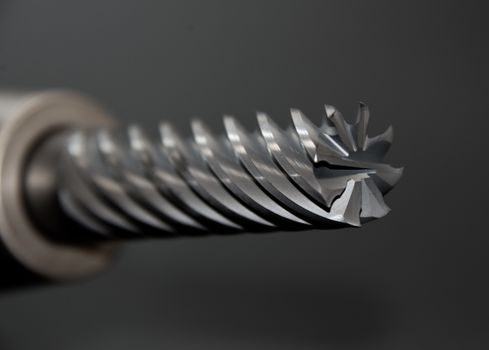
The magnetic base drill is for steel fabricators, structural erectors, shipyards, tank and boiler shops, field service crews, and any site that needs holes in plate or pipe where the workpiece cannot be moved to a drill press. It is not for masonry, concrete, or non-ferrous metal — the magnet will not clamp to aluminum or stainless in the way most operators expect, and the lack of ferrous contact means the safety release will not arrest a runaway cutter. [S3]
The rotary drilling rig is for civil and geotechnical contractors, piling subcontractors, geothermal developers, and water-well drillers. The RTD28 [S1] and RTD45 [S3] are DTH-class machines specified for blast-hole, anchor, and pre-split work; the FD Hydromill [S2] is specified for diaphragm walls in deep foundation and metro construction, not for steel fabrication. Buyers comparing core drilling machine suppliers in 2026 will see this same split: portable magnetic units sit in a different catalog bucket from rotary and hydromill rigs and rarely overlap on a bid.
Limitations, Failure Modes, and Standards Caveats
Magnetic base drills fail when the operator trusts the magnet more than the cutting load: a worn magnet face, paint or rust under the base, or undersized plate thickness drops adhesion sharply and the drill will skate or fall mid-cut. Most safety guidance is manufacturer-side rather than a single harmonized standard; the practical rules are 6 mm minimum plate thickness for typical adhesion, 25-55 mm maximum single-pass depth depending on cutter geometry, and a tether or guard against the rare but documented magnet-failure case. Cutter choice matters: HSS annular cutters handle mild steel, TCT or carbide-tipped cutters are required for stainless and harder alloys, and cutters above ~55 mm cutting depth are specialty items with reduced rigidity. [S3]
Rotary drilling rigs fail in the ways the OEM data hints at: the 2026 research on main-winch mast mount position documents that winch placement on the platform versus the lower mast changes axial and bending load distribution on the mast [S5], which translates directly into whether a 30.97 m drill string at 403 kW [S3] is being asked to do work the structure was not sized for. Air-supply limits cap DTH performance: the RTD28's 20.6 m3/min @ 23 bar envelope [S1] sets a hard ceiling on hole diameter and depth in hard-rock mode, and exceeding it stalls the hammer and burns compressor capacity. Tier III/IVf/V emissions compliance (CAT C13, C15 in the RTDrill data [S1][S3]) governs where the machine can legally operate, and that constraint is not a soft preference.
Sourcing and Selection Signals in 2026
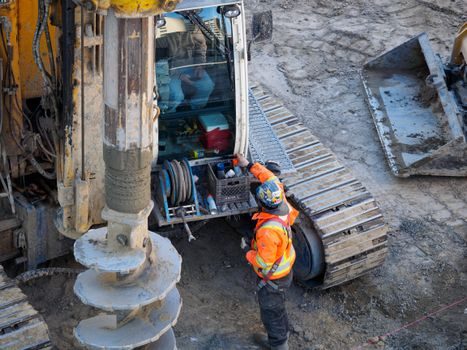
Procurement teams in 2026 should anchor on the spec sheet, not the brochure. For magnetic base drills, demand magnet adhesion in newtons, cutter capacity in mm, full-load current at the rated voltage, and a manufacturer statement on minimum plate thickness and on the safety tether or fall-arrest provision. For rotary rigs, demand hole-diameter range, maximum drilling depth, engine tier, air-compressor flow and pressure, kelly-bar length in meters, and the mast's rated crowd force and pullback, not just the headline horsepower. Cross-check vendor claims against the OEM data published on aggregator catalogs — the [RTD28 spec sheet](https://www.directindustry.com/prod/rtdrill/product-4600742-2688506.html) [S1] and the [RTD45 entry](https://www.directindustry.com/prod/rtdrill/product-4600742-2688508.html) [S3] are the cleanest public numbers in the current research set, and the [Casagrande FD Hydromill data](https://www.directindustry.com/prod/casagrande-foundation-division/product-57763-2418883.html) [S2] sets the diaphragm-wall benchmark.
Trackable signals to watch: Tier V engine availability rolling out across DTH-class rigs (RTD28 already lists Tier V in the OEM description [S1]), battery and cordless 36 V platforms closing the gap on 12-50 mm annular cuts in field service, and rotary-rig telematics reporting real-time crowd force and torque so the mast-stress question raised in the 2026 academic literature [S5] can be answered in production, not just in simulation. Procurement that insists on the spec-band numbers — 95-165 mm diameter, 30-120 m depth, 287-403 kW — will get machines that match the bid, and that is the only metric that matters on a foundation or steel-fab site.
For the relevant spec sheets and selection criteria, see impact drill, and mold base.