
Specifying lock nuts for shipboard service comes down to three independently scored variables, the substrate alloy, the locking mechanism, and the zone of the hull where the joint lives, because a fastener that survives the engine room will not necessarily survive the bilge or the propeller bracket [S1][S2].
For most saltwater marine work, 316 stainless steel and silicon bronze are the dominant substrate choices, with galvanized carbon steel and monel filling specialized roles; locking mechanisms split between nylon insert, all-metal prevailing-torque, and serrated flange, each with a distinct temperature and reusability profile that has to be checked against the actual service location [S2][S4]. A correct decision flows from matching those four variables to the operating environment rather than picking the most expensive or most familiar option. The companion reference on lock nut selection for marine use covers the same decision framework in standalone form.
Substrate alloys and what each zone actually demands
316 stainless steel (A4-80 / A4-70 grade range, with 18-8 as a milder budget alternative) is the default for marine hardware where continuous chloride exposure is expected, including above-waterline deck hardware, rigging terminations, and most below-waterline non-cathodic joints, with the recognized advantage being its resistance to pitting in salt spray versus 304-grade stainless [S2]. 304 stainless is widely used indoors and in freshwater hulls but has lower pitting resistance and is generally not specified for prolonged saltwater immersion [S2]. Marine-grade silicon bronze (commonly C651 or C655) is the historical choice for wooden-boat fastenings and below-the-waterline through-hull terminations, prized for galvanic compatibility with copper-alloy underwater hardware and a corrosion rate in seawater that has kept it in service for hull fastenings on wooden vessels for over a century; it is, however, softer and more expensive per fastener than 316 stainless. Hot-dip galvanized carbon steel is generally restricted to above-waterline, non-critical interior structural connections where zinc coating thickness (typically 2.0–3.5 oz/ft² in ASTM A153 class ratings for hardware-grade galvanizing) provides the corrosion barrier; once the zinc is cut or scraped, the underlying steel corrodes rapidly in saltwater, which is why galvanized lock nuts are not specified for through-hull or permanently submerged service. Aluminum alloy lock nuts (often 6061-T6 or 5052) appear on aluminum-hulled craft and on small outboard and personal watercraft to keep the fastener metal close to the hull metal and limit galvanic couple, and they are widely offered in deep-profile nylon-insert form for marine electronics enclosures [S8]. Brass and bronze lock nuts round out the catalog, mostly for legacy wooden-boat joinery and for plumbing penetrations where dezincification-resistant brass grades (DZR / CW602N) are the responsible pick in hot-water systems [S1].
Locking mechanisms: nylon insert vs all-metal vs serrated flange
The locking mechanism is an independent choice from the substrate and is what determines how the nut actually resists the Junker-effect thread slip that lets a plain hex nut walk off under lateral vibration [S4]. A nylon insert lock nut, commonly called a nylock, uses a polymer ring (typically PA66 nylon, sometimes PA6 or PA12) at the top of the nut to grip the bolt thread through interference; it is the lowest-cost reusable option, widely available in 18-8 and 316 stainless, and is the typical pick for marine accessory hardware, console mounts, and outboard bracket fasteners where repeated removal is not expected [S2][S6]. The nylon insert has a continuous service ceiling that is generally quoted around 120 °C for PA66 (lower than the substrate metal) and a useful life of roughly 5–10 reuse cycles before the grip ring loses interference; above that, the insert softens and the locking torque collapses, which is why engine-room and exhaust-adjacent joints are usually specified with an all-metal alternative [S3]. All-metal prevailing-torque lock nuts reach the same vibration resistance by deforming the female thread (top-formed, reduced-height, or distorted-thread geometries), so they have no polymer to melt or wear out, can be specified for higher-temperature service, and are typically rated for 15 or more reuses depending on the manufacturer’s prevailing-torque test data; Lok-Mor’s prevailing-torque lineup (HEX-LOC, TRI-LOC, C-LOC, DURA-FLEX, and the structural N-LOC and ANCO PN-LOC) is a representative heavy-industry example of that mechanism family, with the structural sub-family specifically intended for high-preload joints that need a free-spinning portion before final tightening [S1]. Serrated flange lock nuts add a washer face with radial teeth that bite into the mating surface, which gives a one-way anti-rotation lock; a marine application note describes stainless serrated flange nuts being used on aluminum-hull production boats where the bite into the painted substrate gives an extra anti-loosen step on top of thread friction [S7]. For high-vibration structural connections on shipboard (mast steps, drive-line mounts, engine bed bolts), the prevailing-torque all-metal nut is the conservative pick, and jam-nut pairs (two plain hex nuts tightened against each other) remain a legitimate reusable alternative when disassembly for service is on the schedule.
Thread size, grade, and the jam-nut pair as a reusable lock
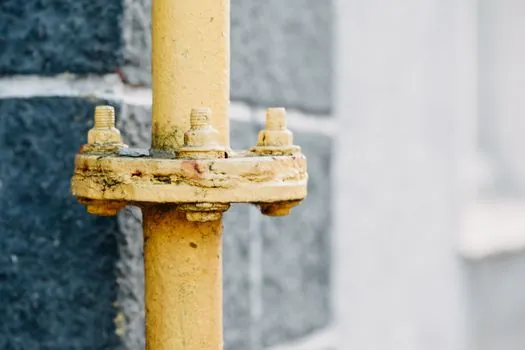
Thread fit, including diameter, pitch, and grade, is the variable most often mis-specified, and it is the one that determines whether a lock nut of any mechanism actually clamps the joint it is supposed to clamp [S2]. Marine work is overwhelmingly unified national coarse (UNC) or, for finer adjustment hardware, national fine (UNF); metric M-size lock nuts (M4, M5, M6, and up) appear on imported machinery and on small outboard hardware, and the size jump matters: some marine manufacturers switched from M4 to M5 nylon lock nuts on October 1, 2020, so a service replacement on a 2018-vintage boat may not accept a 2022-vintage part without re-tapping [S8]. Grade (SAE J429 grade 5 / grade 8 for steel, A2-70 / A4-80 for stainless) has to match the bolt grade or the joint is unbalanced, and a higher-grade bolt paired with a lower-grade nut is a common, easily missed mis-spec. Jam-nut pairs (sometimes called “thin lock nut” or “double nut” arrangements) are a different mechanism entirely: a regular hex nut and a thinner jam nut are threaded against each other so that the two are tensioned in opposite directions, locking the assembly through opposing thread preload rather than through an insert or deformed thread; thin-pattern jam nuts in 18-8 stainless, in sizes such as 1/4-28, are sold specifically for marine and instrument-panel service where a low-profile reusable lock is wanted [S6]. The advantage of the jam pair is that both nuts are standard hex geometry, so they are inexpensive and indefinite-reuse, but installation takes longer because the inner nut has to be set to a controlled position before the outer jam nut is torqued against it. Plain hex nuts carry the lowest per-unit cost and remain the right choice where vibration is low, the joint is large, and disassembly is expected; the engineering cost of adding a lock nut where one is not needed is paid in install time, fastener cost, and reusability loss, not in joint performance [S4].
Decision matrix: substrate × mechanism × zone
The cleanest way to lay the choice out is as a three-axis pick. For above-waterline deck hardware (cleats, stanchion bases, lifeline terminals), 316 stainless with a nylon insert is the typical default, and the 120 °C nylon ceiling is irrelevant because the joint never sees that temperature. For splash zone and below-waterline through-hulls and anode hardware, silicon bronze or monel is the conservative pick because the fastener is fully wetted and often paired with copper-alloy underwater components; nylon insert is acceptable on the bronze fastener because the temperature profile is mild and the joint is rarely disturbed. For engine-room and exhaust-adjacent joints, all-metal prevailing-torque lock nuts in 316 stainless or grade-8 steel are the correct mechanism, and nylon inserts should be ruled out because the sustained ambient temperature can approach or exceed the PA66 softening point. For aluminum-hull craft, 6061-T6 or 5052 aluminum lock nuts are used in deep-profile nylon-insert form to keep the fastener metal matched to the hull and avoid a galvanic couple, and 316 stainless is paired with a dielectric isolation washer when it has to be used on an aluminum substrate [S7][S8]. For structural high-preload joints (mast steps, engine mounts, drive couplings), the free-spinning structural lock nut families such as ANCO PN-LOC and N-LOC, which spin freely onto the bolt and lock only at the final prevailing-torque portion, are the heavy-industry answer [S1]. A summary comparison of the three mechanism families against the four decision criteria a marine buyer actually scores:
Limits, failure modes, and what the standards do not cover
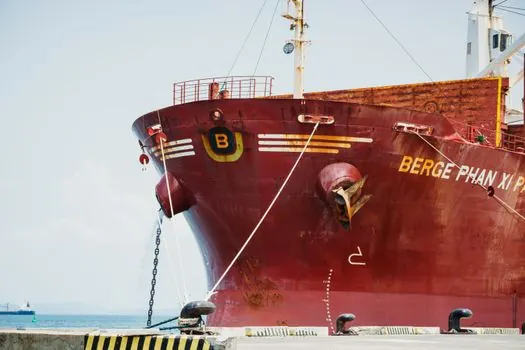
Lock nut failure in marine service is almost always one of three failure modes, and each one maps to a different design error. Loss of preload through Junker-effect thread slip happens when a plain hex nut or a worn-out nylon insert is used in a true high-vibration location; the cure is a prevailing-torque all-metal nut, not a higher torque value, because the loosening is a thread-interface friction problem rather than a torque-target problem [S4]. Galvanic corrosion happens when dissimilar metals are coupled through a wet joint without isolation, for example 316 stainless through an aluminum hull without a dielectric sleeve, or a zinc anode missing from a bronze-through-hull group; the cure is substrate matching or isolation, not a better lock nut. Nylon softening happens when a PA66 insert lock nut is used near an engine, exhaust manifold, or in any joint that sees sustained heat above roughly 100–120 °C; the cure is an all-metal mechanism. Standards coverage for marine lock nuts is thinner than for the bolts they pair with: ASTM F594 covers 316 stainless nuts, ASTM A153 covers hot-dip galvanized coating, and ISO 7040 / ISO 10511 cover prevailing-torque type nylon insert nuts, but the “marine” performance is really a service-condition story, not a single named standard, and the responsible specifier matches the substrate standard to the mechanism standard and to the zone. Marine valve and piping work uses lock nuts at flange studs and at instrument ports, and the same substrate-and-mechanism logic that drives hull hardware drives marine valve and industrial valve hardware selection on board. For vessel HVAC, lock nuts secure duct and condensing-unit hardware in the same salt-laden air that attacks deck hardware, and the marine HVAC envelope inherits the same 316-versus-304 substrate decision.
Sourcing signals and trackable next steps
Two signals are worth tracking into the next quarter. First, published 2026 fastener guidance continues to push buyers toward 316 stainless for any continuous saltwater exposure, with the 304-versus-316 decision now standardly framed as 316 being the marine default and 304 reserved for freshwater or protected interior service [S2]. Second, all-metal prevailing-torque lock nut lines from US and European manufacturers (Lok-Mor’s prevailing-torque and structural families are a current example) are being specified into shipbuilding rather than the nylon-insert default, reflecting the growing share of engine-room and high-vibration structural joints in modern vessel builds [S1]. For a buyer, the next actionable step is to pull the existing BOM and flag any nylon-insert lock nut sitting on or near an engine, exhaust, or steering-system joint, because those are the locations where the next failure will originate. A related reference for shop-floor material selection in adjacent marine systems is the Nylon (PA) selection for marine engineering grade map, which is useful when the lock nut insert itself is the engineering question rather than the surrounding metal.