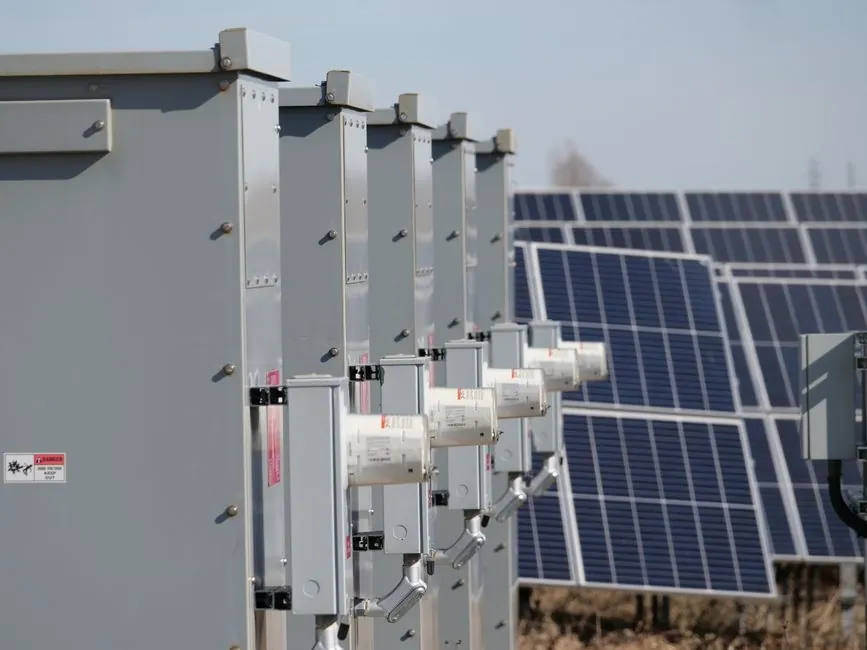
Low-voltage motor control centers are built as modular assemblies of withdrawable buckets fed from a common horizontal bus, and the 1000 A class of unit is now the workhorse for chemical, water, and heavy-manufacturing plants, with rated bus currents between 630 A and 4000 A and short-circuit withstand values typically quoted at 25 kA or 65 kA for 1 s [S3][S5].
Selection flows from four numbers: site fault level, total running FLA, the largest single motor's locked-rotor current, and the IP/IK environment. Get those wrong and the rest of the engineering is decoration. For readers new to the bus, the term motor control center is fully unpacked in our reference entry, while the bus architecture that ties it all together is described under lighting equipment and electric lamps cross-references for IEC 61439-1 assemblies.
Bus Sizing: Icw, Rated Current, and the 25 kA Baseline
The 1000 A reference MCC analysed on EEP uses a 380/220 V at 50 Hz system, 1000 V insulation level, and a 25 kA short-circuit current capacity (Icw) on the main bus, with RAL 9003 epoxy-powder sheet-steel construction at IP54 [S5]. Main bus ratings in commercial low-voltage MCCs are commonly offered at 630 A, 800 A, 1000 A, 1250 A, 1600 A, 2000 A, 2500 A, 3200 A, and 4000 A, with a vertical bus typically rated lower (200-800 A) to feed individual buckets [S3].
Two non-negotiable checks before you approve a bus rating: the upstream transformer's short-circuit MVA must produce a peak let-through below the bus Icw, and the Icw must be tested for the same duration as your protection grading study (typically 1 s for IEC 61439-1 assemblies). If your site has 65 kA available fault, specifying a 25 kA bus is the fast path to a catastrophic bus burnout during a downstream bolted fault. Ratings and the broader architectural decisions are mapped out in the related MCC selection guide: bus, bucket, and standard choices reference piece.
Bucket Sizing: NEC 430.62 for Multi-Motor Feeders
For a feeder MCC bucket feeding multiple motors, NEC 430.62 requires the breaker rating to be not less than 125% of the largest motor FLA plus the sum of the remaining motor FLA values, a formula that maps to a 60 A breaker for a 30 HP / 5 HP / 3 HP / 1 HP group totalling 44.25 A [S1]. A second, more conservative method doubles the largest FLA and adds the rest, giving 80.25 A and selecting a 100 A breaker for high-inrush compressor or loaded-conveyor duty [S1]. The 1.5x largest + sum of others (62.25 A, 70 A breaker) sits in between and suits fan or blower duty with moderate starting torque [S1].
Each motor still needs its own branch-circuit protection per NEC 430.52: a 5 HP motor is typically fed from a 15-20 A breaker (about 250% of FLA), a 30 HP unit uses a NEMA Size 3 starter at 80-100 A, and fractional-horsepower motors share 15 A breakers. The right starter topology matters too: direct-on-line for small motors, star-delta or soft starter for anything above roughly 7.5 kW where the utility or the driven equipment cannot tolerate a 6x inrush, and a variable frequency drive where speed control is part of the process scope [S3][S4].
Fixed, Withdrawable, and Intelligent: Which Bucket Type Fits Which Duty
Three bucket configurations dominate the market. Fixed (or bolt-in) buckets are the lowest-cost option, suited to non-critical process loads where a planned shutdown is acceptable for any bucket maintenance. Withdrawable (draw-out) buckets slide on rails so a single unit can be serviced with the rest of the section live, which is the standard requirement for water treatment, hospitals, and continuous-process lines where uptime is contractually binding [S3].
Intelligent or "smart" MCCs layer Modbus, PROFIBUS, or Ethernet/IP comms onto each bucket so the starter reports voltage, current, thermal state, and trip history to a PLC or SCADA host [S3][S4]. The 1000 A reference unit integrates continuous grid-stability monitoring and localised power metering at every soft-starter feeder, a representative smart-MCC feature set [S5].
Standards, Environment, and Arc-Flash Safety
IEC 61439-1 is the governing assembly standard for low-voltage MCCs in most non-North-American markets, while NEMA ICS-18 covers the equivalent constructional requirements in the US [S3]. Indoors, IP42 is the typical minimum; IP54 is specified for dusty, humid, or wash-down environments, and the Prisma-platform 1000 A reference unit is built to IP54 as standard [S3][S5]. For outdoor MCCs, NEMA 3R or IEC 60529 IP54 enclosures with integral space heaters and sun shields are typical.
Arc-flash risk dominates MCC safety discussions because work is routinely performed on energised equipment. Remote-racking pendants, arc-resistant construction, and bucket designs that allow insertion and removal with the door closed all push the operator outside the arc-flash boundary [S4]. Live-front working without these mitigations should be considered unacceptable on any MCC installed after 2020. The fundamental design choices for the broader switchboard family that feeds an MCC are covered in our best distribution cabinet for power generation: 2026 spec map companion article.
Selection Criteria Comparison: Bucket Type vs Duty

Choose the bucket type against four decision criteria: process criticality, mean time to repair, budget, and digital-integration scope. Fixed units win on price and footprint, typically 15-25% cheaper per bucket, but lose on live maintenance. Withdrawable units double that maintenance access without a section shutdown, and are the default for any single MCC feeding more than 20 motors in a continuous process. [S3]
A quick reference matrix: for non-critical batch duty on a tight capex, spec fixed; for water/wastewater or any 24/7 line, spec withdrawable; for plants already running a plant-wide SCADA with Ethernet/IP and an asset-management system, spec intelligent and amortise the premium against unplanned downtime. The same NEMA Size 3 / IEC equivalent starter package is reusable across all three bucket types, so the choice is largely mechanical and digital, not electrical.
What an MCC Is Not For, and Common Sizing Mistakes
An MCC is not the right product when you only have one or two motors to feed, when the load is predominantly lighting and small power rather than motors, or when the site fault level exceeds the standard 65 kA bus offerings. In those cases, a motor distribution board, a power distribution panelboard, or a custom switchboard is usually cheaper and faster to deliver. [S3]
The most common sizing error is selecting the main bus on running current alone without checking the Icw against the site's short-circuit contribution. The second is undersizing the vertical bus because the running load looks modest, ignoring that 8-10 motors starting within a 2-second window can pull 4-6x the steady-state current. The third is neglecting ambient temperature derating: bus bars in a 45°C plant room cannot carry their nameplate current, and the manufacturer must be told the real ambient and the real grouping so the rating is not silently invalidated.
Inspection, Thermography, and Lifecycle
An MCC inspection should run a torque check on every accessible bus connection to the OEM-specified value (typically 35-50 Nm for M10/M12 connections), infrared thermography under at least 60% loaded conditions, and a mechanical exercise of every withdrawable bucket to verify racking interlocks still latch correctly [S6]. Overload relays are the highest-failure component, and a spare set per ten active buckets is a reasonable stocking level for any plant running more than 50 starters.
Two signals worth tracking into late 2026: the IEC 61439-1 framework continues to push type-tested assemblies, and the next revisions are tightening the documentation that must ship with each MCC. Vendors selling untested "partial" assemblies without a tested design will increasingly lose bids on this point. For plants, that means demanding the design-verification report, not just a nameplate, before accepting a new low-voltage MCC. Track that document through procurement as the spec-side check that the bus, bucket, and standard choices actually match your short-circuit study on paper.