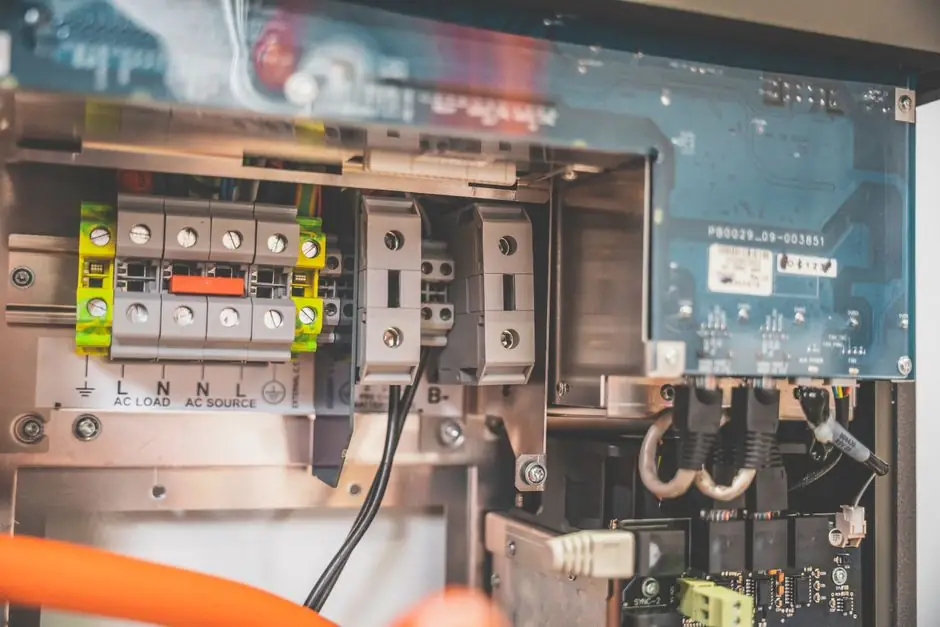
An MCC is a centralized, floor-standing assembly of one or more enclosed sections with a shared horizontal power bus, where each motor gets its own bucket holding a contactor, overload relay, disconnect, and increasingly a VFD or soft starter [S1][S5].
Specifying the right one comes down to four decisions: the bus rating, the short-circuit withstand level, the bucket type, and the standard you build to, because a mis-sized bus or undersized Icw is the single most common and most expensive mistake in retrofit work [S3][S5].
MCC Architecture and the Role of the Bus
Each vertical section of an MCC is fed from a common horizontal power bus and a vertical distribution bus, the architecture that became standard for 480 V industrial service in low-voltage motor control center designs [S1]. Copper main busbar is the standard backbone, distributing power across all vertical sections, with the horizontal bus carrying the incoming feed and the vertical bus tapping down into each bucket [S1][S4].
Rated bus current typically runs 630 A to 4000 A for industrial MCCs, while a 1000 A low-voltage reference design documented in mid-2026 was rated 380/220 V at 50 Hz with a 1000 V insulation level, 25 kA short-circuit current capacity, and IP54 enclosure protection on a Prisma platform with eight soft-starter branches [S2]. That reference design also integrated a thermostatically controlled cooling network to manage heat from the power electronics inside the enclosure [S2].
Fixed, Withdrawable, and Intelligent MCC Comparison
Three bucket architectures dominate, and the right one depends on whether your process can tolerate a planned shutdown. Fixed-type MCCs have all components permanently mounted inside the cubicle, are simpler, lower cost, and suit applications where planned shutdowns are acceptable [S3]. Withdrawable (draw-out) MCCs let each bucket slide in and out on rails so one circuit can be serviced while the rest of the panel stays live, the right choice for water treatment, hospitals, and continuous manufacturing [S3]. Intelligent MCCs (iMCC) replace hard-wired relay logic with microprocessor or PLC-based control and add Modbus, Profibus, or Ethernet/IP communication for real-time current, power factor, and temperature monitoring [S3][S4].
A criteria-based comparison: on uptime, withdrawable and iMCC tie for the top spot because both let you service a circuit without a full lineup shutdown; on cable volume, iMCC wins because a single serial bus replaces thousands of point-to-point wires; on first-cost, fixed-type MCCs are the cheapest; on diagnostic depth, iMCC leads with real-time current, power factor, and winding temperature data; on repairability by a general electrician, conventional hard-wired MCCs still score best because no proprietary tool is needed to trace a fault [S4]. For a primer on the control components that populate the bucket, see the entry on control panel component, and for how the bucket interfaces with a plant-wide control system, the PLC control reference covers the network and I/O side.
Matching Specs to Your Load List

Five specifications on the nameplate decide whether an MCC fits your site. Rated voltage is typically 380 V, 400 V, or 415 V at 50 Hz in most non-North American markets, with 480 V at 60 Hz common in the US [S3]. Rated bus current must cover the sum of your motor feeders with growth headroom; common ratings run 630 A to 4000 A [S3]. Protection degree should be at least IP42 indoors and IP54 in dusty or humid environments, with the 1000 A reference design above hitting IP54 on a sheet-steel Prisma enclosure with RAL 9003 epoxy powder finish [S2][S3]. Short-circuit withstand rating (Icw) must match your site's calculated fault level; the reference design above specifies 25 kA, but higher ratings exist for heavier networks [S2][S3]. Standards compliance should be confirmed to IEC 61439-1 and IEC 61439-2 for most markets, or to UL 845 in North America, since UL 845 is the certification specific to motor control centers and is distinct from general panel fabrication standards [S3][S5].
The starting method inside the bucket is a separate decision that affects both bus loading and component cost: Direct-On-Line (DOL) starters are the simplest and cheapest but draw 6 to 8 times full-load current at start; star-delta starters reduce that inrush at the cost of reduced starting torque; soft starters ramp voltage to give a controlled acceleration; VFDs add variable speed and the largest energy savings, since a motor running at 60% speed uses meaningfully less power than one running full-bore [S3][S5][S6]. A 1000 A reference MCC published in June 2026 used eight soft-starter branches specifically to manage the smooth, controlled acceleration of heavy mechanical loads, illustrating how soft starters have displaced many star-delta designs in higher-power applications [S2].
Who Should Skip the Standard MCC and Why
Not every facility should buy a conventional MCC. A plant with only one or two motors will not recover the engineering and bus-cost premium of a multi-section lineup, and a standalone control cable run to a local starter is cheaper in that case [S5]. A site with no planned expansion and no need for centralized motor protection can often keep individual starters without losing much operational value, and a facility whose loads are predominantly non-motor (lighting, HVAC control, small receptacle circuits) is better served by a power distribution board than an MCC [S3].
Hazardous-area applications also push the spec in a different direction: oil and gas sites in Jubail, Yanbu, and similar refinery clusters need explosion-proof or increased-safety enclosure designs rather than a standard IP54 indoor lineup, and the bucket layout must integrate with the site's process control and access control philosophy rather than be specified as a standalone item [S4]. If your process already runs on a tight uptime budget but your maintenance team has no PLC or network experience, an iMCC will under-deliver on its diagnostic promise, and a conventional withdrawable MCC will be the more reliable choice until the team is trained [S4].
Installation, Commissioning, and Sourcing Signals
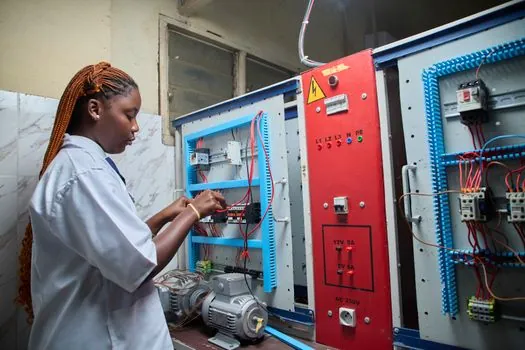
A proper installation starts with a load assessment that catalogs every motor the MCC will serve: horsepower, voltage, starting characteristics, and whether each load needs simple on/off control or VFD-driven variable speed, because this single step determines bus sizing, bucket count, and enclosure dimensions [S5]. Buckets are then wired, labeled, and tested individually before the whole assembly ships or is built on-site, and every bucket is tested again at commissioning to verify the right motor starts, stops, and protects correctly, with VFD parameters and PLC or SCADA communication validated at the same time [S5].
Two trackable signals worth watching: the global MCC market was valued at USD 6.57 billion in 2025 and is projected to reach USD 12.91 billion by 2034 at a CAGR of over 8%, which lines up with broader industrial digitalization programs such as Saudi Vision 2030 that are pulling iMCC adoption forward in large process plants [S3][S4]. For plant engineers weighing a retrofit now, the practical question is not whether to centralize, but whether the existing load list and three-year expansion plan justify a fixed, withdrawable, or intelligent architecture, and that is the same question a control valve or process control specification forces on the instrumentation side of the same project. Related reading on industrial equipment selection: cobot sizing and selection: a 3-30 kg payload, ISO/TS 15066-aligned spec map and concrete pump truck specs for port and terminal concrete placement.