
Distribution cabinet sourcing in 2026 is a two-track market: Chinese OEM factories (Xi'an Huadian, Canwin, Xuzhou-based Tuo Jie) ship XL-21, GGD, and box-type substation cabinets at 10(6) kV or 35 kV primary / 230/400 V secondary with three-phase ratings up to 2500 kVA [S1][S2][S4], while custom sheet-metal fabricators in the US/EU build NEMA 4X and IP54-IP66 enclosures to UL 508A with busbar power ratings from 200 to 2000+ kW and 8-12 week OEM lead times [S5].
Buyers specifying across both tracks have to reconcile Chinese factory catalogues (GGD, XL-21, MNS, drawer cabinets, photovoltaic grid-connected switchgear) with Western NEMA/IP/Ingress-Protection language; the underlying physical article is the same, but the cert stack differs. For a deeper walk-through of the spec axes, see the How to Choose a Distribution Cabinet: Spec Map for 2026 companion piece.
Operating envelope: 50/60 Hz, 2500 kVA, -25 to 40 °C
Canwin publishes one of the clearest environmental envelopes in the segment: AC 50(60) Hz, three-phase maximum rated capacity 2500 kVA (single-phase 833 kVA, generally not recommended), indoor or outdoor mounting, pole-mount permitted at 315 kVA and below, ambient temperature not higher than 40 °C, not less than -25 °C, maximum daily average 30 °C, maximum annual average 20 °C, relative humidity ≤90% at 25 °C, and altitude ≤1000 m [S2]. Huadian adds a 50/60 Hz electric control cabinet line targeting electrical system management, which sits on the same frequency band [S1].
These limits are the practical derating floor for Chinese-built LV distribution cabinets. Any installation above 1000 m altitude, below -25 °C, or in condensing humidity >90% requires either a derating calculation or a switch to a climate-controlled / IP66 enclosure built outside the standard catalogue.
Three supply lanes: OEM, transformer-integrated, custom sheet metal
Lane 1 is the Chinese OEM assembly line. Huadian's catalogue covers XL-21 power distribution cabinets, GGD AC low-voltage switchgear, photovoltaic grid-connected switchgear, PLC control cabinets, distribution boxes, drawer cabinets, and box-type substations, all anchored to a 6/10/35 kV primary architecture [S1]. Canwin pairs the cabinet with its own dry-type and oil-immersed transformers, so the same vendor can ship transformer + cabinet + box-type substation as a matched train [S2]. Xuzhou Tuo Jie (electricinchina) layers on amorphous-metal dry-type transformers, CE/CSIT/Southern & State Grid prequalification, and DC power distribution panels for utility buyers [S4].
Lane 2 is the Western custom fabricator. Safefaber positions itself as a sheet-metal OEM/ODM shop running UL 508A enclosure engineering, NEMA 4X sealed gaskets, IP54/IP65/IP66 ingress ratings, heavy-gauge carbon-steel or 304/316 stainless construction, polyester powder coat (>1000 h salt spray), busbar power rating 200-2000+ kW, DIN-rail modular grids, gland-plate cable entry, and an 8-12 week OEM production lead time [S5]. Lane 3 is the bare fabrication shop, for example Sheet Metal MFG, which builds reinforced frames, separator plates, busbar support brackets, access doors and gland plates to the cabinet OEM's drawings rather than selling a finished electrical product [S3].
What "electrical distribution cabinet" actually contains
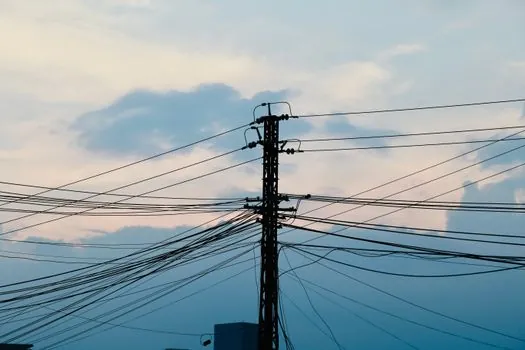
Per Canwin's definition, an electrical distribution cabinet is the part of an electrical system whose task is to distribute electrical energy; it includes distribution, protection, measurement, control and signaling instruments, plus wires, insulation and support components [S2]. Huadian extends the same definition into an "electric control cabinet" / "electrical enclosure cabinet" framing aimed at housing and protecting electrical control equipment in industrial and commercial applications [S1].
For a process engineer, the practical content is busbars (solid copper or lightweight aluminium per Safefaber's option list), DIN-rail-mounted modular circuit breakers, knockout and gland plate cable entry, copper earthing studs plus a structural grounding busbar rail, and a 3-point heavy-duty latching mechanism on concealed anti-tamper hinges [S5]. The distribution cabinet encyclopedia entry walks through the canonical internal layout; the cable distribution cabinet variant shifts focus to multi-cable entry and gland-plate density. For motor-heavy plants, the MCC cabinet is the section-distribution sibling, and the lighting equipment and electric lamps reference covers the lighting-distribution downstream.
Selection criteria by site condition
Indoor, dry, clean (control rooms, electrical rooms): a catalogue XL-21 or GGD from a Chinese OEM is the default; 2500 kVA three-phase, IP30-IP54, standard cold-rolled steel, polyester powder coat, and CE / State Grid prequal are sufficient [S1][S2][S4]. Outdoor, coastal, or chemical atmosphere: jump to Safefaber's 304/316 stainless with >1000 h salt-spray powder coat, IP65/IP66 gasket, labyrinth water-shed channels, and continuous robotic polyurethane gasketing [S5]. Altitude >1000 m, ambient below -25 °C, or humidity >90%: the Canwin envelope [S2] no longer applies without derating, so the spec must call out the override conditions explicitly to the OEM.
For solar EPCs and photovoltaic grid-connection work, Huadian's photovoltaic grid-connected switchgear and PLC control cabinet lines are catalogue items designed for that duty cycle [S1]; for utility substation work, a box-type substation pairing the cabinet with a dry-type or oil-immersed transformer on the same vendor is the lower-risk path [S2][S4].
Limitations and failure modes to spec against
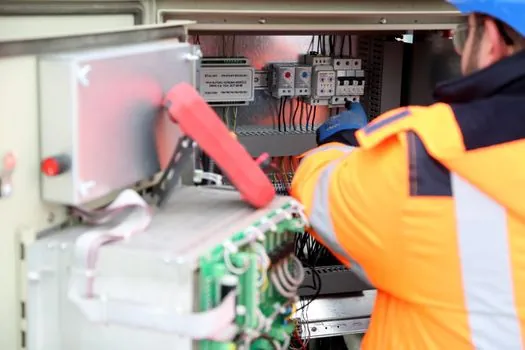
Three failure modes dominate the warranty returns in this segment. First, condensation inside unsealed enclosures: the Canwin 90% RH at 25 °C ceiling is a steady-state limit, not a condensing-duty rating, so any outdoor or wash-down location needs IP65+ with labyrinth water-shed channels, not just a gasketed door [S2][S5]. Second, thermal runaway on high-amperage busbars: Safefaber runs calculated heat-rise simulations and forced-air cooling channels, and rates its busbars at 200-2000+ kW, meaning undersized ventilation is the most common cause of nuisance tripping [S5].
Third, corrosion at the gland plate and hinge interface. The polyester powder coat plus >1000 h salt-spray test plus 3-point latching and concealed anti-tamper hinges are a system, not à la carte items; specifying IP66 but accepting a painted MS hinge is a known leak path [S5]. Buyers who treat the enclosure as a parts list rather than a tested assembly typically inherit the warranty. For plants building out motor-control rooms alongside the LV switchgear, the construction machinery and equipment and lamps and light fittings references cover the adjacent MCC and lighting-distribution spec gates.
Standards, sourcing, and what to verify before PO
Confirm the cert stack in writing: CE, CSIT, Southern & State Grid prequal for Chinese OEMs [S4]; UL 508A enclosure engineering plus NEMA 4X gasket plus IP54/IP65/IP66 ingress test report for Western custom shops [S5]. Pin the operating envelope numerically, not verbally: 50/60 Hz, ≤2500 kVA three-phase, ambient -25 to 40 °C, altitude ≤1000 m, RH ≤90% at 25 °C [S2]. Specify the enclosure material and finish together (304/316 stainless + polyester powder coat + >1000 h salt spray) rather than as separate line items [S5].
Trackable signals to watch: (1) whether the Chinese OEMs start publishing matched IP66 / NEMA 4X equivalents of XL-21 and GGD as a stock catalogue item, or only as an RFQ-driven upgrade; (2) whether Western custom shops compress the 8-12 week OEM lead time [S5] as Chinese box-type substation lead times normalise post-2024 transformer bottlenecks; (3) whether UL 508A third-party inspection becomes a default line item on Chinese-exported enclosures into North American EPCs. For buyers cross-spec'ing against solar EPC work, the Sourcing Solar Cells from China: 2026 Spec, Cert, and Supplier Map and Solar Glass Sourcing from China: Spec, Cert and Supplier Map references sit on the same supply-chain axis.