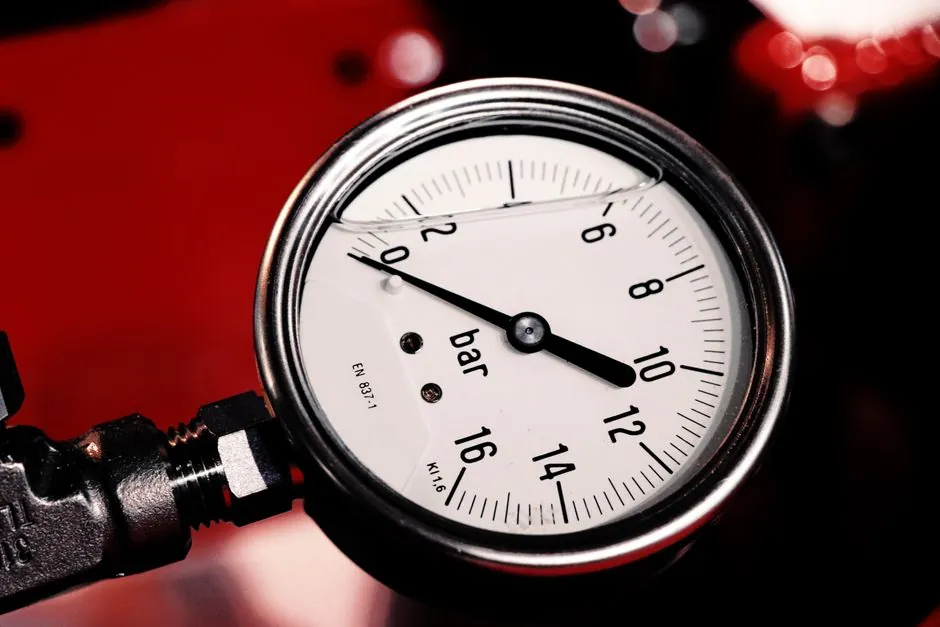
Industrial measuring instruments sit in two distinct but coupled value chains: a shop-floor dimensional-metrology chain (calipers, micrometers, height gauges, vision measuring machine systems) feeding machining, tool-room, and QC functions, and a process-instrumentation chain (pressure, flow, level, analytical) feeding chemical, water, and power plants [S1][S2].
Distributor catalogues published in July and August 2026 show the two chains are converging around common digital protocols, IIoT gateways, and cloud dashboards, even when the underlying physics stays purely mechanical or purely analogue. The same vendor footprint that ships a 300 mm digital caliper also quotes an electromagnetic flow meter with HART or Modbus output, a fact buyers should exploit when consolidating approved-vendor lists.
Dimensional metrology upstream: where hand tools come from
The hand-tool upstream chain runs precision balls, linear encoders, hardened steel, and LCD or OLED sub-assemblies into CNC grinding, laser etching, and calibration cells, with most finished calipers, micrometers, and dial indicators shipping in the 0.01 mm to 0.001 mm resolution band [S1][S4]. YAMAYO India lists 18 hand-tool sub-categories on its 2026 catalogue page, from calipers and height measurement through to Shore hardness testers, sound level meters, digital tachometers, and infrared thermometers, demonstrating the breadth a single mid-tier distributor now covers [S1].
Ukraine-based MICROTECH, in operation since 1995, has layered custom stands, special-purpose jigs, and bespoke measuring tools on top of its standard range, and now publishes a multi-language storefront (English, Ukrainian, Spanish, German) that signals an export orientation well beyond its domestic base [S4]. The combined catalogue, roughly 30-plus classic product lines plus NDT accessories, gives procurement teams a workable consolidation target: one PO, one calibration certificate regime, one RMA path.
For QC engineers, the practical spec gate on hand tools is unchanged in 2026: IP65 ingress on shop-floor digital calipers, 0.5 µm spindle-thread accuracy on shop micrometers, and DIN 863 / ISO 3611 compliance for resolution and repeatability claims. Distributors rarely print the standard number on the product page, so buyers should request the test certificate and a recent calibration-traceability document before release.
Process instrumentation downstream: where the recurring revenue lives
Downstream, the value chain inverts: a pressure transmitter cell, a magnetic flow tube, or a contacting conductivity probe ships as a small fraction of the plant cost but drives the entire control loop, and the aftermarket is dominated by spare-parts and re-calibration spend. HSA ASIA (Petaling Jaya, Malaysia, founded 2009) lists electromagnetic, ultrasonic, thermal-mass, energy, open-channel, and acoustic-Doppler flow metres on a single 2026 product tree, alongside contacting and non-contacting level, water analytical (process, portable, lab, oil-in-water, auto-sampler), and fixed/portable gas detection [S2].
For a single wastewater-treatment upgrade, the same Malaysian distributor will quote a BD Sensors pressure transmitter, a YSI multiparameter sonde, and a Palintest photometer, the kind of one-stop bill of materials that historically required three separate vendors. Plant engineers should map their instrument-to-standard matrix before issuing the RFQ: electromagnetic flowmeters to ISO 5167 or its magnetic-flow equivalent for installation straight-run requirements, Coriolis and ultrasonic to API MPMS Chapter 5 for custody transfer, and gas detectors to IEC 60079-0 / IEC 60079-1 for hazardous-area zoning, all of which are routinely demanded by EPC contractors in 2026.
The competitive split inside this downstream chain is stable: electromagnetic flowmeters dominate conductive liquids above roughly 5 µS/cm, ultrasonic clamp-on devices keep gaining ground on retrofits where pipe cutting is unacceptable, and Coriolis meters remain the default for mass-flow-critical applications despite a 3-5x price premium over magnetic equivalents. Endress+Hauser, Emerson Rosemount, Krohne, Yokogawa, and ABB hold most of the global installed base; HSA ASIA's Tokyo Keiki and BD Sensors lines slot into the mid-tier and integrator-favoured segments in Southeast Asia [S2].
Selection criteria: matching instrument to application
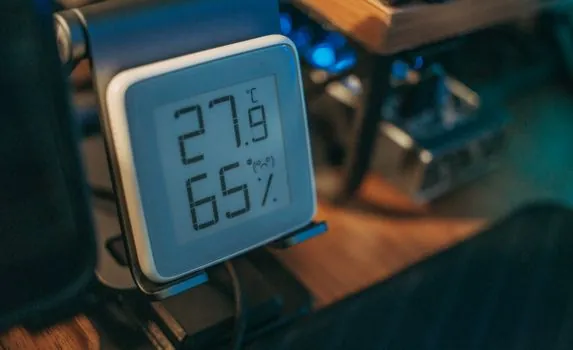
Four criteria reliably separate the right instrument from the wrong one in 2026: media compatibility, accuracy class, signal protocol, and hazardous-area certification. Media compatibility rules first: magnetic flowmeters need a conductive, mostly water-based liquid; ultrasonic Doppler requires particulates or bubbles above a threshold; Coriolis tolerates clean liquids, slurries, and most gases but adds a 2-3% pressure drop at typical line sizes. Choosing on protocol alone, e.g. insisting on Foundation Fieldbus when HART-over-4-20-mA is already wired, wastes both capex and engineering hours. [S2]
HART remains the dominant smart protocol in 2026 plant upgrades; Foundation Fieldbus and PROFIBUS PA are largely retained for legacy greenfield sites.
For dimensional metrology, the analogous four-criteria filter is: resolution, repeatability, IP rating, and probe/contact geometry. A 0.01 mm digital caliper with IP65 is the shop-floor default; a 0.001 mm micrometer with a 2.5 mm spindle pitch belongs in a temperature-controlled QA room; and a contour measuring machine with stylus radii from 2 µm to 200 µm is justified only when profile tolerance bands drop below roughly 10 µm [S1][S4].
Distributor landscape and sourcing channels in mid-2026
YAMAYO India, established 1995 and exhibiting at Pune Machine Tool Expo 2026 (7-10 September 2026, stall B106), is a representative mid-tier hand-tool distributor for the Indian subcontinent and SAARC markets, with a catalogue that crosses from vernier calipers into Shore hardness, sound level, and digital tachometry [S1]. MICROTECH has run 30 years of measurement-solution R&D from a Ukrainian base, signalling resilience of the Eastern European precision-tool cluster despite supply-chain disruptions of the early 2020s [S4].
In Southeast Asia, HSA ASIA's Selangor-based operation is unusual in being a privately owned, single-vendor-agnostic instrumentation house that stocks flow, level, water analytical, gas detection, and pressure lines side by side, including I/O and data-logger components from Metasphere and M-System plus meteorology and green-energy channels from Awite, Weber Entec, and Binder [S2]. For the 2026 buyer, that breadth converts to shorter RFQ cycles and a single calibration-coordinator relationship. CENS.com, a Taiwan-anchored B2B sourcing platform, lists inspecting/measuring instruments under machinery category M2069 and surfaces OEM listings such as the Precaster EL70 Ergline laser distance meter (20-record memory, LCD backlight) and the Yang Shing PM600 process monitor, both typical of the cross-border OEM-tier components reaching South and Southeast Asian shop floors [S3].
Atlantic Sales and Service in India takes a different, complementary angle: 40-plus years in industrial test and measuring instruments plus electronic components, with a current product line heavily weighted to EBM-Papst AC axial and centrifugal cooling fans in the D2E160, G2E160, G2E133, R2E220, R2K150, and W2E142 frame sizes, plus the REC 3x56S2W and W2E200 housings [S5]. That overlap between instrumentation and thermal-management sourcing is one of the more useful 2026 patterns: instrument cabinets and analyser shelters need both measurement and forced-air cooling, and consolidating the two line items with one vendor often beats splitting them.
Failure modes and field constraints engineers actually hit
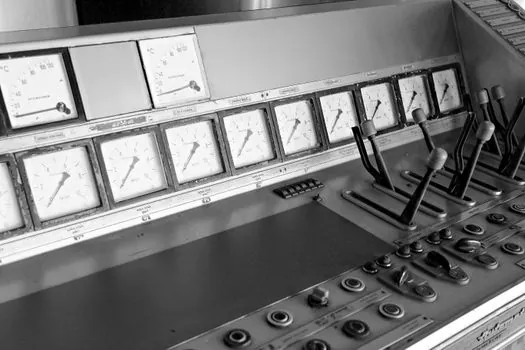
Hand-tool failures in 2026 are dominated by three repeat offenders: battery compartment corrosion on IP54-class calipers used in coolant-heavy cells, spindle-thread wear on micrometers driven past 0.25 N·m torque, and encoder-strip contamination on height gauges stored without dust covers. The fix is procedural, not technical: torque-limiting micrometer ratchets, weekly battery-condensation checks, and a documented 6-month recalibration interval aligned to ISO 9001 clause 7.1.5 monitoring resources. [S1]
Process-instrument failures show a different pattern. Electromagnetic flowmeters fail when the lining, usually PTFE or hard rubber, is attacked by solvents outside its chemical envelope, when electrodes (Hastelloy, titanium, tantalum) suffer erosion in slurries above roughly 5 m/s, or when the grounding rings are omitted on lined pipes. Ultrasonic clamp-on units fail when old pipe scale decouples the acoustic path, when gas entrainment exceeds roughly 2% by volume, or when the coupling gel dries out in outdoor service. Coriolis meters fail when the balance of the flow tubes drifts due to coating build-up in fatty-acid or caustic service, requiring periodic zero-verify against a blocked-valve reference. Pressure transmitters, the pressure transmitter class that often decides whether a plant trips or not, see the bulk of their field failures in the impulse line (water hammer, freeze damage) rather than in the sensor itself.
For hazardous-area zones, the discipline is unchanged in 2026: Ex d flameproof enclosures for Zone 1, Ex e increased safety for terminal compartments, Ex i intrinsic safety for loop-powered 4-20 mA field devices, all under ATEX 2014/34/EU in Europe and IECEx globally. Vendors publishing only "ATEX" or "IECEx" without the equipment protection level (EPL Ga, Gb, Gc, Da, Db, Dc) on the data sheet should be sent back for clarification before purchase-order release.
Standards, traceability, and the 2026 sourcing checklist
Engineers sourcing measuring instruments in 2026 should anchor every line item to a named standard and a calibration-traceability chain. Dimensional metrology defaults to ISO 3611 (vernier and digital calipers), ISO 4381 and DIN 863 (micrometers), ISO 13225 (plain plug and ring gauges), and ISO 10360 for vision measuring machine acceptance tests. Process instrumentation defaults to ISO 5167 (orifice and other differential-pressure flow elements), ISO 4064 / OIML R49 (cold and hot water meters), API MPMS Chapter 5 (custody transfer), IEC 61511 for safety instrumented systems, and IEC 60079-0 / IEC 60079-1 for hazardous-area certification of the instrument housing. [S1]
Calibration traceability should run to a national metrology institute: NABL in India, NIST in the United States, NIMT in Thailand, SIRIM in Malaysia, NMIM in Ukraine, with certificates that quote the standard, the measured values, the expanded uncertainty (k=2), and the environmental conditions at test. A 2026 RFQ template worth standardising reads: "Quote per ISO [number] / IEC [number] / API [chapter]. Provide traceable calibration certificate from [national institute]. State accuracy class, repeatability, and turndown ratio. Confirm ATEX/IECEx EPL for hazardous zones."
For buyers cross-shopping between distributors like YAMAYO, MICROTECH, HSA ASIA, CENS-listed OEMs, and Atlantic Sales, the realistic 2026 watch-list covers three signals: emergence of more IIoT-native SKUs with on-board MQTT or OPC UA, deeper hazardous-area certification on mid-tier brands to compete with the top five process vendors, and tighter lead times on Coriolis and pressure transmitter lines as EPC backlogs normalise. Related sourcing-side reading on instrument-adjacent lines is in the cutting-tools suppliers map for 2026 and on driver cost dynamics in the diesel generator set pricing 2026 brief.