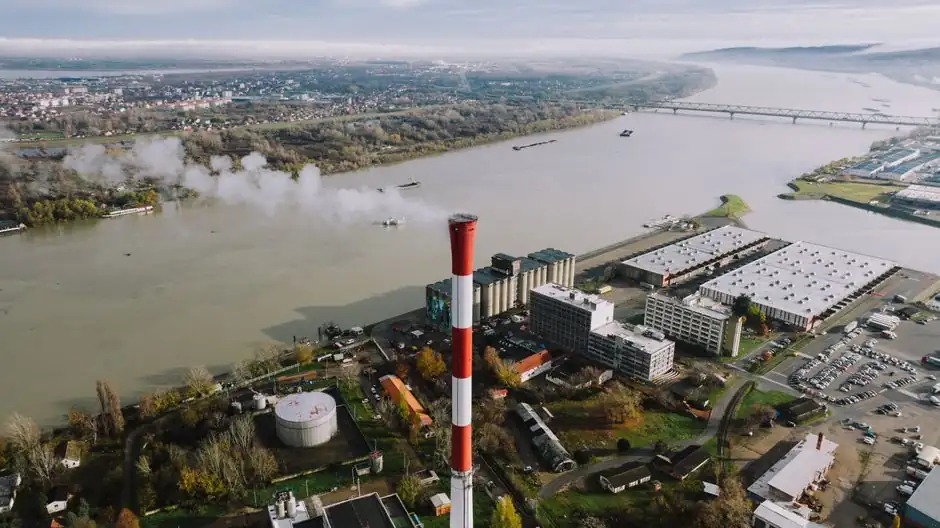
Hypersaline refinery wastewater fed to a hollow-fibre MBR (HF-MBR) followed by a reverse-osmosis (RO) polishing stage delivered 82% COD, 89% BOD5, 98% total suspended solids, 99% volatile suspended solids, 99% total dissolved solids, and 98% turbidity removal over a 6-month continuous run on Arak refinery influent [S1]. The 2015 dataset is still the reference benchmark for refinery-side MBR/RO trains, and it is the starting point for any 2026 specification on waterproof-membrane and separation media selection upstream of the RO rack.
On the demand side, FLOWTECH CHINA 2026 will occupy more than 60,000 m² at the National Exhibition and Convention Center, Shanghai, on June 9-11, 2026, gathering over 1,200 brands across pumps, valves, intelligent water supply, drainage, pipes and fittings, and dedicated membrane and digital-water zones [S2]. That footprint is the clearest 2026 commercial signal that pump-and-valve suppliers (the membrane plant's upstream) and RO skid builders (the downstream reuse and discharge market) are being courted at the same venue, which compresses the historical gap between feed-water and finished-water sourcing [S2].
What sits upstream of the membrane rack: feed-water chemistry and pre-treatment
The Arak influent used in the 6-month HF-MBR/RO study was real hypersaline refinery wastewater, with hydraulic retention time and flux varied as the main operating handles, and the immersed ultrafiltration stage sized to absorb suspended-oil load before the RO bank [S1]. For a comparable brackish or produced-water feed, three pre-treatment gates dominate: suspended solids (target ≤1 NTU turbidity at the RO inlet, consistent with the 98% turbidity cut reported across the train), free-oil and grease (drives the choice between a corrugated coalescer and a dissolved-air flotation stage), and oxidation-reduction potential (sets the chlorine tolerance of polyamide RO elements, typically requiring bisulphite dosing above 0.5 mg/L free chlorine).
Specifiers building the upstream train for hypersaline refinery or petrochemical service should lock the following engineering facts: a 6-month pilot window is the minimum evidence base for oil-fouling rate claims [S1]; flux normalised to litres per square metre per hour (LMH) is the cross-vendor comparison unit on RO data sheets; and any pressure-transmitter on the feed, inter-stage or concentrate line must survive the chemical-cleaning-in-place regime, which routinely uses pH 1-12 caustic and acid cycles and 1,000-2,000 mg/L sodium hypochlorite soaks on stubborn biofouling.
What sits downstream of the membrane rack: reuse, discharge and brine handling
Downstream of the membrane train the value chain splits into three buyers: industrial reuse (boiler feed, cooling-tower make-up), potable reuse (typically requiring an advanced-oxidation polishing stage), and zero-liquid-discharge brine concentrators. The Arak pilot pushed the RO permeate to 99% TDS rejection and 98% turbidity removal, the operating envelope that allows the permeate to ride directly into a low-pressure boiler feed or a cooling-tower basin without further softening [S1]. For discharge to a municipal outfall, the same permeate quality maps onto typical biochemical oxygen demand caps of 10-20 mg/L and total suspended solids caps of 30-50 mg/L used in Chinese and Middle East refinery permits, although the exact numeric limits must be taken from the site permit, not extrapolated from the pilot abstract [S1].
Brine handling is the other downstream gate. A hypersaline RO at 70% recovery generates a concentrate at roughly 3-4× the feed salinity, which forces the next decision: a brine concentrator (mechanical vapour compression, 95-99% water recovery) or a crystalliser (yields solid salt for landfill or resale). For the membrane plant itself, the downstream instrument chain typically includes a conductivity transmitter on the permeate line (target ≤10 µS/cm for high-pressure boiler feed), a pH sensor on the concentrate, and a lighting-and-lamp-rated inspection point inside the RO vessel for safe element change-out under confined-space entry rules.
Comparison of the four mainstream membrane formats on the upstream-downstream gate
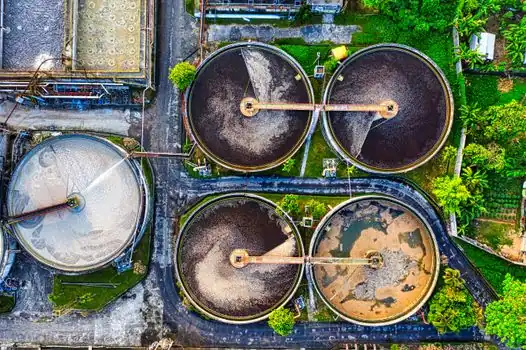
Four formats dominate the 2026 membrane procurement slate, and each lands differently on the upstream feed and downstream reuse side.
On a four-criteria comparison, MF scores low on dissolved-species removal but is the cheapest LMH and the easiest CIP, UF scores high on oil and TSS rejection and pairs with MBR biology, NF scores high on hardness and partial desalination at lower pressure than RO (typically 4-10 bar vs 10-30 bar for brackish RO), and RO scores highest on TDS and organics but is the most sensitive to chlorine and the most energy-hungry per cubic metre of permeate. For a hypersaline refinery train the realistic answer is UF followed by RO, which is exactly the sequence in the Arak dataset [S1].
Who the membrane plant is for, and who it is not for
A membrane plant of this topology is built for sites with continuous, high-volume water throughput, a defined reuse or discharge specification, and a tolerance for chemical cleaning once or twice a month: refinery and petrochemical complexes, large district-municipal plants, semiconductor and pharmaceutical pure-water makers, and food-and-beverage plants that need boiler-feed or process-water quality. The Arak pilot ran for 6 months without a reported element change, which is a reasonable proxy for a minimum operating window in this service envelope [S1].
It is not the right answer for a low-flow, intermittent or highly variable feed (a sequencing batch reactor with cartridge filtration is usually cheaper and simpler), for a site with no concentrate or brine outlet (no membrane train is viable without a discharge path, a brine concentrator, or an evaporation pond), or for a buyer that cannot accept the 0.5-1.5 bar permeate-side backpressure that an RO element imposes on downstream piping. Process engineers scoping a new build should also confirm the upstream pump room can deliver a stable feed pressure (typically 1-3 bar at the membrane skid inlet for UF, 10-30 bar for brackish RO) before locking a membrane format, otherwise the heat-treatment-furnace-and-vessel supplier and the membrane supplier end up arguing about surge pressure at commissioning.
Real use cases: Arak refinery, FLOWTECH 2026 buyer flow, and the digital-water overlay
The Arak case is the most-cited real hypersaline refinery dataset in the open literature and is the closest 1:1 reference for any 2026 Middle East or Indian refinery RFQ, with 82% COD and 98% TSS removals still anchoring the engineering expectations a decade later [S1]. FLOWTECH CHINA 2026, co-located with WATERTECH CHINA, ECOTECH CHINA, INTENV CHINA and BUILDEX CHINA, packages the same supply chain into one venue and adds a Digital Water zone and a "Little Giant" niche-innovator hall, which is where most of the membrane-side instrumentation and smart-valve deals are now written [S2]. The 14th Shanghai International Pump Valve Exhibition format effectively fuses the upstream pump-and-valve world with the downstream membrane-and-digital-water world, and the 80+ professional forums on site are where the cross-discipline RFQ language gets normalised [S2].
For specifiers, a third use case is the digital-water overlay: an online-water-analyzer on the RO permeate line (conductivity, pH, ORP, free chlorine) is now a default line item, not an option, and the same vendor typically supplies the upstream raw-water analyser, which compresses the calibration and data-history burden onto a single platform. Sites that ignore that consolidation tend to inherit two SCADA streams and a chronic spare-parts mismatch at the lab.
Failure modes, constraints, and what to track next
Three failure modes dominate the field after a year of operation, and each one is traceable to a specific gate in the upstream-downstream chain. First, fouling: oil breakthrough on the immersed UF, typically within 4-8 hours of an upstream separator upset, drives the transmembrane pressure up by 200-400 mbar and forces a chemical clean; the Arak dataset avoided that by running the immersed UF as a true MBR with biomass, but a refinery without a stable biological load cannot replicate that protection [S1]. Second, scaling: calcium carbonate and barium sulphate scaling on the RO tail element, controlled by an antiscalant dose of 2-5 mg/L and a recovery ceiling of 70-75% on typical brackish feeds, is the most common cause of a 10-15% flux loss in the first 12 months. Third, chemical attack: chlorine above 0.1 mg/L on a polyamide RO element causes irreversible flux loss, which is why the upstream dechlorination stage (sodium bisulphite or granular activated carbon) is non-negotiable, and why an online water analyser on the RO feed is the cheapest insurance on the skid.
For 2026 sourcing, track two signals: the FLOWTECH CHINA 2026 exhibitor list when it is published in the run-up to the June 9-11 show, which is the cleanest read on which pump and membrane brands are pairing for the next 12-18 months [S2]; and the publication cadence of follow-up HF-MBR/RO datasets on real hypersaline refinery feed, since the 2015 Arak paper is now a decade old and the 2026 buyer is asking whether modern polyamide chemistries and energy-recovery devices have shifted the operating envelope [S1]. The mining roller bearing selection 2026 spec gate analysis is a useful parallel reference on how a different heavy-industry buyer is now writing the same kind of criterion-based sourcing document.