
Mesh belt conveyor selection for chemical shipping depends on four binding decisions: stainless-steel grade (304 vs 316), weave type (balanced, flat-top, chain-edge), drive configuration (sprocket positive-drive vs friction-driven), and belt-tensioner arrangement, per OEM product literature published in July 2026 [S1][S4].
Chinese manufacturers including Anping Dinghe Wire Mesh and Alex Wire Mesh publish conveyor mesh belt product lines specifically covering chemical, petroleum, rubber, and plastics industries alongside food, electronics, and logistics duty cycles [S1][S4]. Conveyor mesh belt is described as widely used in electronics, logistics, tobacco, iron and steel, automobile, food, and wood-handling applications, with chemical shipments falling into a higher-corrosion subset of that envelope [S1].
Stainless-Steel Grade and Wire Material
Stainless Steel Wire Mesh is produced from first-class stainless-steel wire materials in grades SUS302 and SUS304, with 316 grade and higher nickel-molybdenum variants offered for corrosive media, per Anping Dinghe Wire Mesh product literature (2026-08) [S1]. For chloride-bearing cargo, phosphoric acid intermediates, and brackish rinse zones, 316/316L is the practical default because of its 2-3% molybdenum addition that resists pitting corrosion in chloride-rich environments; 304 is acceptable for dry chemical transfer and ambient-temperature detergent service where chlorides stay below 200 ppm [S1].
Wire diameter commonly spans 0.6 mm to 4.0 mm for conveyor mesh belt constructions, with edge-wire upgrades to 5.0 mm or 6.0 mm at chain-edge belt terminations to absorb sprocket tooth loading [S1][S4].
Mesh Weave and Belt Construction
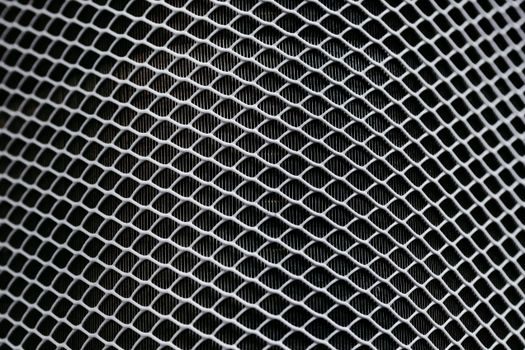
Balanced-weave mesh uses alternating left-hand and right-hand spiral coils to keep the belt tracking straight under thermal cycling, while flat-top constructions present a closed flush surface for fine powder transfer without carry-back [S1][S4]. Chain-edge belts add welded side plates with cross-rod hinge points so sprockets positively engage the belt edge — the standard approach for chemical lines wider than 1500 mm where friction-only drive would slip under oily or wet contamination [S4].
Manufacturer-published conveyor belt applications for chemical duty include printing, mining, petroleum, machine building, chemical, rubber, and plastics handling, demonstrating that the same belt platform is reused across high-corrosion and abrasive service by swapping wire grade and weave density [S1]. A useful reference for tracking these decisions against the broader conveying equipment category is the belt conveyor specification page, which frames drive geometry and load-curve calculations used during mesh-belt selection. Mesh-belt-specific terminology and weave geometry are catalogued in the mesh belt conveyor encyclopedia entry.
Drive Type, Tensioner, and Edge Hardware
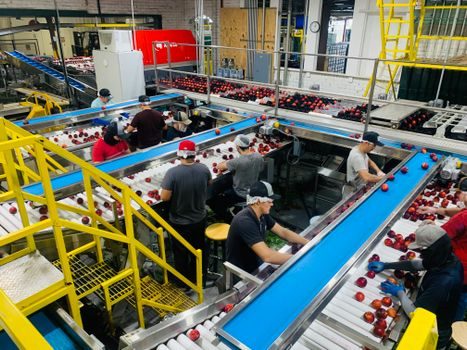
Positive sprocket drive with chain-edge mesh belt is specified where chemical drums, FIBCs, or coated totes must be conveyed up inclines above 15° without belt slip; friction-driven flat-top or balanced-weave belts remain in service for horizontal or shallow-angle dry-chemical packaging lines up to around 8° [S1][S4]. Drive motors for chemical shipping are typically paired with stainless-steel covers and IP65 minimum enclosures because wash-down sanitation is standard between product-changeover cycles [S1].
Belt-tensioner selection governs belt life: take-up travel should be sized at 1.5-2.0% of belt center-to-center distance to absorb thermal expansion on heated chemical lines and to compensate for stretch on long runs above 8 m [S1]. Generic tensioner architectures for conveyor and chain systems are documented in the belt tensioner encyclopedia reference, which the spec engineer can pair with vendor cut-sheets during PR issuance. For chemical-shipping lines that also bundle pallet and drum flow, comparing these specifications alongside broader steel mesh selection rules keeps wire grade, opening size, and load rating consistent across the entire handling envelope.
Decision Matrix: Belt Type vs. Chemical-Shipping Duty
Three belt types cover the majority of chemical-shipping conveyor duty, and the trade-offs are direct: balanced-weave stainless mesh suits light parcel and boxed dry chemicals on horizontal or shallow-angle lines; flat-top 304/316 mesh suits fine powder and granular chemicals that must release cleanly from the belt surface; chain-edge 316 mesh with sprocket drive suits drums, totes, and incline lines where positive tracking is non-negotiable [S1][S4]. For each type the decision is made on four criteria — load per square meter, incline angle, chemical compatibility, and wash-down frequency — rather than belt price alone [S1].
Balanced-weave 304 mesh is the lowest-cost option and is acceptable for dry, non-corrosive chemicals at ambient temperature, while flat-top 316 mesh is the workhorse for general-purpose chemical shipping because it combines clean release with chloride resistance; chain-edge 316 with sprocket drive is the premium choice for heavy drums and incline conveying, and its welded edge hardware drives the price 30-60% above balanced-weave 304 — a margin justified by longer service life under wash-down sanitation [S1][S4].
Standards, Materials, and Sourcing
Chinese conveyor mesh belt manufacturers cite provincial quality inspection certification and compliance with national standards on stainless-steel wire mesh, expanded metal mesh, and conveyor belt products, though vendor pages do not name a specific ISO or ASTM designation for the belt itself [S1][S2]. The OEM pages confirm food-grade, electronics, tobacco, iron and steel, automobile, and chemical industries as documented application envelopes, so the same belt platforms meet the demands of a chemical-shipping receiving line that handles boxed reagents, plastic-jug detergents, and sealed pail solvents in mixed rotation [S1][S4].
Adjacent industries rely on the same mesh and conveyor selection logic, and cross-referencing a copper material selection for electronics spec map illustrates how a separate commodity (copper grade, form, temper) is locked down using the same four-criteria method (grade, form, environment, duty cycle) that governs mesh-belt selection here. Warehouses that co-handle palletised chemicals and dry-mix mortar often share conveyor lines, so reviewing a warehouse dry-mix mortar selection spec map helps align belt width, drive power, and wash-down protocol between adjacent product groups. For plants that need to verify chemical-handling rooms adjacent to conveying equipment, a toxic gas detector selection spec map is the right companion document, since it locks down the sensor grid that protects the conveyor operator station from solvent vapour events.
Common Failure Modes and Field Watch-Outs
Mesh-belt conveyor failures in chemical shipping cluster around four modes: edge-wire fatigue at chain-edge splices when the belt is run over-tensioned; pitting corrosion on 304-grade belts in chloride-bearing wash-down zones; carry-back on flat-top belts when powder moisture climbs above 8%; and sprocket-tooth wear when chain-edge belts are paired with mild-steel drive sprockets instead of hardened stainless or nylon-faced equivalents [S1][S4]. Each failure mode is addressable in the spec: oversize the edge-wire diameter by one standard step, upgrade the wire grade to 316L for chloride service, add a belt scraper or UHMW dead-plate for wet powder, and require the drive sprocket material to be specified equal to the belt edge [S1].
Operating-temperature limits for 304 stainless mesh belt are typically capped near 700°C in continuous service, while 316-grade constructions push that envelope modestly higher in oxidising atmospheres, though neither grade is suitable for molten-metal or strong reducing-chemical exposure without a higher-nickel alloy overlay [S1]. For chemical-shipping lines that operate continuously across 16-24 hour shifts, a six-month visual inspection of edge wires, splices, and sprocket engagement is the practical maintenance interval flagged in the OEM literature [S1][S4].
The next trackable signal is the publication of 316L-specific conveyor mesh belt cut-sheets by Anping Dinghe Wire Mesh and Alex Wire Mesh, where current 2026 product pages list 302/304 grades as the headline wire materials and treat 316 as a custom upgrade [S1][S4]. A second signal is the emergence of chain-edge 316 belt SKUs in the cross-border B2B catalogues (go4worldbusiness, Alibaba) with explicit drum- and tote-load ratings rather than generic "chemical industry" application notes, which would let spec engineers bypass the phone-call quotation step that currently applies to most chain-edge 316 orders [S3].