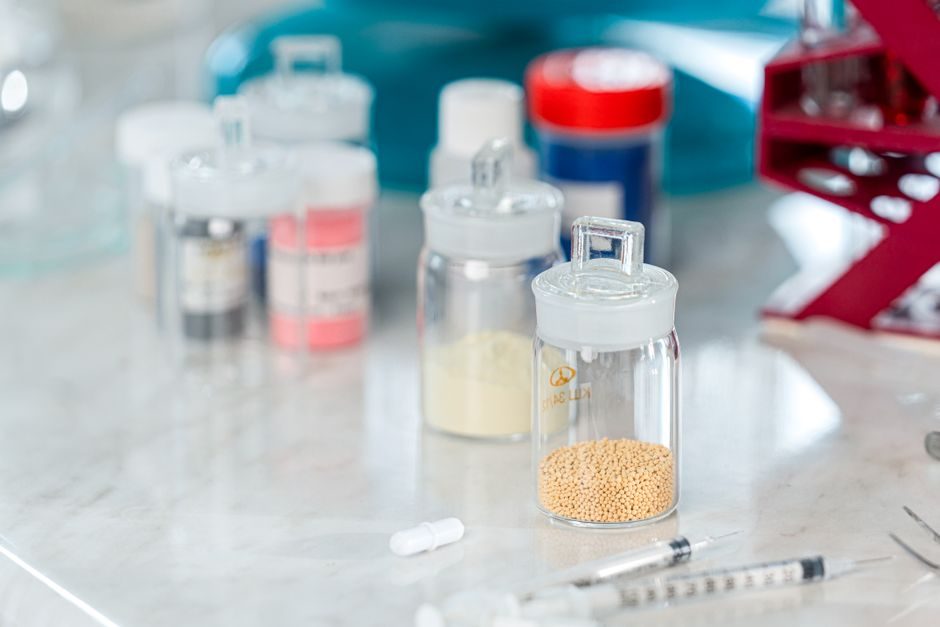
In 2026 industrial buying, metal powder sourcing is decided less by alloy name on the spec sheet than by four engineering levers: atomization vs reduction vs mechanical comminution, particle size distribution (PSD), assay purity, and particle morphology (spherical, irregular, sponge, flake). Those four parameters routinely swing delivered price by a factor of 3–10 for the same nominal chemistry such as iron, copper, or tungsten [S1][S2][S3].
For OEM buyers the workflow is now process-first: pick the manufacturing route that meets the downstream forming method (press-and-sinter, metal injection molding, thermal spray, additive layer manufacturing, welding overlay), then lock PSD, morphology, and purity inside that constraint envelope. Getting the process wrong forces purity money to be spent compensating for surface-oxide or satellite-particle problems that no assay upgrade will fix [S3][S4].
Process Routes and Their Real Cost/Property Footprint
Atomization — water, gas, and plasma — is the dominant route for spherical powder used in linear guide raceway surfacing, additive manufacturing, and laser cladding, with gas atomization preferred when flow and low satellite content matter [S4]. Water atomization undercuts gas atomization on cost and is the workhorse for press-and-sinter PM parts, where irregular morphology actually helps green strength. Reduction routes (Fe from oxide, Cu from cementite, W from oxide) deliver the lowest-cost irregular or sponge powder for structural parts, hardfacing, and diamond-tool matrices [S3][S4].
Plasma spheroidization, mechanical crushing, ball milling, and magnetic/iron-removal finishing are the secondary value-add steps, and Jinchun's equipment list shows the typical Chinese supplier offers atomization + plasma spheroidization + crushing + ball milling + magnetic separation + air-classification under one roof — six equipment patents accumulated through 2024 on that stack [S4]. For powder-metallurgy diamond-tool, welding-consumable, and battery-cathode grades that vertical integration is the only way to hit both PSD and morphology targets on tight lead times.
Particle Size Distribution: Where the Real Money Is
PSD is the single most quoted parameter in 2026 inquiries, and the unit conventions are still a minefield: laser-diffraction results are reported as D10/D50/D90 (µm), sieve analyses as mesh fractions (e.g. -200 mesh = <75 µm), and some welding-grade powders as BSS or ASTM mesh. For laser powder-bed fusion of steels, the working envelope is 15–45 µm D90 with D10 typically above 20 µm; binder jetting pushes to 5–22 µm; MIM feedstock to 5–22 µm with D90 < 22 µm; thermal spray to 10–45 µm for HVOF and 45–106 µm for plasma spray. [S1]
HORIBA's laser-diffraction guidance underlines that any cross-vendor comparison is meaningless without naming the dispersion model (Mie vs Fraunhofer) and the wet vs dry module — a common source of rejected lots at incoming QC. On the buying side, request three numbers: D10, D50, D90 in µm with the dispersion method stated, and a tap-density figure (typically ≥4.5 g/cm³ for AM-grade spherical Fe, ≥4.0 g/cm³ for AM-grade 316L).
What "Purity" Actually Means in a 2026 Spec Sheet
Headline purity figures such as 99.9% / 99.95% / 99.99% are only the start; the real specification is the impurity table — O, N, S, P, C, plus metallic tramp elements — and the test method (LECO inert-gas fusion for O/N, ICP-OES for metals, combustion IR for C/S) [S3][S4]. AM-grade spherical titanium and Ti-6Al-4V routinely demand O < 0.10 wt% (often < 0.08 wt% for aerospace builds), and gas-atomized 316L typically lands O < 0.05 wt% when produced under inert handling. Iron-reduction powder is fine for structural PM at 99% Fe min but cannot meet that O ceiling, so trying to use it as an AM feedstock is a common budget error.
For indium, tin, bismuth, and other low-melt specialties, "purity" is commonly quoted in 4N (99.99%) to 5N (99.999%) grades with a documented ICP-OES impurity table, and Made-in-China catalog pages list multiple 4N/5N indium-metal-powder SKUs side by side so buyers can compare on the same assay format [S1]. Without that table, two "99.9%" lots are not the same product.
Comparison: Five Common Powder Types on Four Decision Criteria
Side-by-side, the four most specified industrial powder families rank very differently on cost, morphology, PSD reach, and purity ceiling. Gas-atomized pre-alloyed steel (e.g. 316L, 17-4PH) sits at the top for spherical morphology and AM-grade purity but commands the highest per-kg cost. Water-atomized iron and Cu-Sn are the workhorses for press-and-sinter — irregular, lower-cost, perfectly adequate for non-critical structural parts. Plasma-spheroidized refractory and hard-facing alloys (WC-Co, Cr-Fe, Ni-based) are the right answer for crossed-roller guide race surfacing and HVOF overlays, where flow and density matter more than alloy flexibility. Reduction-route Fe and W powders are the cheapest path to volume but cannot reach AM PSD envelopes. Each option fails differently when misapplied. [S2]
Packaging, MOQ, and Cross-Border Sourcing Levers
Packaging is not a footnote in 2026 — vacuum-aluminum-foil pouches with desiccant are the default for AM-grade reactive powders (Ti, Al, Mg, Si), and inert-gas-purged drums for larger lots; the packaging spec itself shows up on supplier data sheets as a controlled parameter, not as a logistics line [S2]. Hangzhou Kafan's "metal powder package" catalog lists US$7,889–15,010 per piece at MOQ 1, with options for vacuum sealing, nitrogen purge, and ton-bag outer packing [S2].
For a buying inquiry, the realistic levers are: (1) PSD envelope with named test method, (2) full impurity table with detection methods, (3) tap density / Hall flow if AM-grade, (4) packaging spec, (5) MOQ and lead time. The Turkish platform go4worldbusiness lists a 2024 inquiry pattern — Ankara-based Cevik Destek sourcing metal powder for 3D-printing and "augmented manufacturing" with MOQ not specified, signalling that AM-grade powder is being actively quoted to non-OEM buyers outside the traditional aerospace cluster [S5]. For OEM teams, an India-domiciled aggregator such as The Metal Powder Company Ltd. in the Guidechem directory also surfaces small-lot and custom-purity channels worth pricing alongside Chinese mill-direct options [S6].
Failure Modes When Spec Is Too Loose
Three failure modes dominate 2025–2026 rejection reports at incoming QC. First, mismatched PSD — buyers accept a -200 mesh Fe powder for a binder-jet build and end up with spreading defects, because the actual D90 was 75 µm when the build needed 22 µm. Second, undocumented morphology — water-atomized Fe substitutes for gas-atomized Fe in laser cladding, satellites clog the nozzle, and surface roughness drifts out of spec. Third, alloy-coded purity but missing interstitial control — "99.9% Cr powder" turns out to be 99.9% metallic Cr with 0.8% O, unusable for any reactive build [S3].
The mitigation is mechanical, not contractual: demand a signed CoA per lot, run an independent PSD check on day-one of every shipment (a casting mold sourcing team will see the same discipline applied to steel-grade verification), and reserve the right to reject on a documented D90 drift of >10% from the agreed value. The same evidence-based acceptance pattern is well established in adjacent spec-driven buys such as arc welding machine lots, where amperage, duty cycle, and process are the controlling levers.
Standards and Test Methods That Anchor the Spec

The test-method stack behind a defensible CoA is well established. PSD: ISO 13320-1 (laser diffraction), ASTM B822 / MPIF 05 (sieve), ASTM B821 (sieving guidelines). Purity / O-N: ASTM E1019 (O, N, H in refractory metals), ASTM E1409 (O, N by inert-gas fusion). Flow / density: ASTM B213 (Hall flow), ASTM B527 (tap density), MPIF 46. Morphology: SEM-based visual classification per MPIF 99 or ASTM B795. Naming a specific 2026 revision date for any of these is a buyer error — refer to the current published edition rather than a version year. [S3]
Adoption of these test standards by Asian mills is now routine: Jinchun publishes its process line as atomization + plasma spheroidization + crushing + ball milling + magnetic separation + iron removal + air-classification + pre-alloy + reduction, with six patents held through 2024 and product lines covering welding consumables, spraying coating, battery cathode/ceramics, absorbing metals, and diamond tools [S4]. That breadth means a single audited mill can supply powder for an aluminum ladder extrusion-press, a filling scale feeder-tray, and a belt tensioner wear-coat under one quality system.
For verification at receiving, lock two signals in the next quarter: incoming PSD reproducibility on at least three lots per supplier (Mie-model laser diffraction, with the dispersion module named) and a quarterly SEM morphology check against a reference micrograph — both are cheap, both are decisive, and both shift rejected-lot cost from a process-engineering investigation back to a routine acceptance test.