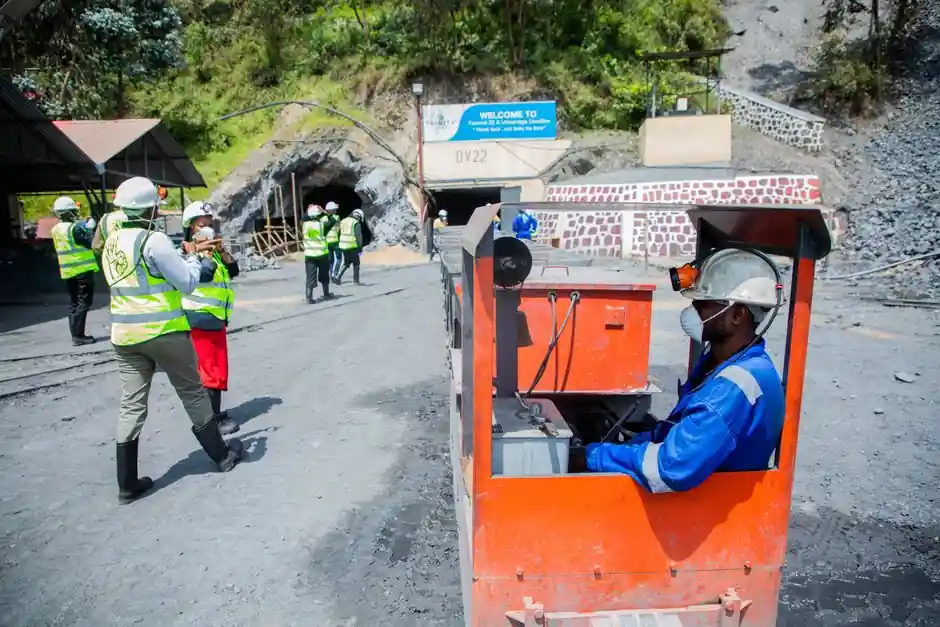
Clutch and brake selection for mining equipment is governed by three non-negotiable inputs: peak torque demand of the driven load, duty cycle (stops per hour and thermal energy per stop), and hazardous-location certification class, with MSHA approval required for any underground coal or gassy-mine installation [S1][S5].
Across surface and underground operations, the dominant machine categories are rope shovels, draglines, ball/SAG grinding mills, haul trucks, conveyors, and rock crushers; each maps to a different clutch-brake topology rather than a one-size-fits-all package, and suppliers including Force Control, WPT Power, Industrial Clutch, Stearns, and Carlisle all segment product lines around those exact machine types [S1][S2][S3][S5][S6].
Wet Disc vs Dry Disc vs Oil-Shear: The Three Braking Topologies
Wet disc brakes operate fully submerged in oil and are the default for large mining machinery where heat dissipation and lining life dominate, while dry disc brakes are used in lighter-duty or cost-sensitive applications and tolerate dust poorly [S7].
Oil-shear technology, marketed as a distinct sub-category of wet system, transfers torque through a shear film of hydraulic fluid between disc faces, eliminating contact wear and delivering a service life often described as maintenance-free in mining service, with both Force Control Posistop air/hydraulic and MagnaShear electric product lines built on this principle [S1]. For a broader view of how clutch-brake packages combine these friction elements with actuation, the topology choice cascades directly into the electromagnetic brake selection path for non-mining equivalents. Carlisle's mining product line similarly splits between fail-safe spring-applied hydraulically released caliper disc units and hydraulic drum brake families sized to haul trucks and excavators [S6].
Shovel, Dragline, and Mill Clutch Sizing
WPT Power specifies pneumatic clutch and brake sizes from 13 inches up to 30 inches for rope shovels, draglines, and bucket excavators, with vertical and horizontal mounting options and custom torque/pressure settings, and supplies dedicated Power Grip grinding mill clutches for ball, pebble, rod, AG, and SAG mills seated between the main drive motor and the mill [S2].
For mine-shovel retrofit, Industrial Clutch delivered LKB 117 spring-set, pneumatically-released brakes rated at 37,230 in·lb torque for the hoist and propel drives of a Peru iron-ore rope shovel, after the original Chinese units and two competitors using full-disc friction material failed to meet performance criteria [S3]. The WPT Gen III Python hydraulic clutch control, paired with Hydraulic Type 1 or Type 2 PTOs, is positioned for high-inertia crusher starting on impact, jaw, and hammer mills, with overspeed protection, smooth engagement, and one-button operation as standard features [S2]. For a primer on the related mechanism family used to lock or release the driveline under load, see coupling-clutch.
Hazardous Location and MSHA Certification
Stearns is the only motor brake manufacturer offering both Division 1 and Division 2 hazardous-location brake lines plus electric safety brakes certified by the Mine Safety and Health Administration for underground coal and gassy mines, with explicit SAB series part numbers (65,300 / 87,300 / 82,300 for Div 1; 56,800 / 87,800 for Div 2) carrying that certification [S5].
Force Control matches that with pneumatic and hydraulic brakes rated for NEC Class I, II, and III, Divisions 1 and 2, while its electric brakes are limited to Class I and II, Division 2, and the Magnashear line carries CSA hazardous-duty rating [S1]. For haul trucks and excavators operating on the surface where explosive-gas atmospheres are less likely but dust loading is severe, Division 2 certification is typically sufficient and avoids the cost and weight penalty of fully explosion-proof enclosures [S5]. Specifiers working across both chemical and mining sites should cross-reference the explosion-proof electrical selection map, since NEC 500 hazardous-location class/division logic is shared across both industries.
Conveyor, Tripper Car, and Haul-Truck Brakes
Conveyor brakes must prevent rollback on inclined runs and hold the tripper car in position under load, with Force Control's MagnaShear motor brakes promoted as a self-contained, no-adjustment solution for tripper cars and overland conveyors, and dedicated AB-series application briefs covering rotary coal samplers, overland tripper cars, and internal tripper cars [S1].
For the abrasive, high-shock load profile common to cement and aggregate conveyors, a parallel spec exercise is laid out in the cement plant conveyor chain selection map, since chain and brake selection both share the same input variables: peak load, ambient dust, and stop frequency. Carlisle's mining brake catalog covers haul-truck service brakes, parking brakes, and emergency braking on caliper-disc and hydraulic-drum platforms, with the surface-mining equipment population (haul trucks, wheel loaders, dozers) representing a distinct duty cycle from underground continuous miners [S6].
Hydraulic Actuation and the 2025-2026 Engineering Shift
Engineer Live's January 2026 feature on hydraulic brakes and clutches in modern mining frames intelligent hydraulic braking as a critical safety and uptime element rather than an upgrade, with closed-loop proportional valves, electronic load-sensing, and condition-monitoring retrofits now commonly specified on new shovels and retrofit draglines [S8].
The same 2025-2026 trend favors hydraulic actuation over purely pneumatic systems for high-cycle positions because hydraulic pressure is easier to modulate, integrates with proximity-switch feedback, and supports soft-start and soft-stop profiles that reduce lining thermal load [S8]. Carlisle's hydraulic caliper and drum lines for haul trucks, combined with Stearns' Division 1/2 brake families and WPT's hydraulic Type 1/2 PTOs, suggest that hydraulic actuation is becoming the default rather than the exception for new mining equipment builds in 2026 [S2][S5][S6][S8].
Selection Checklist and Decision Criteria
Start with machine type and torque: rope shovels and draglines above 25,000 in·lb call for spring-set pneumatic units in the 13-30 inch frame size band, while grinding mills call for dedicated large pneumatic clutches with quick-change drive adapters and split friction discs to minimize mill downtime [S2][S3].
Next, set the certification floor: MSHA-certified electric safety brakes for any underground coal or gassy mine, NEC Class I Div 1 for above-ground explosive-gas atmospheres, and Class II Div 2 for dust environments without continuous gas exposure [S1][S5]. Then pick topology: oil-shear wet disc for high-cycle, maintenance-free service; dry disc only where cost dominates and dust ingress is controlled; hydraulic caliper or drum for surface haul trucks and modern shovel retrofits [S1][S6][S7][S8]. Finally, verify the actuation interface: pneumatic for legacy shovel compatibility, hydraulic for new-build intelligent braking with electronic load sensing, and electric spring-set for conveyor motor brakes and tripper car positioning [S1][S2][S8].
Two trackable signals for the next 12 months: MSHA certification expansion of hydraulic-actuated brake lines beyond the current Stearns electric-safety portfolio, and wider Gen III Python clutch control deployment on crusher retrofit packages as mining operators chase higher-inertia starting with controlled engagement profiles [S5][S8].