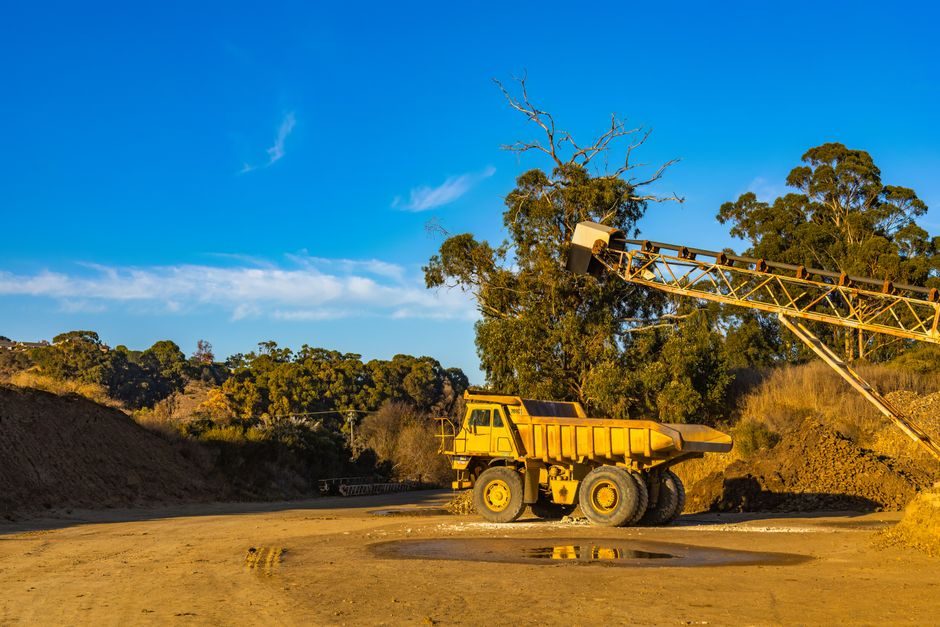
A 100-ton class mechanical-drive mining dump truck delivering 90,000 operating hours over a 20-year service life accumulates a total cost of ownership where fuel, ground-engaging components, and powertrain maintenance each individually exceed the unit's acquisition cost [S1][S3].
TCO modelling for off-highway haul equipment follows the same three-bucket framework applied to truck scales and process instruments: initial project cost, ongoing operating cost, and end-of-life residual — but the operating bucket dominates the stack because of fuel burn rates above 100 L/hr under load [S1][S3]. For procurement teams evaluating a mining dump truck against a standard dump truck, the calculation difference is roughly an order of magnitude in per-hour cost.
Cost Driver 1: Acquisition Price vs Lifecycle Math
Buyers who anchor on the lowest purchase price typically underestimate the 20-year operating envelope, which routinely converts a "cheaper" truck into the higher-TCO option [S1]. A new 100-ton mechanical-drive rigid-frame hauler in 2026 lists in the USD 4-6M range before options, while a comparable AC-drive trolley-assist unit runs 30-50% above that baseline.
The 20-year service life assumption in [S1] is conservative for a haul truck operating on a 3-shift roster; many Australian Pilbara and Chilean copper-mine fleets now run rigid-frame trucks past 120,000 engine hours with structured mid-life rebuilds on frame, engine, and final drives. Acquisition premium for AC-drive electrification typically pays back inside 5-7 years at fuel-price parity above USD 0.80/L, then runs negative for the remaining 13-15 years of the truck's life.
Cost Driver 2: Fuel and Energy — the Largest Line Item
For a diesel-powered 100-ton rigid hauler, fuel routinely accounts for 40-55% of lifetime TCO depending on haul profile grade, payload utilisation, and idle-time discipline [S3]. Tier 4 Final / Stage V engines on newer units burn 110-130 L/hr loaded and 35-50 L/hr empty on a flat haul, with consumption scaling roughly linearly with gross vehicle weight and grade resistance.
Trolley-assist retrofits cut diesel burn on the loaded uphill segment to near zero for that portion of the cycle, and the cost case strengthens wherever site electricity is below USD 0.06/kWh. CNG and hydrogen pilot fleets exist but currently sit outside mainstream TCO models; until a refuelling network covers the mine-to-port corridor, the diesel baseline remains the comparison anchor. Frame structure and dump-body metallurgy — covered in the mining dump truck installation spec map — also constrain how aggressively a truck can be loaded, which loops back into fuel per tonne moved.
Cost Driver 3: Tyres — a 2-4x Line Item Nobody Forecasts Right

Mining dump truck tyres are the single most mis-procured line item in haul-fleet TCO. A 40.00R57 radial for a 100-ton class hauler lists in the USD 30,000-55,000 range per tyre in 2026, and a full set of six carries a replacement bill that hits USD 180,000-330,000 before taxes and fitting [S3].
Tyre life in hard-rock haul conditions runs 4,000-8,000 operating hours, dropping to 2,500-4,000 hours in high-abrasion iron-ore or shot-haul duty cycles. That puts tyre spend alone at 1.0-1.8x the truck's annual depreciation, and most procurement models under-allocate by 30-50%. The interaction with payload-accuracy discipline is direct: running a 5% overload on every cycle shortens casing life by 15-25% — which is why most operations now specify a truck scale on the load-out rather than relying on loader-bucket estimates.
Cost Driver 4: Powertrain and Ground-Engaging Maintenance
Engine, final drives, wheel motors, hydraulic cylinders, and dump-body liners form the second-largest maintenance bucket, typically 20-30% of lifetime TCO [S3]. Mid-life engine rebuilds on Tier 4 Final platforms now run USD 250,000-450,000 per event when done at OEM-authorised shops, and a 90,000-hour truck will see 1-2 such rebuilds.
Ground-engaging components — body liners, ejector plates, and bed wear plates — run 8,000-15,000 hour replacement intervals in high-impact iron-ore duty, and the trend toward quenched-and-tempered 400-500 HBW steels has cut liner spend by roughly 20% versus the older 350 HBW specification. Condition-monitoring sensors on final drives and wheel motors, paired with route-based oil sampling, have moved planned-outage intervals from 500 hours to 1,000-2,000 hours on most modern fleets, which is a structural TCO win that the acquisition-bid process rarely captures.
Cost Driver 5: Payload Accuracy and Load-Pass Productivity
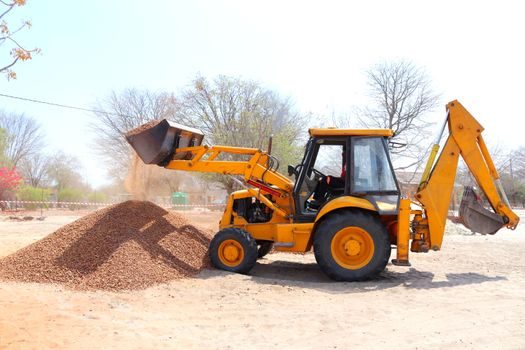
Payload accuracy is the productivity lever that converts a same-spec fleet into 10-20% higher annual tonne-kilometres — and the only one driven by a relatively small instrumentation spend [S1].
At 50 loaded cycles per shift and a per-tonne margin of USD 1.50-4.00 across different commodities, that 6-8 percentage-point utilisation gain clears the instrumentation cost inside 4-8 months and then compounds for the truck's remaining life. Cross-checking onboard payload data against a fixed truck scale at the load-out is now standard on mines running more than 15 trucks; the static scale catches drift that onboard strain-gauge systems accumulate over 12-18 months. Operators planning fleet replacement should request the TCO comparison approach used in adjacent mobile equipment categories so that the truck evaluation follows the same lifecycle framework already applied to their support fleet.
20-Year TCO Stack: Where the Money Actually Lands
Aggregating the five drivers into a single envelope for a 100-ton mechanical-drive rigid hauler running 90,000 hours over 20 years, fuel consumes 40-55% of cumulative spend, tyres 10-15%, powertrain maintenance 15-20%, acquisition 12-18%, and other operating cost (lubricants, filters, ground-engaging parts, training, insurance, freight) the residual 5-10% [S1][S3].
The total 20-year spend for a single truck typically lands 4-6x the acquisition price in pure cash terms, which is why the TCO framework is mandatory for any haul-fleet justification over 10 units. Watch points over the next 12-18 months: trolley-assist kit pricing announcements for existing fleets, and any 2026 OEM guidance on extending mid-life rebuild intervals past 60,000 hours.