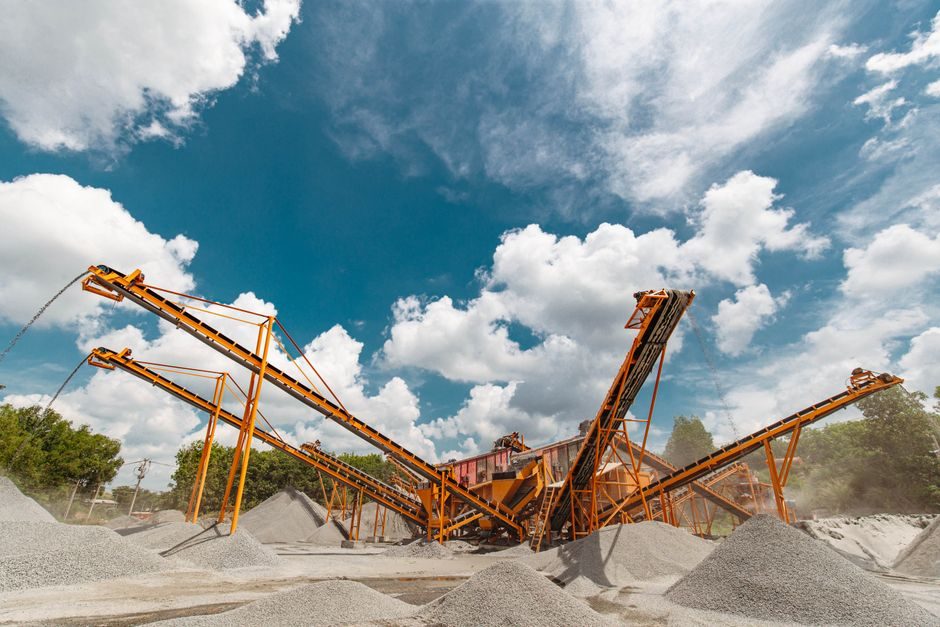
Demand for mining and earthmoving machines is bifurcating fast: a global mining-equipment market valued at USD 122.3 Bn in 2020 is projected to reach USD 200.9 Bn by 2032 at a 4.1% CAGR (2023-2032), while the adjacent earthmoving segment is forecast to climb from USD 76.27 Bn in 2026 to USD 115.5 Bn by 2033 at a 7.5% CAGR [S1][S3].
Underground equipment is the faster slice of that mix, with mining drills, LHDs, haul trucks, continuous miners and modular mining systems now being specified against room-and-pillar, cut-and-fill, sublevel stoping, block caving and longwall methods across the Americas, APAC, the Middle East and Africa [S6]. Buyers chasing the underground trend are documented in our underground-capex brief on the mining-equipment 2026 split.
Battery-Electric and Digital-Hydraulic Architecture Move From Demo to Spec
Validation tests on a 30-tonne battery-electric excavator cut power consumption by 35% and extended runtime by 53% through a digital hydraulic architecture, demonstrating that large battery-electric mining iron is no longer a prototype exercise [S2]. The same OEM-Off-Highway roundup of CONEXPO-CON/AGG 2026 frames electrification, AI-assisted controls and autonomous equipment as the three engineering pivots that procurement must now price into tenders, alongside Association of Equipment Manufacturers (AEM) leadership continuity under Scott Youn.
For spec writers, the immediate consequence is that hydraulic-architecture language has to change: legacy "load-sensing pressure-compensated" callouts are giving way to "digital hydraulic" or "electrohydraulic" descriptors, and a 30-tonne BEV energy-budget line item needs to sit next to diesel kWh/litre equivalents. Pairing a pressure sensor spec at the implement cylinder and a pressure transmitter spec at the pump manifold is now standard, because digital hydraulics close the loop on pressure telemetry at sub-second intervals rather than at operator throttle feel.
Underground Method Mix Drives Machine Type and Power-Source Spec
Underground equipment buyers are choosing between five competing mining methods - room and pillar, cut and fill, sublevel stoping, block caving and longwall mining - and each one locks in a different combination of mining drills, LHDs, haul trucks, continuous miners and modular mining systems [S6]. Power-source selection compounds that choice: electric, ICE, hybrid, diesel and compressed-air drivelines are all still in active production runs, which is why Made-in-China listings in mid-2026 show 1-piece MOQ LHD-class underground loaders landing in a USD 230,000-400,000 band and DTH drill rigs from Changsha DTH Drill Construction Machinery at USD 27,577-107,508 per set [S5].
The price spread inside each power-source band is the real lever: a Chinese-supplied 1-piece LHD with 1-set MOQ is 1.7-2.9x cheaper than a typical Western OEM equivalent, and that delta is large enough that a mine planning team can underwrite a hybrid trolley-assist retrofit on the haul-truck side for the same envelope. For deeper coverage of how that mix ties back to capex sizing, see the mining-equipment 2026 power-source split brief.
Crawler and Wheeled Excavators Hold 35% of Earthmoving Spend
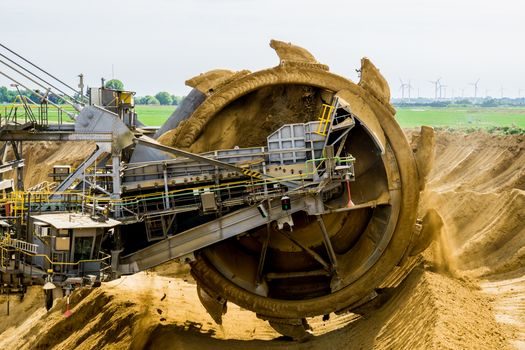
Crawler and wheeled excavators are projected to command 35% of the 2026 earthmoving-equipment market because the same chassis can be redeployed across building, road and small-scale mining sites, which is the single most cited justification for capex committees standardising on one platform [S1]. A 7.5% CAGR on a USD 76.27 Bn 2026 base implies absolute annual additions near USD 5.7 Bn in 2026 dollars, and excavators take roughly USD 2 Bn of that on the 35% share alone.
The same global building-project investment of USD 9 trillion cited as the demand anchor is the same number pulling excavator allocation upward, so any commodity-price softening that delays building starts will hit excavator order books before it hits LHD rebuild shops.
Surface vs Underground: Selection Criteria, Side by Side
Surface and underground equipment diverge on four engineering decision gates that procurement can score side by side. First, capital intensity: surface haul trucks and cable shovels are unit-priced in the multi-million-USD range with single-unit MOQs, while underground LHDs from Chinese suppliers cluster in the USD 230,000-400,000 band with 1-piece MOQ [S5]. Second, power-source flexibility: surface fleets still lean diesel and trolley-assist hybrid, underground offers the full ICE/electric/hybrid/diesel/compressed-air menu [S6].
Third, method lock-in: surface mining is method-agnostic at the machine level, underground ties the machine to one of five methods (room and pillar, cut and fill, sublevel stoping, block caving, longwall), and the wrong method/machine pair forces a costly redesign of the ventilation and decline plan [S6]. Fourth, telemetry density: surface machines can rely on GPS and flow meter-based fuel accounting, underground machines need industrial valve-position feedback and continuous gas monitoring in addition to GPS-denied positioning, which is why digital-hydraulic and battery-electric pilot programmes are running underground first [S2].
Safety, Autonomy and the New Tender Checklist
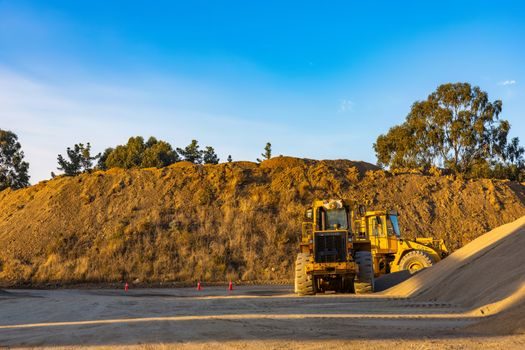
CONEXPO-CON/AGG 2026 coverage grouped AI, autonomy and electrification as the three pillars now showing up in OEM tender responses, and a battery-electric 30-tonne excavator posting 35% lower power draw and 53% longer runtime is the kind of figure that turns a "nice to have" line item into a binding key performance indicator [S2]. Sandvik's Rock Technology division, meanwhile, is positioning efficiency, safety and sustainability as non-optional requirements for any new decline, production drill or rock-support installation, framing equipment selection as a process-engineering decision rather than a purchasing decision [S4].
The practical spec change is a column-add to the tender: every new machine must carry a runtime-versus-energy KPI, an autonomy-readiness interface (sensor mount, compute bay, network switch) and a remote-diagnostic data feed. For buyers cross-checking whether their flow meter and anti-static equipment packages are still adequate for BEV underground duty, the audit pass/fail is now "can it survive 53% more runtime cycles between services?" rather than the legacy "does it meet nameplate flow?".
Standards and Spec Discipline: What Buyers Must Verify
Two procurement guardrails are non-negotiable in 2026: any battery-electric or hybrid machine specified for gassy underground headings has to be evaluated against the relevant IEC 60079 parts for explosion protection, and any autonomy stack must document its functional-safety basis (typically ISO 13849 or IEC 62061 for machinery, ISO 26262 for any on-highway haul-truck transfer) before it is connected to production drilling or load-haul cycles. Sandvik's own framing of safety as a baseline rather than an option reinforces that the burden of proof now sits with the buyer to demand the certification document, not with the OEM to volunteer it [S4].
Hydraulic-fluid cleanliness targets are also tightening in lockstep with digital-hydraulic retrofits, because the 35%/53% efficiency improvements only hold if ISO 4406 contamination codes stay in the 18/16/13 range or cleaner; a poorly filtered machine will lose its digital-hydraulic advantage in weeks. A short, traceable list of open compliance items - IEC 60079-x zone coverage, ISO 4406 fluid spec, ISO 13849 PL rating, autonomy functional-safety file - is now the difference between a tender that gets accepted and one that gets returned for revision.
What to Watch Through 2026 H2
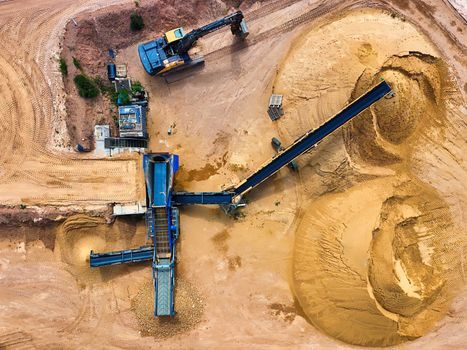
Three trackable signals will tell procurement whether the 7.5% earthmoving CAGR and the 4.1% mining CAGR are still on the rails: the next AEM CONEXPO-CON/AGG 2026 follow-up data drops on autonomous haul-track deployments, the Made-in-China underground LHD price band for 1-piece MOQ, and any new battery-electric 30-tonne-class validation that beats the 35%/53% benchmark set in the April 2026 roundup [S2][S5]. Watch also the Sandvik Rock Technology product-line updates for evidence that digital-hydraulic architecture is moving from a 30-tonne excavator demo into the LHD and long-drill product codes [S4].