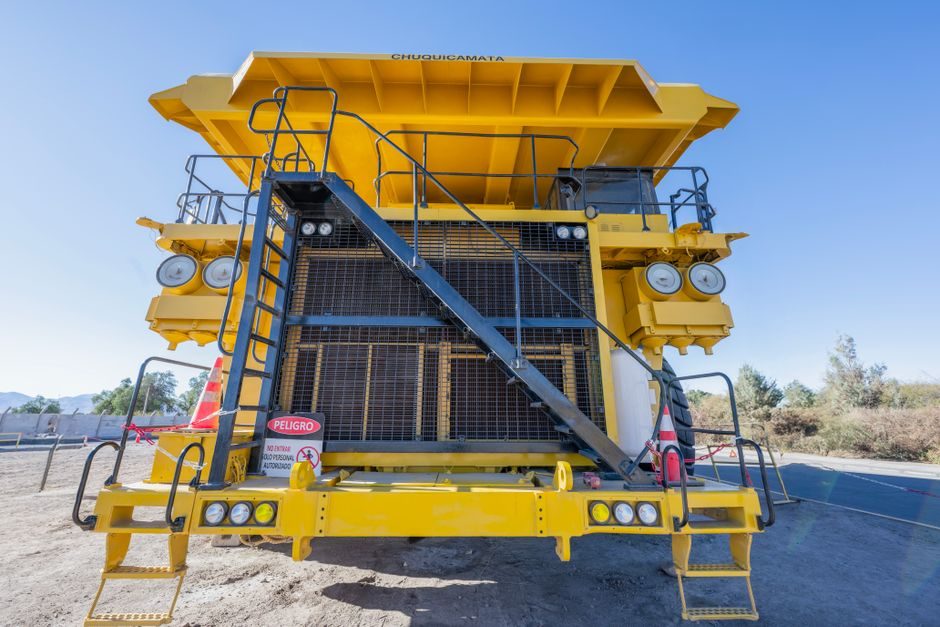
The Business Research Company values the 2026 mining market at the start of a 2026–2035 forecast window covering 150 pages of segmentation [S1], while Market Research Future sizes the underground mining equipment sub-segment out to 2035 by power source, application and region [S2].
Adjacent construction and mining equipment aggregation (loaders, dozers, excavators, crushing/pulverizing/screening) is also tracked through Allied Market Research, confirming the 2026 base year is the active reporting reference for OEM planning teams [S4]. Mining equipment services — the installed-base support layer — is forecast to reach roughly USD 103.38 billion by 2030 per IndustryARC, a number procurement should hold against spares budgets.
Market Size Baselines and Forecast Windows
Mining equipment market reports published in early 2026 frame 2026 as the base year, with forecast horizons running to 2033, 2035 and 2030 depending on the publisher [S1][S2]. Underground mining equipment is segmented by power source (Electric, Internal Combustion Engine, Hybrid, Diesel, Compressed Air) and by application (Metal Mining, Coal Mining, Mineral Mining, Non-Metal Mining), with regional cuts across North America, Europe, South America, Asia Pacific, Middle East and Africa [S2]. The construction-and-mining equipment aggregate widens the scope to loaders, dozers, excavators and crushing/pulverizing/screening equipment, with applications split across infrastructure, mineral mining, residential building and metal mining [S4].
For sourcing teams, the practical takeaway is that the 2026 base year is the only stable anchor across all four published reports; every CAGR and revenue figure in those reports is rebased to 2026 [S1][S2][S4]. Specifications such as mining dump truck class ratings, drive architecture and payload envelope should be benchmarked against the same 2026 baseline, not older 2023 or 2024 vintage forecasts that pre-date the current commodity cycle.
Power-Source Split: Electric, ICE, Hybrid, Diesel, Compressed Air
Underground mining equipment is explicitly partitioned by power source into five classes: Electric, Internal Combustion Engine, Hybrid, Diesel, and Compressed Air [S2]. Electric and hybrid classes are the strategic growth lanes in current 2026 OEM roadmaps because they map directly to mine ventilation savings, diesel particulate reduction mandates, and battery-electric load-haul-dump retrofits. Compressed-air equipment retains a defined share in specialty applications (pneumatic drilling, shotcrete) where ignition-proof requirements are absolute.
Diesel and ICE equipment still dominate the installed base in metal and coal segments where deep-mine heat loads and existing fuelling infrastructure discourage battery swaps [S2]. The procurement cut: fleet managers running mixed-age underground fleets typically hold a 60/40 to 70/30 ratio of diesel/ICE to electric+hybrid, with hybrid units concentrated in haul and LHD duty cycles where regen energy is recoverable.
Application Segmentation: Metal, Coal, Mineral, Non-Metal
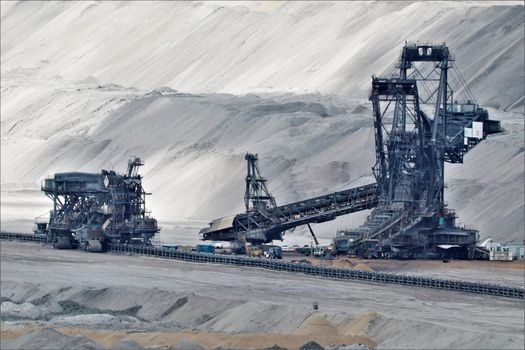
Underground equipment demand is split across four application lanes — Metal Mining, Coal Mining, Mineral Mining, Non-Metal Mining — each carrying distinct spec gates [S2]. Metal mining drives the highest share of hard-rock loaders, drill jumbos and production drill rigs; coal mining still absorbs continuous miners, shuttle cars and roof bolters, though global thermal-coal capex is uneven. Mineral mining (potash, trona, salt) and non-metal (limestone, aggregates, dimension stone) segments skew toward surface equipment but contribute meaningful underground share where deposits sit below water table.
Construction-and-mining equipment demand mirrors these applications, with infrastructure, mineral mining, residential building and metal mining named explicitly as application axes [S4]. Buyers specifying industrial valve and flow meter packages for slurry lines in mineral mining should align instrument spec to the same forecast base year, since the 2026 base dictates supplier capacity reservation and lead-time quotes.
Regional Build-Out Signals
Both underground and surface mining equipment reports split the world into five regional lanes: North America, Europe, South America, Asia Pacific, Middle East and Africa [S2]. Asia Pacific remains the volume lane driven by coal and metal capex; South America absorbs copper, lithium and iron ore fleet refresh; North America and Europe skew to replacement plus electrification retrofit; Middle East and Africa are the swing lanes for bulk-commodity ramp-ups. Construction-and-mining equipment reporting uses the same regional logic for infrastructure-driven loader and excavator demand [S4].
For EPC contractors, the regional signal is straightforward: match the 2026 forecast base to the regional lane where the project sits, since the 2026 base year is the only common reference across publishers [S1][S2][S4]. Sourcing teams tied to pressure transmitter and pressure sensor packages for new mining process skids should anchor the supply bid calendar to the same 2026 vintage forecasts to keep quoted lead times inside the project window.
Services, Spares and Installed-Base Economics
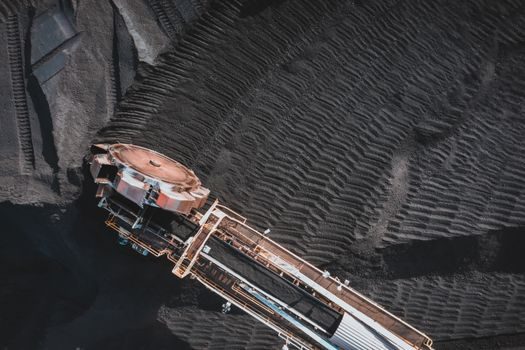
IndustryARC projects mining equipment services to reach roughly USD 103,382.8 million by 2030, starting from a 2024–2030 forecast window. Services cover field maintenance, rebuild, parts logistics, and condition-monitoring subscriptions — all of which scale with installed fleet size rather than new-unit shipments. The implication for procurement: spares and service contracts are a larger and more predictable spend line than new-equipment capex over a 5-year window, even when new-unit CAGR looks attractive on the headline chart. [S1]
For context, the construction-and-mining equipment segment is segmented by product type (Loaders, Dozers, Excavators, Crushing/Pulverizing/Screening Equipment, Others) and by application (Infrastructure, Mineral Mining, Residential Building, Metal Mining, Others), confirming that services attach to the same product taxonomy as new units [S4]. Specifying anti-static equipment packages for fuel and conveyor transfer points should be folded into the services budget line, not the new-unit capex line, because installation typically happens during scheduled maintenance windows.
Procurement Cut: How to Use the 2026 Forecasts
Three rules hold across the four 2026-vintage reports: (1) treat 2026 as the only stable base year, (2) match power-source segmentation to actual mine duty cycle before reading CAGR, and (3) size services spend against the 2030 services forecast, not the headline equipment CAGR [S1][S2][S4]. The power-source table — Electric / ICE / Hybrid / Diesel / Compressed Air — is the single most actionable axis because it drives ventilation, fuelling and battery-electric infrastructure decisions [S2]. Application segmentation (Metal / Coal / Mineral / Non-Metal) is the second axis, and regional build-out the third [S2].
Trackable signals for the next planning cycle: the next MRFR underground equipment regional cut (Asia Pacific vs South America share), the next IndustryARC services update beyond the 2030 USD 103.38 billion endpoint, and any 2026-vintage publication that revises the 2026 base year mid-year [S2]. Spec sheets on AC motor packages for underground ventilation fans and conveyor chain drives for mineral handling lines should be rebaselined against the 2026 forecasts before Q4 2026 bid lock-in.