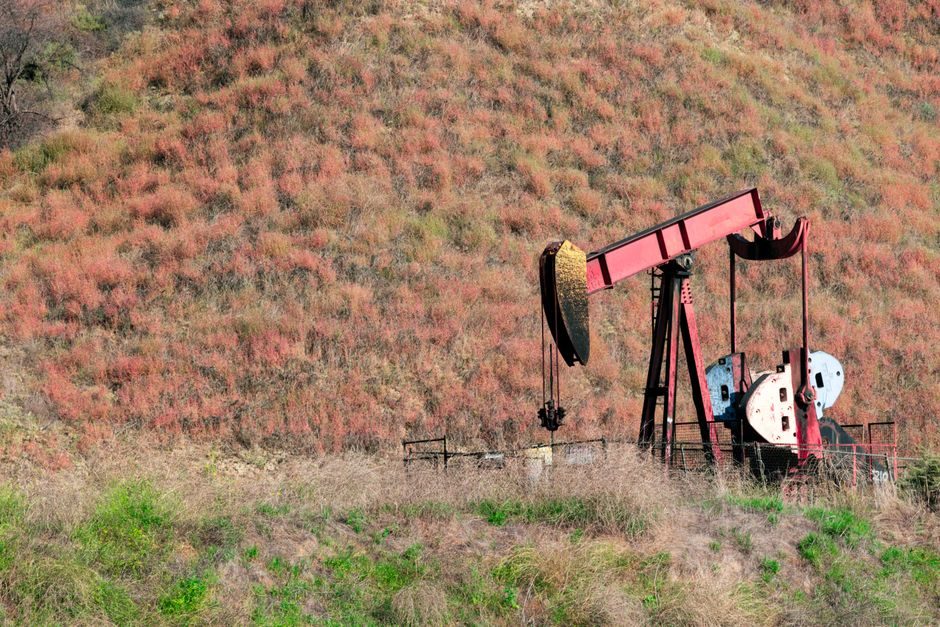
Mining-equipment demand in 2026 is driven by three linked sectors — upstream oil & gas consumables, midstream processing skids, and downstream chemical/refining plants — and each segment pulls on a different slice of the OEM catalogue [S1][S2].
Aydintek positions itself at the upstream/downstream interface, supplying industrial oils, chemicals and equipment for oil & gas, mining and power applications [S1]. WW Industries, active since 1978, ships ASME-certified vessels and heat exchangers into upstream, midstream and downstream oil & gas, plus adjacent food, beverage, chemical and petrochemical plants [S2]. Together these two supply lines illustrate how a single mining equipment vendor now quotes a 90-tonne haul truck and a pressure vessel on the same proposal.
Where the Value Chain Splits: Upstream, Midstream, Downstream
Upstream mining work consumes heavy mobile equipment — face drills, LHDs, dump trucks and roof-bolters — plus the wear-parts cycle behind them. Sandvik groups its catalogue into "underground mining equipment and surface mining equipment" covering development, production drilling, rock support and load-and-haul [S6]. OMIM Ltd. delivers European- and American-built crushing, grinding and classification packages to mining, power, chemical and sand-and-gravel operators, bundling delivery with logistics, installation supervision, commissioning and crew training [S3]. The 2026 supply line for an open-pit copper project, for example, now reaches from a jaw crusher OEM in Europe to a conveyor splice team trained on-site, with both invoices landing in the same month.
Downstream of the pit, midstream processing and downstream refining pull on the same fleet. WW Industries ships ASME Section VIII stamped heat exchangers, columns and pressure vessels into the same oil & gas and chemical plants that consume mining outputs as feedstock [S2]. Aydintek extends the overlap one step further, listing oils, chemicals and equipment together for upstream, downstream, mining and power — a one-stop procurement pattern that compresses what used to be three separate RFQs into one [S1].
Selection Criteria: Matching the Asset to the Work Envelope
Three levers drive the 2026 spec sheet: ore hardness and abrasiveness (defines crusher reduction ratio and liner metallurgy), haul distance and gradient (sets truck payload class and engine kW), and automation/connectivity readiness (gates telematics and operator-assist packages) [S6]. Sandvik markets automation software that "monitors your machines" and gives "a full overview of your fleet," positioning the digital layer as a first-class spec item rather than an aftermarket add-on [S6]. OMIM frames the same problem differently: it sells the European/American OEM equipment and wraps the local value in logistics, commissioning and machine-crew training [S3].
For a greenfield operation, the decision rule is straightforward. Hard-rock, high-tonnage, deep-pit operations lean on Sandvik-class surface drills paired with 90- to 150-tonne mechanical-drive haul trucks, with throughput reported in tonnes-per-hour against an abrasive-ore work index [S6]. Narrow-vein and underground operators shift to LHDs, jumbos and roof-bolters from the same Sandvik catalogue, often with the same automation stack layered on top [S6]. Adjacent plants — the WW Industries customer base — stack ASME-stamped pressure equipment into the same procurement review, which is why the upstream/downstream boundary is no longer drawn by equipment type but by process license.
Ore Sorting and the Mid-Stream Bottleneck
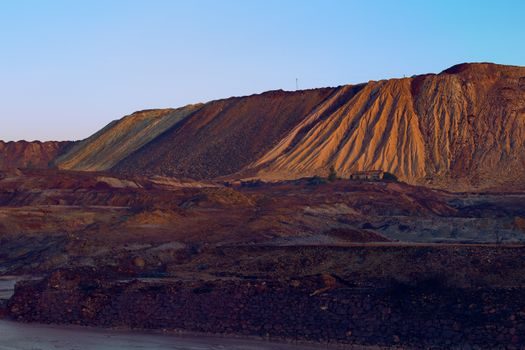
GiGi Mining Services is launching what it describes as "the world's first & only ring-shaped ore sorting machine," targeting a step-change in pre-mill gangue rejection [S4]. The unit claims a "large processing capacity and a wide processing grain size range," "high recognition accuracy" and a "high precision separation system," packaged in a "small size, easy to operate, and maintain" frame described as "highly applicable and customized" [S4]. That pitch matters because a sorter upstream of the mill shifts the downstream crusher and ball-mill duty, and that shift ripples through liner life, conveyor sizing and downstream tailings pump selection.
Vendors positioning this layer in 2026 typically quote throughput in t/h, particle-size envelope in mm, and recognition accuracy against a reference ore suite — three numbers a buyer should pin to a purchase specification before signing [S4]. When the sorter is correctly sized, the downstream pressure transmitter network on the mill discharge line sees a steadier density profile, which reduces caliper drift on the flow meter skids and lets the industrial valve actuators on the classifier loop cycle at design frequency.
Adjacent Equipment: Antistatic, Conveyance and Consumables
Up- and downstream overlap also shows up in safety and consumables. Coal and sulfide-ore handling lines increasingly specify anti-static equipment for conveyor belts, hose couplings and shotcrete spray rigs, and the same plants ship coal or concentrate into the kind of midstream and downstream facilities WW Industries and Aydintek serve [S1][S2]. Mining dump truck selection — the 90-, 150- and 240-tonne rigid-frame class — is decided on payload, tyre class, engine kW/litre and retarder capacity, with the larger units now specified with AC drive and trolley-assist options on long uphill hauls.
For a single 2026 procurement review, a process engineer can now expect to see the mining truck, the crushing train, the sorter and the downstream pressure-vessel package quoted side by side, with the OEM automation software layered on top [S3][S4][S6]. Reading across the four vendor pages above, the spec sheet for a 2026 mining-plus-processing node is shorter, not longer: it converges on a smaller set of OEM partners, a tighter standards map, and a digital layer that runs from the pit face to the pressure transmitter.
What to Watch Through the Rest of 2026
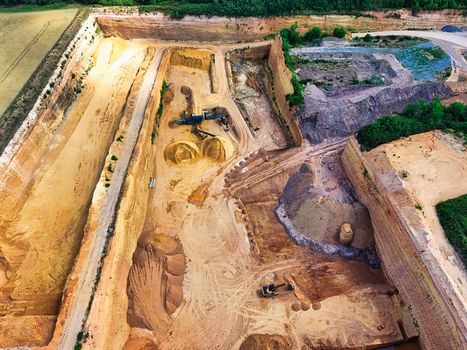
Two trackable signals stand out. First, sorter-class OEMs like GiGi Mining Services moving from "coming soon" marketing into commercial order intake will set a benchmark for the pre-mill rejection layer [S4]. Second, the bundling pattern at Aydintek — oils, chemicals and equipment on one quote — and the ASME-Certified scope at WW Industries will be a useful gauge of how far the upstream/downstream boundary keeps dissolving for mid-tier buyers [S1][S2]. For an engineer building a 2026 spec pack, the mining equipment supply chain 2026 feed and the dust mask sourcing layers are the most useful cross-references, because PPE bands and consumable pricing typically move two quarters ahead of capex.