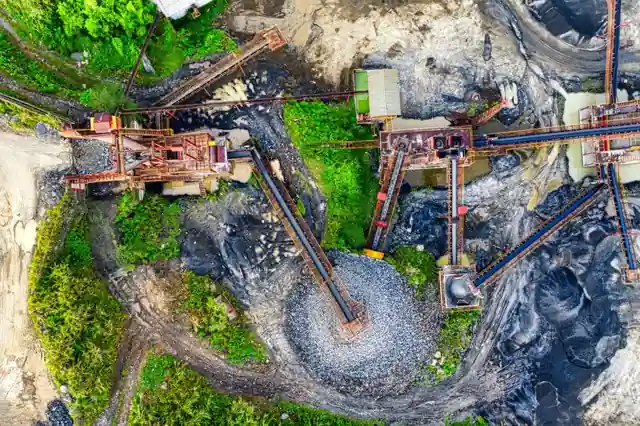
A mining metering pump for critical reagent dosing should operate at 85–90% of rated capacity at maximum expected flow, leaving 10–15% headroom for dosing variation and future demand [S7][S8].
Scope the selection around fluid characteristics, solids content and particle size, duty cycle, chemical exposure, and discharge pressure before comparing pump technologies [S4][S6].
Dosing Duty and Capacity Sizing
Metering pumps are positive-displacement pumps selected for controlled reagent injection, not bulk slurry transfer. Watson-Marlow cased pumps and Qdos chemical metering pumps are used to provide accurate, controlled reagent dosing in mining operations [S1].
Record normal flow, maximum expected flow, minimum turndown, stroke frequency, running hours, and required suction and discharge pressures. Size the metering pump so maximum expected flow is 85% to 90% of rated capacity, providing 10–15% additional capacity [S7][S8]. A unit selected exactly at peak demand has little margin for reagent concentration changes, valve leakage, or operating growth.
The duty cycle must also be defined. Continuous leaching or precipitation dosing may justify a larger pump operated across a wider speed range, while intermittent truck-shovel or assay-lab reagent injection may be better served by a smaller unit and controlled stroke settings.
Bellows, Diaphragm, and Piston Options
Materials and Reagent Compatibility

Chemical composition determines material compatibility because acidic, alkaline, and oxidizing reagents can attack unsuitable wetted components [S3]. Compatibility must be checked for every fluid path part, including the liquid-end housing, diaphragm or bellows, valves, seals, tubing, and connectors.
These materials are not interchangeable, and a material selected for one reagent cannot be assumed compatible with the complete reagent package or contaminants carried with it.
Pressure, Suction, and System Configuration
Discharge pressure is the sum of the injection point requirement and piping, fitting, valve, and injection-device losses. A pump selected on discharge pressure alone can fail because the process also limits available suction pressure and creates a condition known as cavitation. [S2]
Specify maximum and normal system pressure, suction pressure, piping length and diameter, elevation difference, fluid temperature, and liquid vapor pressure. Confirm that the selected pump can deliver the required flow against the total dynamic head without cavitation or excessive valve leakage. For chemical processing applications, the broader metering pump selection for chemical processing comparison provides useful context for control, sizing, and material selection.
Install a pressure-relieving or pressure-limiting device where continued pressurization can exceed the metering pump’s rated pressure. Confirm backpressure effects on calibration and verify that the capacity rating remains valid after accounting for suction conditions and system losses.
Mining Fluids, Solids, and Abrasion

Solids concentration, particle size, and hardness directly affect pump selection and expected wear rates, while mining slurries can also be highly abrasive [S3][S6]. A conventional metering pump is normally assigned to clean reagent or conditioning solutions, not the main ore slurry circuit.
When the selected stream contains solids, specify the maximum concentration, particle size distribution, hardness, and settling behavior. Screening duties may involve variable-density slurry and surging flow; AODD or peristaltic technologies may be appropriate in some applications, but those technologies should not be substituted automatically for a precision reagent-dosing pump [S2][S4].
Keep the metering pump’s wetted path separate from bulk slurry where possible. If solids can enter the dosing circuit, evaluate filtration, backflow prevention, and a clean-water flush. A peristaltic pump is not a generic synonym for every pump used in mining, and its suitability must be judged against the actual fluid, pressure, and solids limits.
Control, Accuracy, and Verification
Dosing performance depends on the complete control loop, including the pump, calibration column, suction and discharge tubing, valves, pulsation dampener, back-pressure device, and controller. The mining selection worksheet should identify fluid characteristics, solids content, particle size, duty cycle, and chemical exposure before a model is selected [S4].
Specify the required accuracy, repeatability, turndown, stroke-speed range, and permitted pulsation. Compare these values with downstream consequences: reagent overdose can alter leach recovery, while under-dosing can increase reagent consumption or leave product off specification. The cased-pump and chemical-metering-pump approach described for mining focuses on accurate, controlled reagent dosing rather than simply moving a large liquid volume [S1].
Commission the system with the intended reagent and water at operating pressure. Verify flow at minimum, normal, and maximum stroke settings, check valve seating and back-pressure compensation, and record the baseline calibration. Recheck calibration when tubing, valves, diaphragm or bellows parts, or reagent conditions change.
Specification Checklist and Shortlist Logic
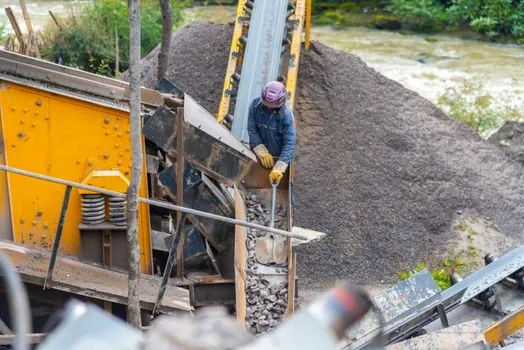
A defensible mining metering-pump datasheet requires at least 10 data fields: fluid identity, concentration, carrier, temperature, normal flow, maximum flow, normal pressure, maximum pressure, duty cycle, and chemical compatibility. Add particle size and solids concentration, required accuracy, control signal, power supply, suction arrangement, and available installation space [S3][S4].
Shortlist a diaphragm metering pump for accurate reagent injection with leakage isolation, a piston metering pump where higher capacity or pressure justifies its sealing arrangement, and a bellows metering pump where clean high-pressure dosing and compact capacity control dominate [S9]. Reject any candidate that lacks a compatible liquid-end material list, confirmed pressure rating, or capacity envelope from 85–90% of maximum expected flow up to the required operating point.
Compare shortlisted units on four criteria: flow and turndown, maximum system pressure, wetted-material compatibility, and maintenance exposure. The winner must meet all four, not merely achieve the highest rated flow.
Next, obtain vendor curves for capacity versus stroke speed and pressure, request chemical-compatibility statements for the complete liquid end, and complete a site hydraulic check before approving the model.