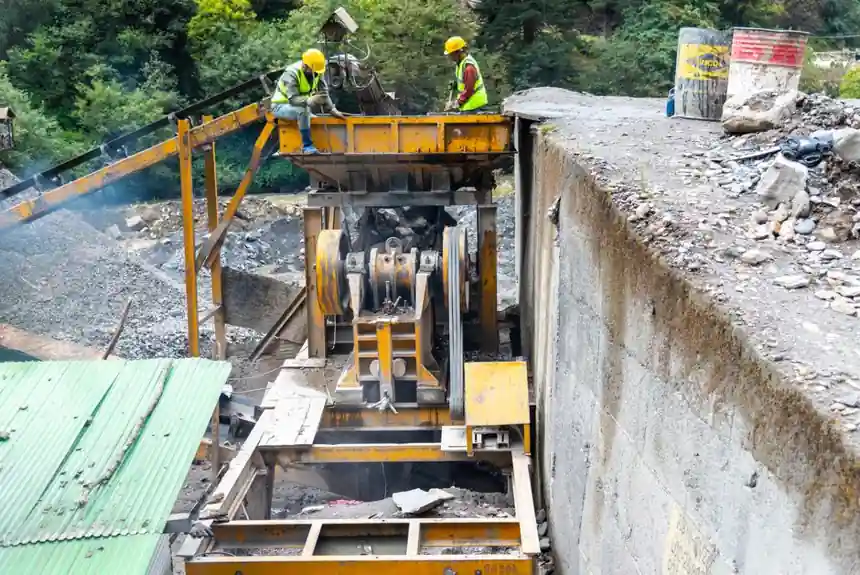
A mining-duty plunger pump is a reciprocating positive-displacement pump that can deliver high pressure with nearly constant stroke volume, making it suitable for grouting, backfill, and injection duties rather than bulk slurry transfer.
The selection must be based on required flow, operating pressure, slurry particle size, abrasiveness, valve configuration, and available drive power, with the final pump size checked against the actual system curve.
Define the mining service before selecting the pump
A plunger pump moves a fixed volume per stroke through a cylindrical chamber using a reciprocating plunger and inlet and outlet check valves.
For mining, the first distinction is between water, grout, backfill, and tailings duties. A clean-water pump may be adequate for dewatering, but a grouting or cemented-backfill system needs a fluid end and valves designed for abrasive, viscous mixtures. A mining slurry pump is generally a centrifugal design intended for high-solids transport, whereas a plunger pump is selected where controlled pressure and metering are more important than very high bulk flow [S5].
Use the centrifugal pump reference as a comparison point when the duty is continuous tailings or concentrate transfer. Use the plunger pump reference for high-pressure grout, backfill, or injection where pressure control and positive displacement are decisive.
Match flow, pressure, and slurry properties
Plunger pumps are most suitable when the required flow is low to medium and the system needs very high discharge pressure. Their flow remains largely independent of discharge pressure because every stroke displaces a fixed volume, while their discharge is pulsating unless the system includes a suitable pulsation-control device [S4].
Industrial CV-type plunger pumps are reported to handle viscosities from 1 to 5,000 cP, covering thin liquids through thick slurries [S2]. Volumetric efficiency of 90% or higher is achieved in many industrial plunger pump applications. These values are useful screening limits, not a substitute for a vendor performance curve using the specified fluid.
The minimum required flow must cover the injection rate and the pressure drop across the complete line. At the same time, the maximum stroke rate must not exceed the pump’s permitted speed, and the drive power must cover the pressure work plus losses. These are model-specific maxima, not generic mining-pump ratings.
Check solids, materials, and wear components
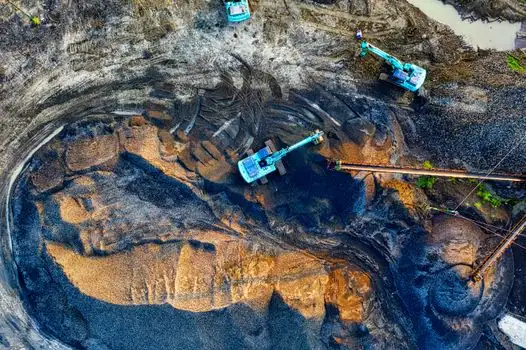
Particle size is a mechanical gate, not a polishing item. Plunger clearances must pass the expected particle size without jamming, and operating conditions affect both material selection and configuration [S2]. A pump selected without a representative particle-size distribution can fail through valve blockage, packing abrasion, or plunger scoring even when its nominal pressure rating is adequate.
Use the mine or plant solids data to define maximum particle size, concentration by mass or volume, particle shape, and the proportion of abrasive contaminants. Mining slurry pumps must handle abrasive, dense slurries and be selected and sized for the specific challenges of the operation. Corrosive process water or chemical additives require fluid-end compatibility review as well.
Specialized reciprocating pumps are moving toward ceramic plungers, corrosion-resistant fluid ends, improved packing assemblies, and configurable pump heads [S3]. These features are relevant only when the selected material is qualified for the actual temperature, chemistry, particle abrasiveness, and duty cycle. Specify replaceable wear parts and check the availability of seals, valve components, and packing kits before issuing an equipment order.
Compare the main pumping options
The practical comparison is between a mining plunger pump, a centrifugal slurry pump, and a peristaltic pump. A plunger pump offers high pressure, positive displacement, and good metering, but requires more deliberate solids control and valve or packing maintenance [S1][S4]. A centrifugal pump handles high bulk flow and continuous transfer more naturally, while its flow changes with the system curve and its efficiency is best near the best-efficiency point [S4].
For a high-pressure grout or backfill duty, choose a plunger pump when the pressure requirement is substantially beyond a normal centrifugal service and the flow can be met without excessive pulsation. For tailings or concentrate pipelines with large flow and moderate head, choose a centrifugal slurry pump with wear-resistant construction. For metering duties involving abrasive slurry, consider a peristaltic pump where its documented flow and pressure range cover the required service and its tubing replacement interval is acceptable [S6].
Apply mining-duty constraints and failure controls
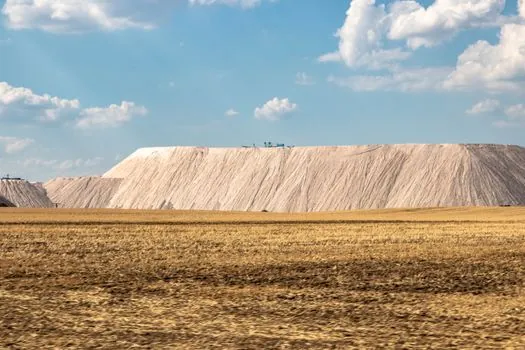
For dewatering, a plunger pump is usually excessive because the duty is normally high flow and low pressure. For underground backfill or surface injection, the pump must deliver the specified grout or cemented-fill formulation at the required pressure without starving on the suction side. For tailings, the centrifugal slurry-pump duty is usually more appropriate because the design objective is sustained solids transport rather than precise displacement [S5][S7].
Reciprocating pumps are also sensitive to liquid-supply conditions. A starved suction side, air entrainment, or a poorly maintained suction accumulator reduces filling and can increase valve wear. High-cycle service should be reviewed for packing leakage, valve fatigue, thermal load, and the allowable pressure pulsation at the pipeline or injection point. The pump should operate within its rated speed, pressure, temperature, and fluid limits, with a relief path provided by an appropriately selected safety valve.
For a typical mining application, require the supplier to state the rated flow at the specified speed, maximum permitted operating pressure, continuous-duty pressure, maximum particle size, maximum solids concentration, fluid viscosity range, fluid-end materials, packing type, valve configuration, lubrication requirements, and the wear-part replacement interval. A test witnessed with a representative fluid is more valuable than a generic capacity claim because slurry rheology and particle interaction can alter pump performance.
Select for maintainability and operating economics
The economic decision is not simply the lowest purchase price. Evaluate the complete package: pump, drive, suction and discharge piping, check valves, pulsation control or accumulators, filtration, guarding, lubrication, spares, and planned maintenance access. The fluid end should expose replaceable seals and packing without requiring removal of the drive train or major pipeline components [S2].
Positive-displacement efficiency should also be separated from total system efficiency. A reciprocating pump may exceed 90% mechanical efficiency in a suitable application, but overall consumption still depends on operating pressure, drive arrangement, fluid properties, and auxiliary equipment [S3]. At high pressure, even a small efficiency difference can produce a material operating-cost difference over repeated mining cycles.
Do not select a plunger pump for a bulk-flow duty simply because its pressure rating is impressive. Do not select a centrifugal slurry pump for a high-pressure injection line simply because it handles solids and is locally available. Select the configuration that meets the duty point, has verified clearance for the solids, and can be maintained with stocked parts.
Shortlist by duty, then verify with fluid data
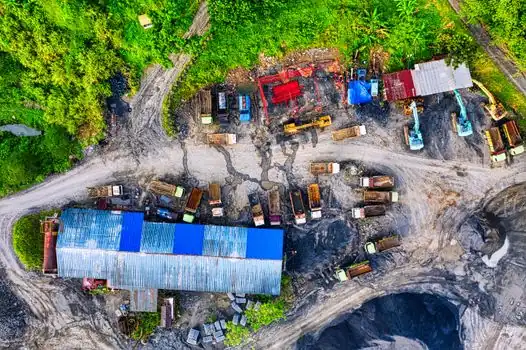
Use a three-stage shortlist. First, reject pumps whose maximum particle size is below the measured slurry top size or whose pressure rating is below the required operating pressure. Second, compare flow capacity at the specified speed, viscosity, solids concentration, and temperature against the actual duty point. Third, require a representative-fluid test and confirm the fluid-end, valve, seal, packing, and lining materials against the service chemistry. [S3]
For high-pressure mining grout or cemented backfill, the correct shortlist is a reciprocating plunger pump with documented flow, pressure, viscosity, and particle-size limits. For high-volume tailings or concentrate movement, retain a centrifugal slurry pump in the comparison. For metering of abrasive fluids where hose replacement is acceptable, evaluate a peristaltic unit against the same pressure and solids limits [S5][S6].
The procurement decision should close only when the pump curve, system resistance, solids envelope, material compatibility, and maintenance plan agree on one datasheet. For related valve controls in the same mining system, the balancing valve selection guide provides a separate engineering basis for network-pressure control.