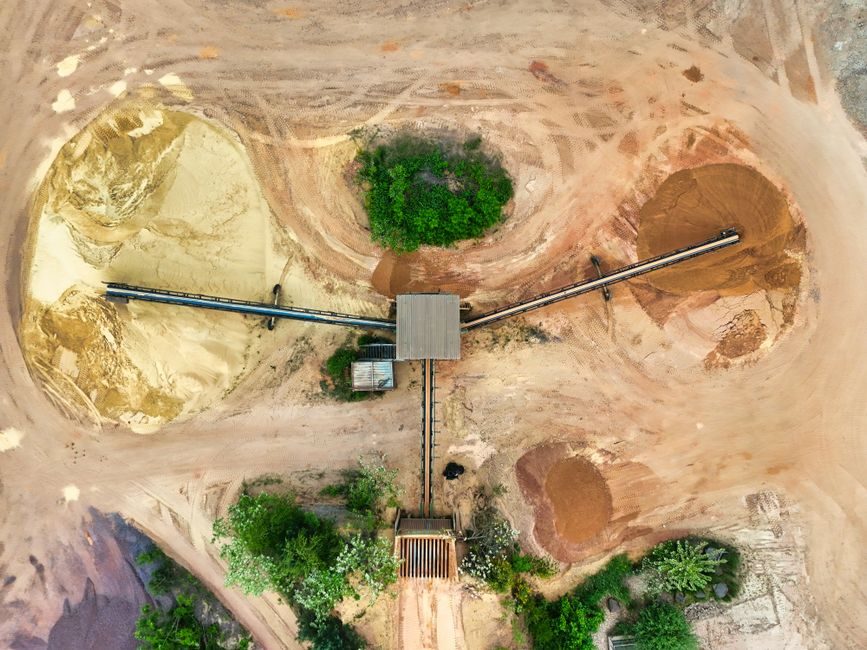
A motor grader specified for hard-rock mining must clear at least 200 HP, weigh 15,000–32,000 kg, and carry a 14–16 ft moldboard to maintain haul-road running surface, bench floors, and ROM pad cross-falls; sub-150 HP units are road-maintenance machines, not mining tools [S1][S3].
Mining-grade units are differentiated from highway graders by heavier front frames, ripper/rear-scatter options, and the parking-brake architecture required by ISO 3450 — a fail-safe spring-applied, hydraulically or pneumatically released system that holds the machine on slope while the operator is off the seat [S2].
Power, Weight, and Moldboard: The Three-Number Sizing Rule
For pit-floor grading and haul-road maintenance, base net power above 200 HP separates mining-class graders from municipal units [S3]. Caterpillar's 16-class machine — 290 HP base net at first gear, 71,454 lb (≈32,400 kg) typical operating weight, and a 16 ft blade — sits in the upper band used for coal and metal-mine haul roads [S6].
XCMG's GR2405T publishes 178 kW (≈238 HP) in the 200–240 HP mining tier, while the smaller GR165, GR2153, and GR2003 cluster in the 165–215 HP range used for light mining, quarry access, and stockpile work [S4]. A practical rule: each 1 ft of moldboard width beyond 14 ft adds roughly 10–15% to the engine power needed to sustain a 4–6 km/h grading pass on compacted mine fill.
Transmission Architecture: Hydrostatic vs Direct-Drive vs Torque-Converter
Three transmission families cover the entire grader market: hydrostatic, direct-drive (power-shift), and torque-converter-drive, each with a different trade-off on inching precision and stall-torque under moldboard load [S3].
Hydrostatic drives give the smoothest low-speed modulation — useful for finish grading on crusher-feed pads — but historically carry higher hydraulic-oil cooling loads in continuous high-load haul-road work. Direct-drive and torque-converter packages handle stall torque better when the blade meets a compacted waste-rock edge; mining fleets with mixed grading and ripping duty usually pick torque-converter or power-shift, while finish-grading-only spreads lean hydrostatic. The fit must match the duty cycle, not the brochure headline.
Braking and Slope Holding: ISO 3450 and the Fail-Safe Parking Brake
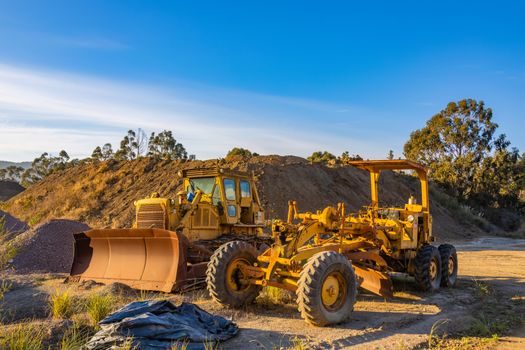
ISO 3450 sets the performance and test requirements for braking systems on rubber-tyred earth-moving machinery — the standard graders running on Indian mine sites must satisfy in addition to local DGMS rules and CMVR 1989 for any on-road segment [S2].
Fail-safe parking brakes are spring-applied and released by hydraulic or pneumatic pressure; on a 12 ft-blade class grader, the original mechanical ratchet-pinion parking brake was replaced by a disc-type spring-applied hydraulically-released unit, with field tests showing lower operator fatigue and higher slope-hold confidence [S2]. For pit-floor work on benches steeper than 8–10%, specify a spring-applied hydraulic-release parking brake with a dual-circuit service brake — anything with a pure mechanical ratchet on a >25 t machine is a safety audit finding waiting to happen.
Frame, Blade, and Attachment Match for Mining Duty
Caterpillar's lift-group work-tool system is built around a 2 in (≈50.8 mm) pin diameter and manual actuation, the common interface for mounting rippers, snow wings, and rear-mounted scarifiers on motor graders [S5]. A 2 in pin / manual interface across the OEM lift-group family lets a mine's existing attachment inventory ride across multiple grader platforms without re-pin welding.
For mining duty, prioritise: (a) heavy-duty front axle with hydraulic-disc service brakes, (b) rear ripper/scarifier with at least 3 shanks, (c) moldboard with replaceable cutting edges in high-carbon steel, and (d) an enclosure meeting ROPS/FOPS for falling-object zones near shovels. Frame articulation beyond the standard 20° left/right is rarely required unless the grader works narrow bench ramps.
Operator Controls: Joystick vs Lever-Steering and the Next-Gen Platform Shift
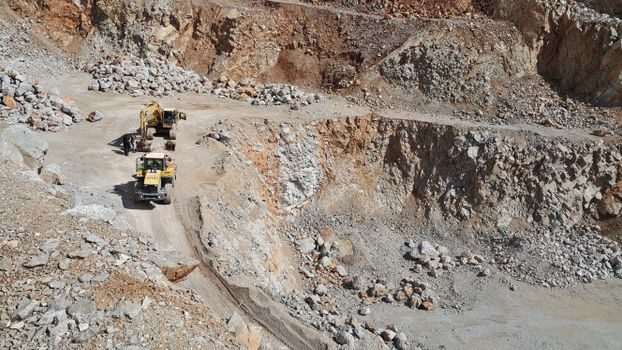
Caterpillar's 140-class grader moved to the next-generation platform in 2025 and gained an optional joystick control in December 2025, sitting alongside the classic lever-and-steering-wheel layout [S3]. The 150 and 160 joined the next-gen platform with smarter controls, improved efficiency, and enhanced operator comfort for higher-hour mine fleets.
Joystick controls reduce operator arm fatigue on long shifts but change the muscle-memory of lever-trained crews; for a fleet with mixed seniority, the LVR (lever) option remains the lower-training-risk default. John Deere's 2026 SmartGrade P-Tier release covers 620/622/670/672/770/722/870/872 models and embeds grade-control integration directly into the machine [S3]. For new pit-floor purchases, the choice is no longer 'joystick vs lever' alone — it is 'integrated grade control vs retrofit mast', and integrated systems win on bench-floor accuracy.
Vendor Landscape and Selection Criteria for Mining Buyers
Four OEM families now contest the 150–300 HP mining-grader segment: Caterpillar (140/150/160/16-class), John Deere (P-Tier SmartGrade 620–872), Case (GR Series 200+ HP expansion), and the Chinese-build entries from XCMG and LiuGong that entered the North American market in mid-2025 via Apex Equipment [S3][S4].
A short comparison on four decision criteria: (1) Power — Cat 16 at 290 HP and XCMG GR2405T at 178 kW lead the 200+ HP band, while Cat 140/150/160 and Deere 620/670 cluster in 200–250 HP [S3][S4][S6]; (2) Weight — heavier frames (>30 t) suit coal and oil-sand haul roads, lighter 15–20 t frames suit quarry access; (3) Grade control — Deere SmartGrade and Cat next-gen ship with factory-integrated automation, XCMG and LiuGong typically rely on third-party masts; (4) Total cost — Chinese-build XCMG units list in the $19,701–$750,000 FOB band across used and new, while Cat and Deere machines sit materially above [S4]. For a single 24/7 pit-floor deployment, integrated grade control and dealer-backed service usually outweigh a $50,000 purchase-price spread.
Use Cases, Limits, and What a Motor Grader Will Not Do
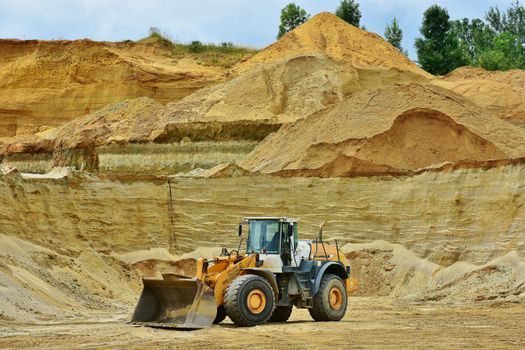
A motor grader is the right tool for haul-road maintenance, ROM pad grading, bench-floor cleanup, snow removal on access roads, and light ripping in fill material [S1][S3]. It is the wrong tool for primary excavation, hard-rock ripping requiring a dozer, or stockpile stack/reclaim — a bulldozer spec map is a better reference for snow-and-clearing and ripping duty, while motor graders carry a motor grader encyclopedia entry for sizing and transmission detail.
Limits: motor graders depend on tractive effort that drops sharply on wet clay or icy haul roads; a grader cannot push a fully loaded 100 t mining dump truck out of a sink hole — that is a dozer or mining dump truck recovery task. For auxiliary power on attachments requiring hydraulic flow, the grader's implement pump is sized for blade lift, not high-pressure rotary tools, so overspec'ing a hydraulic-motor-driven attachment will starve the steering circuit.
Trackable Signals for the Next Spec Window
Three signals are worth watching before the next purchase: (a) Case's 200+ HP GR Series full release and dealer-coverage map, (b) Deere SmartGrade retrofit availability for legacy G-series owners, and (c) the next Cat 140/150/160 LVR-vs-JOY adoption split at mines with multi-shift crews [S3]. Specifications and MSRP for the Cat 16-class machine, including 290 HP base power and 71,454 lb operating weight, are confirmed on the regional OEM product page as of February 2026 [S6].
Component reference pages worth checking: ac motor.