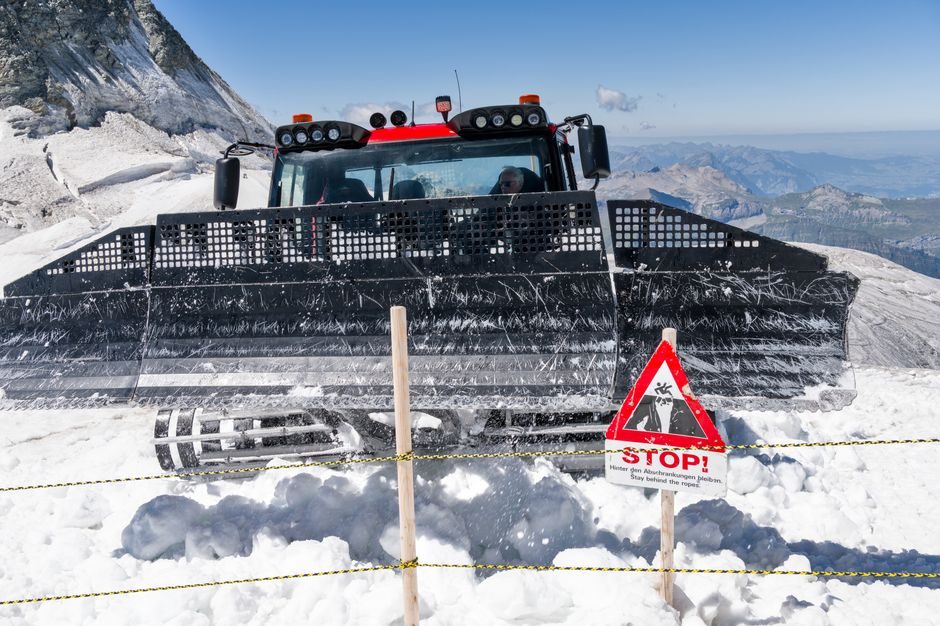
Snow duty is pushing and stacking, not ripping — a 130–160 hp crawler with a 6-way PAT blade and low-ground-pressure (LGP) undercarriage is the workhorse for city lots and arterial roads, while 200–300 hp machines with semi-U or full-U blades handle haul-road and airport-ramp pushing where snow volume is measured in cubic metres per metre [S1].
For municipal contracts east of the Rockies, fleets typically size a 14–18 tonne class machine such that ground pressure stays below 0.35 kg/cm² on packed snow to avoid sink-in and turf damage on parking-lot work, and they spec cold-start packages rated to –30 °C including block heaters, synthetic hydraulic oil, and arctic-grade batteries [S1].
Operating-Weight and Horsepower Bands
Snow-removal dozer horsepower clusters into three duty bands tied to snow density and push distance: 90–120 hp for walkways, driveways, and small parking lots (often a compact track loader with a dozer blade is more efficient); 130–160 hp for residential streets, apartment complexes, and shopping-centre lots; 200–300+ hp for arterial roads, airport ramps, and haul-road windrow management where a single pass must move wet, dense snow [S1].
The 130–160 hp band dominates commercial snow contracts because a 14–18 tonne machine can be hauled on a 25-tonne tag trailer without over-width permits in most US states, keeping mobilisation costs under USD 800 per move in 2026 — a key margin variable for subcontractors bidding seasonal work [S1].
Blade Geometry: 6-Way PAT vs Straight vs Semi-U
Six-way power-angle-tilt (PAT) blades are the default for snow because they let the operator angle, tilt, and offset the blade from the cab — critical when windrowing along curbs without spillage into catch basins and when back-dragging to clear stubble left after the main pass [S1].
Straight blades are cheaper and tougher for ice scoring, but they cannot windrow efficiently. Semi-U and full-U blades retain more material per pass and are standard on machines feeding snow into blowers or stacking into haul trucks on arterial and airport jobs, where the higher hp of 200+ hp crawlers provides the push force that U-blade geometry demands [S1].
Undercarriage and Ground Pressure for Snow
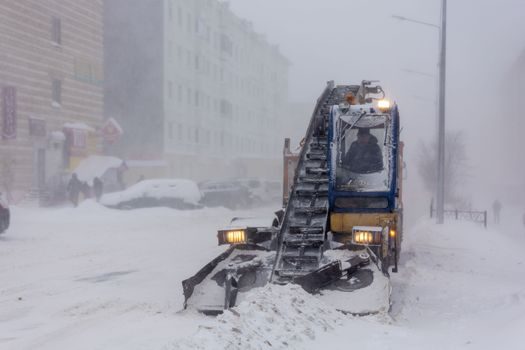
LGP (low-ground-pressure) tracks with wider shoes — typically 760 mm (30 in) versus 510 mm (20 in) on standard undercarriages — drop ground pressure by roughly 30–40 %, which is the difference between walking on top of a frozen lot and punching through into soft asphalt or thawed turf at the spring edge of the season [S1].
Cab, Visibility, and Cold-Weather Operator Systems
Rear-view cameras, heated mirrors, and LED work-light packages are no longer options but contract requirements — most US municipalities now require reverse alarms plus a 360° lighting scheme for night operations under OSHA 1926.602 and state DOT night-work rules [S1].
Arctic cab packages typically include a 12 V or 120 V block heater, a fuel-fired coolant heater (Espar/D-Webasto type), a hydraulic-oil cold-start bypass that holds warm return oil at the reservoir, and HVAC rated for –40 °C ambient — without these, J1939 cold-start derates can cut a 160 hp machine to roughly 110 hp until the coolant reaches 60 °C, which on a 25-below morning is 20+ minutes of idle [S1].
Matching the Machine to the Site
For a 5-acre shopping-centre lot with 200 mm (8 in) typical snowfall, a 14-tonne LGP dozer with 6-way PAT running one 8-hour shift clears the property in roughly 4–5 hours, leaving a windrow pile that requires hauling when stacks exceed 1.5 m — at which point a loader-truck team takes over rather than a larger dozer, since dozers are inefficient at truck loading [S1].
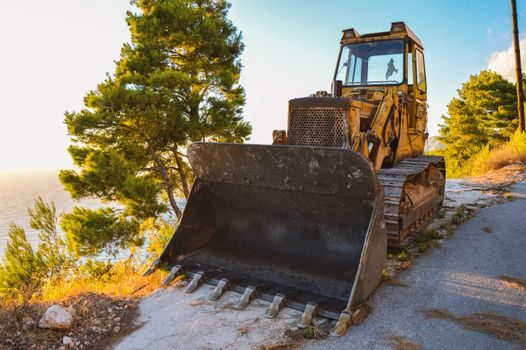
Airports and Class-1 rail intermodal yards need 200+ hp machines with semi-U blades and ripper-style rear attachments that break compacted snow and ice ridges before the next pass, a pattern that mirrors the rationale behind heavy landfill dozer work where guard rails and elevated sprockets protect against debris strikes — a closely related bulldozer specification profile for high-impact push duty.
Standards, Safety, and Contract Compliance
Reverse-signal alarms, ROPS/FOPS structures, and seat-belt indicator systems are mandated under OSHA 29 CFR 1926.602 for any dozer operating on a commercial jobsite; the same rule set governs municipal-fleet work in most US states [S1].
For state DOT highway work, the Manual on Uniform Traffic Control Devices (MUTCD) Type C arrow-board and high-visibility marking on the dozer itself are required — a low-cost compliance item that has become a contract-disqualification criterion in 2026 municipal RFPs in the Midwest and Northeast [S1].
Limitations and Common Failure Modes
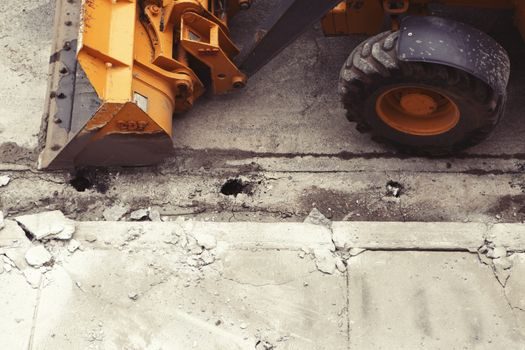
Dozers are poor at truck loading — when a windrow pile exceeds loader-truck reach, a wheel loader with a 4 m³ bucket moves 4–5× the cubic-metres-per-hour of a dozer pushing into a truck; fleets that try to use a single dozer for everything burn fuel and wear undercarriage for no schedule gain [S1].
Hydraulic-hose cold cracking below –25 °C is the most common pre-season failure; arctic-spec hose (to –40 °C) and quick-disconnect fittings on the blade-angle cylinder cut field-repair time from hours to minutes — a field-tested practice on Northeast US fleets that commission 50+ machines in a single October weekend [S1].
Selection Checklist for 2026 Procurements
Specify: 130–160 hp (or 200+ hp for airport/arterial) Tier 4 Final engine, LGP undercarriage with 760 mm shoes, 6-way PAT blade factory-installed, arctic cab package rated –30 °C, LED light bar, reverse camera, and a cold-start package including 120 V block heater and fuel-fired coolant heater [S1].
Track the FY2027 municipal-bid calendar in target counties (Cook IL, Wayne MI, Erie NY, Suffolk MA) — RFPs typically publish 90 days before the November 1 contract start, and frame orders to OEM dealers through Cat, John Deere, Komatsu, and Case usually require 120-day lead time, so fleet replenishment decisions made in August 2026 lock in delivery before the first measurable snowfall in most service areas.
Spec-level background on the components involved: pressure transmitter, and flow meter.
For related coverage, see Smart Valve Positioner Sizing and Selection: A Spec Map for 2026 Plant Builds.