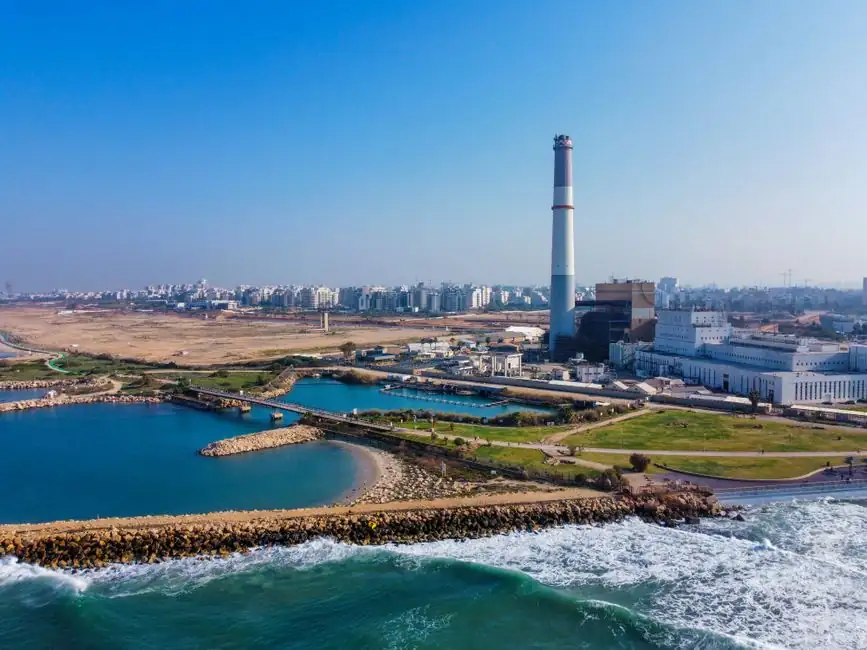
For a seawater reverse osmosis plant, the high-pressure pump must generate 55–85 bar of operating pressure to overcome osmotic pressure and force water molecules through the semi-permeable membrane [S1].
Selection must reconcile design flow, total dynamic head, net driving pressure, first-stage NPSH, salinity, materials, seal arrangement, motor duty, and the plant’s operating range rather than rely on pressure alone [S1][S3][S6].
Define the hydraulic duty before choosing the pump
The first specification is the design flow in m³/h, paired with the minimum and maximum operating flows expected during startup, production, cleaning, and turndown. A variable-speed multistage pump must remain within its acceptable operating region at every credible duty point, while a fixed-speed unit must be checked against both rated flow and minimum continuous stable flow [S3][S6].
The high-pressure pump must generate 55–85 bar of operating pressure for the stated reverse osmosis duty [S1].
A practical shortlist should record at least three flow cases: design flow, minimum stable flow, and maximum flow. Each case needs corresponding head, pressure, speed, power, and NPSH checks. This avoids selecting a pump that reaches the design point but runs outside its efficient or stable operating range at reduced production [S3][S6].
Compare the pump architectures against actual duty
Multistage centrifugal, plunger, and positive-displacement arrangements must be compared on flow stability, pressure control, energy consumption, and maintenance exposure before one is selected. Multistage centrifugal pumps are generally favored for medium and large seawater desalination plants because they combine high flow with pressure generated by multiple impellers in series [S2].
The mainstream multistage centrifugal option should not be selected when the duty has highly pulsating flow, severe solids, incompatible salinity chemistry, or a pressure requirement that cannot be met economically with staged hydraulics. Plunger or specialist positive-displacement equipment may then be more suitable, subject to flow and fatigue checks [S2].
Match stages, impellers, NPSH, and speed
A multistage pump contains two or more impellers mounted on one shaft, with discharge from one stage feeding the next, so total developed head is approximately the sum of the individual stage heads [S3][S8]. The stage count must therefore be derived from the calculated total head and the head developed per stage at the required flow, not selected from a model family alone [S3][S6].
The pump curve and best efficiency point are central constraints. Select a multistage unit whose rated operating point falls near its BEP and verify part-load operation at the expected production range; oversized pumps can consume more energy per cubic metre, while undersized pumps can fail to maintain the membrane net driving pressure [S1][S3].
NPSH must be checked at the first stage under the lowest inlet condition, including suction piping, elevation, vessel pressure, valve losses, temperature, and minimum flow. A quoted NPSH value is not sufficient unless its test reference and application margin are established, because insufficient first-stage NPSH causes cavitation, vibration, noise, erosion, and loss of performance [S3][S6].
Specify seawater-compatible materials and leakage control
Centrifugal pumps are the most commonly used pump family in desalination, and material selection must follow the actual feed and brine chemistry rather than a generic “stainless steel” description [S7]. The selection should identify the grade for wetted impellers, casing, shafts, sleeves, seals, fasteners, and exposed external components, then define the chloride concentration, temperature, pH, oxidants, and cleaning chemicals that bound corrosion [S1][S7].
Seawater and brackish service are not interchangeable material applications. Feedwater TDS in mg/L is a core selection parameter, and the proposed alloy must remain suitable for the specified salinity and operating temperature throughout the duty cycle [S1]. Chloride-bearing service also requires careful review of crevices, galvanically dissimilar connections, and replaceable wear parts.
Seal architecture must be selected from the fluid and failure consequence. Where a mechanical seal is retained, the specification still needs the seal fluid, barrier or buffer arrangement, flush plan, leakage containment, and accessible inspection provisions.
Control the system, energy, and maintenance consequences
The operating check should include kWh/m³ at the design flow, variable-speed behavior at reduced load, motor starting method, power-system limits, and the duty of any energy-recovery equipment [S1][S3].
Controls must protect both membrane and pump performance. Relevant interlocks include low suction pressure or NPSH margin, high discharge pressure, excessive differential pressure, low flow, and pump or motor faults. A variable-speed arrangement can hold the required net driving pressure as feed temperature and salinity change, but the pump must still pass the minimum stable-flow and maximum-speed checks [S1][S3][S6].
Maintenance scope should be defined at purchase, including access to impellers, stage diffusers, bearings, mechanical seals or coupling elements, and wear rings. The spare-parts strategy should identify lead times, compatible material grades, and tools needed for casing removal. For a related comparison, the multistage centrifugal pump selection for irrigation illustrates why duty-specific hydraulic checks matter outside desalination.
Use a procurement checklist tied to measured data
A purchasable data sheet should state rated flow, rated head or pressure, speed, number of stages, impeller geometry, motor rating, efficiency at stated flows, required NPSH, operating limits, and certified performance curves. It should also identify wetted materials, seal or coupling construction, allowable fluid temperature, and the applicable seawater-service configuration [S3][S4][S7].
Every bidder should be evaluated against the same operating cases. Require guaranteed flow and head, minimum NPSH, efficiency at the specified design points, material certificates, and details of the test standard stated on the quotation. Any deviation affecting stage count, speed, motor, seal, materials, or instrumentation should be treated as a technical deviation rather than silently treated as equivalent.
The shortlist logic is straightforward: choose a multistage centrifugal pump for a large or medium seawater RO duty when the calculated pressure is within the 55–85 bar class, the operating range can be placed near the BEP, NPSH is demonstrated at the first stage, and compatible materials are defined by the actual feed chemistry [S1][S2][S3][S7]. Do not release the order until the datasheet closes the hydraulic, corrosion, sealing, motor, control, and test-data gaps.