
Global NAND Flash demand is forecast to expand at 18% year-on-year in both 2026 and 2027, with Q1 2026 manufacturer revenue hitting a record USD 46 billion, roughly 3.5 times the year-ago quarter [S5]. Enterprise SSDs already absorb 40% of total bit demand and Counterpoint Research expects that share to clear 60% by year-end 2026 [S5].
On the supply side, Mizuho models NAND wafer starts contracting 5% in 2026 and recovering only 3% in 2027, with no meaningful new wafer capacity until 2028 or 2029 [S5]. TrendForce separately pegs the 2026 bit supply deficit at 4% to 5% and expects shortages to persist through the first half of 2027, with the supply-demand balance flipping positive in 2H 2027 [S2][S6].
Market Size and Growth Trajectory to 2030
The global NAND Flash market reached approximately USD 68 billion in 2025, up 12.4% year-on-year, and is projected to break USD 75 billion in 2026 and exceed USD 110 billion by 2030 [S1]. A separate shipment-based view sizes the 2026 NAND Flash wafer-equivalent market at USD 92 billion on roughly 78 billion equivalent GB shipped, expanding to USD 150 billion on 135 billion equivalent GB by 2030, a 10.8% five-year CAGR [S3]. The two views differ because one measures end-product market value and the other measures wafer-level shipment revenue, but both show the same double-digit compounding through the decade.
Quarterly bit demand growth is running above 8% as AI training and inference pull enterprise SSD density to 8-16 TB per drive in 2026 [S3]. For buyers who specify industrial PLC-backed storage cabinets, the implication is that the bill of materials is being repriced against server OEM allocation rather than against the consumer channel.
Demand-Side Drivers: AI Servers, Smartphones, and Auto
Servers now represent more than 40% of total NAND Flash bit demand, while smartphones and notebooks together account for nearly another 40% [S2]. A single AI server consumes several times the NAND of a conventional server, and major suppliers are reallocating advanced-node capacity toward HBM stacks used alongside NAND [S5]. Counterpoint's 60% enterprise-SSD share by end-2026 is the highest the segment has ever held, and the shift is structural rather than seasonal.
On the consumer side the picture is weaker. TrendForce expects global smartphone production to decline 15-20% in 2026 and notebook shipments to fall around 10%, with both contracting again in 2027 at a more moderate pace [S2]. In automotive, each L3 autonomous vehicle averaged 1.2 TB of NAND in 2026, four times the 2023 figure, and European automotive demand alone is sized at USD 2.4 billion in 2026 with a 14.2% five-year CAGR [S3]. Sourcing teams that feed servo motor-driven conveyor lines into SSD pack-out should expect auto-grade NAND allocation to be increasingly ring-fenced by the same suppliers serving the data-center channel.
Supply-Side Constraints: Wafer Cuts, Capex Discipline, and the 2028-2029 Wall
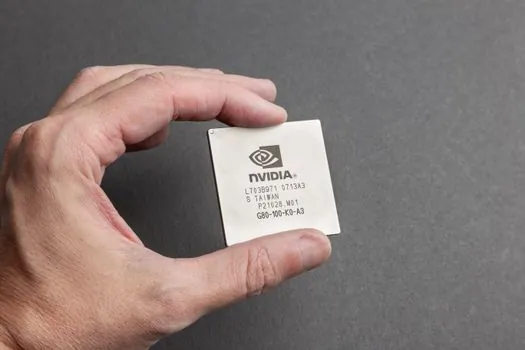
Bank of America analyst Wamsi Mohan expects NAND pricing strength to persist at least through H1 2027 and notes the absence of incremental supply through 2028-2029 will sustain vendor gross margins [S5]. The capex logic is straightforward: leading manufacturers are prioritizing advanced-node wafer allocation to HBM for AI accelerators, and the lead time from groundbreaking to qualified NAND output routinely exceeds 24 months. SanDisk has signalled that meaningful capacity additions are unlikely before 2027 at the earliest, with consumer-grade lines unlikely to ease near term [S5].
Total 2026 NAND Flash industry equipment investment is forecast at USD 21.5-24 billion, actually down 6% from 2025, confirming a shift from expansion to technology-upgrade cycle [S3][S1]. Of this spend roughly 62% is flowing to advanced-node and packaging capacity rather than new fab shell space [S1]. This is consistent with the TrendForce read that 2026 supply growth is process-driven, not wafer-count-driven [S2].
Regional Split and China's Rising Share
Asia Pacific dominated 2025 NAND demand at USD 31 billion, or 45.6% of the global total, with China alone at USD 12.8 billion, 41.3% of the regional figure and growing 14.7% year-on-year [S1]. North America, pulled by AI infrastructure spend, reached USD 19 billion at 16.2% growth, the fastest of any region, while the EU sat at USD 9.5 billion on a more sedate 6.8% [S1]. The high-performance NAND segment, defined as 3D TLC and 3D QLC for enterprise SSDs and high-end smartphones, was sized at USD 48.5 billion in 2025 and is projected to reach USD 114.95 billion by 2032 on a 13.12% CAGR [S4].
On the supply side, Chinese manufacturers' share of global NAND Flash bit output is expected to rise to nearly 19% in 2027, making them an increasingly important source of additional market supply [S2]. YMTC specifically has moved from 3.2% of global share in 2023 to 5.7% in 2025, with 6.8% projected for 2026 on the strength of its 232-layer product in embedded and consumer SSD [S1]. The top six suppliers together held 93.8% of global share in 2026, down modestly from 96.2% in 2023 as Chinese capacity ramps [S3].
Technology Roadmap: 300-Plus Layers, QLC Dominance, and PCIe 6.0
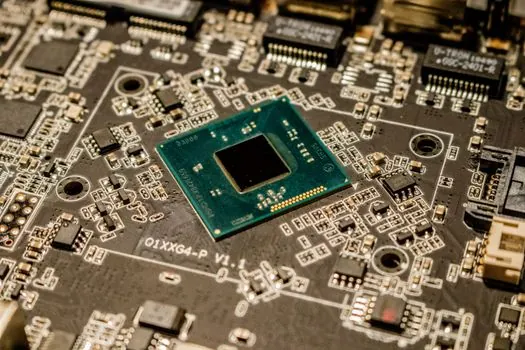
200-plus layer 3D NAND is in mass production, with Samsung, Kioxia, SK hynix, and YMTC all shipping 300-plus layer samples in 1H 2026, cutting cost per bit 18-22% versus the prior generation [S1]. QLC penetration in data-centre deployments is forecast to hit 31.5% in 2026 and over 55% by 2030, displacing TLC for read-intensive warm-tier workloads [S1][S3]. PLC remains in lab validation; commercial sampling is not expected before 2028 [S1][S3].
Interface standards moved forward in 2026 with Toggle 6.0 and ONFi 6.1 supporting 3.2 Gbps per channel, paving the way for PCIe 6.0 SSDs that began small-batch shipments in Q2 2026 with sequential reads above 14 GB/s [S1][S3]. Hybrid bonding, which decouples CMOS logic from the NAND array to raise I/O speed, is the next packaging battleground, covered in detail in this advanced packaging capacity map. For HBM-adjacent buyers, the HBM supply picture that constrains AI accelerator build-out runs on the same Korean fab footprint, as tracked in this HBM market share update.
Price Action: SanDisk's 50% Hike and Multi-Year Lock-Ins
SanDisk raised its November 2026 NAND contract prices by approximately 50% as the squeeze began biting, and multiple module makers paused shipments while contracts re-priced [S5]. Under the company's New Business Model (NBM), multi-year supply is locked with key customers, and Bank of America reports that more than one-third of SanDisk's FY2027 revenue is already committed under NBM arrangements [S5]. Bank of America raised its SanDisk price target from USD 1,550 to USD 2,100, while Mizuho lifted its target from USD 1,825 to USD 2,200 and simultaneously raised Seagate's target to USD 1,090; on 9 June 2026 SanDisk shares jumped nearly 10% intraday on these revisions [S5].
Major producers have effectively sold out 2026 supply allocations, while total NAND bit demand is projected to grow 20-22% against 15-17% capacity growth [S4]. Inventory at the manufacturer level is lean, though module makers have built stock because consumer sell-through has been slow [S2].
What to Track: Inventory, HBM Reallocation, and 2H 2027 Inflection
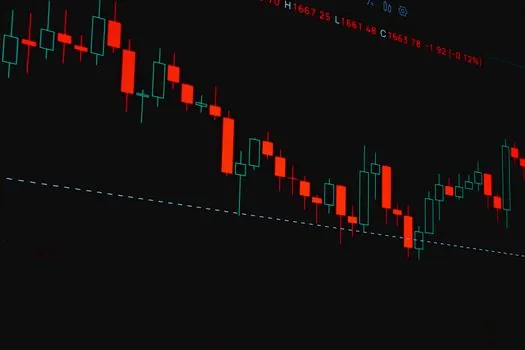
Three signals will tell procurement teams whether the 2H 2027 relief is real. First, Chinese bit-output share crossing 19% in 2027, which TrendForce already projects, is the swing variable for global supply growth turning positive [S2]. Second, NAND wafer starts, forecast to contract 5% in 2026 and rebound only 3% in 2027, need to inflect positive or the deficit window extends past 1H 2027 [S5]. Third, HBM capacity allocation decisions at the Korean majors, which currently pull advanced-node wafer away from NAND, will dictate whether greenfield NAND fabs get greenlit before 2028.
Near-term, the consumer channel will not see relief: desktop, notebook, smartphone, and tablet bill-of-materials costs are still rising as manufacturers prioritize higher-margin enterprise SSD output, and consumer SSD prices are not expected to ease in the near term [S5]. For industrial and edge buyers, the practical hedge is to lock 12-24 month supply under NBM-style agreements while spot pricing remains punitive, and to qualify second-source Chinese QLC for read-intensive tiers where endurance requirements permit.
Spec-level background on the components involved: pressure transmitter.