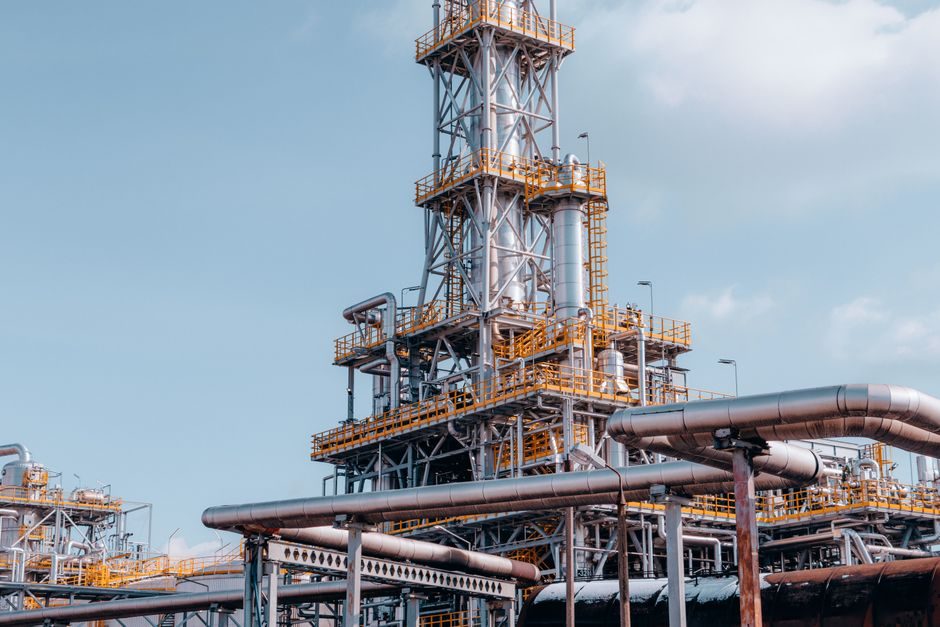
U.S. dry natural gas production averaged roughly 103–105 Bcf/d across 2024–2025 per EIA's quarterly data series, with shale-gas basins (Marcellus, Haynesville, Permian associated gas) supplying the majority share of incremental volume [S1].
The same EIA series breaks output into marketed production, extraction loss, and dry gas; the dry-gas column is the figure sent into processing plants, LNG export terminals, and the MRO/RNG-to-syngas conversion units covered below [S1].
Conventional vs Unconventional Reservoir Production Methods
Conventional natural gas is produced from high-permeability sandstone/carbonate reservoirs where the formation drives the well; typical wellhead equipment is a low-to-medium pressure Christmas tree (ANSI 600–1500 class) feeding a two- or three-phase separator at 0.5–7 MPa and 20–60 °C. [S1]
Unconventional production — tight gas, coalbed methane, and most importantly shale gas — requires hydraulic fracturing in horizontal wells with lateral lengths of 1,500–3,000 m, 20–40 fracture stages per well, and 1.5–4 million gallons of slickwater per stage. The Marcellus alone accounted for the largest share of U.S. dry shale gas in EIA's 4Q 2025 release, with Haynesville contributing the largest absolute increase in the same quarter [S1].
After reservoir flowback, both streams converge at the gas-gathering system and are routed to a processing train whose primary job is NGL recovery, dew-point control, and H2S/CO2 removal to meet pipeline spec (≤ 0.25 grain H2S / 100 scf, ≤ 2–3 % CO2, ≤ 7 lb water/MMscf in the U.S.).
Gas Processing Trains: Separators, Dehydration, Sweetening
A standard amine sweetening unit uses MEA, DEA, MDEA, or formulated aMDEA at 35–50 wt % to reduce acid gas; contactor pressures are commonly 0.5–7 MPa with lean amine temperatures 35–45 °C, and H2S outlet is typically held under 4 ppmv to comply with pipeline tariff [S3].
Dehydration is performed with triethylene glycol (TEG) contact towers operating at 4–10 MPa and 15–50 °C, achieving water dew points below −20 °C at 6.9 MPa; molecular sieve units (3A, 4A) are added upstream of LNG / cryogenic NGL recovery when sub-ppm moisture is mandatory [S3].
Methane Emissions, Liquid Unloadings and Process Upsets
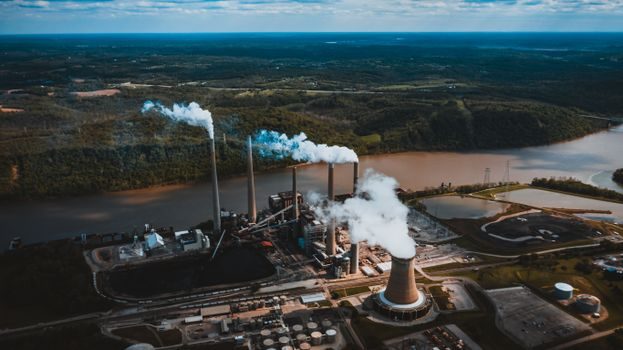
Field studies of U.S. gas production sites show that liquids unloadings on conventional wells can release an estimated several hundred cubic metres of methane per event when wells are vented rather than recovered, making plunger lifts, pump-assisted unloadings, and gas-lift conversions a primary mitigation route [S6].
Process equipment at well pads — pneumatic controllers, dehydrator vents, compressor rod-packing, and storage-tank flashing — accounts for the majority of remaining vented emissions; route-level measurement campaigns using optical gas imaging and fixed gas detectors are now standard practice on new U.S. operations [S6].
Continuous monitoring of sweetening-unit acid-gas breakthrough is done with gas detectors qualified to IEC 60079 family and ATEX category requirements; a 1–2 ppmv H2S swing on the treated-gas line is the typical alarm trigger, with full ESD at 10–20 ppmv depending on site philosophy.
Synthesis Gas and Downstream Conversion Routes
Beyond pipeline delivery, natural gas can be converted to syngas (H2 + CO) by three principal technologies: steam methane reforming (SMR), partial oxidation (POX), and autothermal reforming (ATR); SMR dominates merchant hydrogen at 70–80 % of installed capacity, with reformer outlet temperatures of 800–900 °C and steam-to-carbon ratios of 2.5–3.5 [S2].
POX operates at 1200–1500 °C without a catalyst and produces a H2:CO ratio near 2:1, ideal for Fischer-Tropsch diesel; ATR combines a partial-oxidation burner and an adiabatic catalyst bed, sitting between the two on both temperature (900–1050 °C) and H2:CO ratio (2.0–2.5) — the modern preference when CO2 capture is in scope [S2].
Methane activation remains the kinetic bottleneck on all three routes; typical SMR reformer tubes are 25 % Cr / 20 % Ni (HK40) or 35 % Cr / 45 % Ni cast alloys rated for 25–30 bar and 950 °C skin temperature, with service life of 80,000–100,000 hours before creep-driven replacement.
Comparison: SMR vs POX vs ATR for Syngas Production
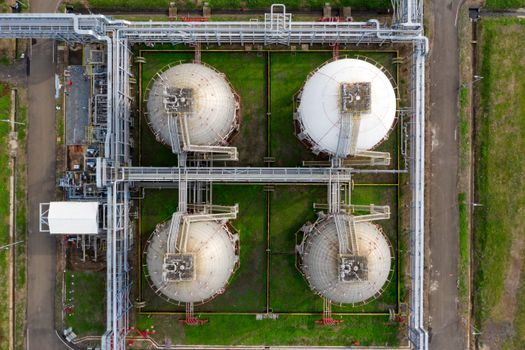
The three reformer families are not interchangeable; engineering selection is driven by H2:CO ratio, oxygen availability, scale, and CO2-capture readiness. The table below consolidates the decision-grade criteria a process engineer needs at the PFD stage. [S2]
On the cost axis, SMR has the lowest capex per unit H2 but the highest natural-gas consumption per ton of H2 (roughly 3.5–4.0 MMBtu); POX carries higher capex because of the cryogenic ASU and refractory-lined reactor, but produces no external flue gas stream to sequester, simplifying carbon capture retrofits; ATR is increasingly chosen on a balance of capex/opex when a 2:1 syngas ratio suits the downstream block (e.g. methanol, GTL via Fischer-Tropsch) [S2].
On the scale axis, SMR scales from 1–500 t/d H2 in modular units, POX is typically above 1,000 t/d because of ASU economics, and ATR sits in the 500–2,000 t/d band favoured for new GTL and methanol mega-projects where industrial gas purity is a tariff requirement.
Standards, Measurement and Source Data
Production data used in this article is sourced from the U.S. Energy Information Administration's Natural Gas Data hub, which publishes 1Q 2026 figures (release 4/1/2026) and 2Q 2026 figures (release 6/30/2026); the same series carries 4Q 2025 (release 12/30/2025) and 4Q 2024 (release 1/2/2025) for trend lines [S1].
Syngas-route technology references are documented in Sundset, Sogge and Strøm's 1998 evaluation of natural-gas based synthesis gas production technologies, which remains a primary literature source for SMR/POX/ATR trade-offs and reformer metallurgy choices [S2].
Operational guidance for the U.S. processing industry is maintained by the Energy Solutions Center's Natural Gas Technology portal, which collects industrial performance benchmarks, flare-management protocols, and emission-reduction practices applicable to gas-processing trains and downstream syngas blocks [S3].
For related process-equipment context, see the heat-treatment spec guide for reformer tube manufacturing at heat treatment furnace 2026 cost reference and the comparative spec cut on adjacent furnace equipment at foundry furnace comparison 2026; for measurement hardware on the wellhead, see the combustible gas detector reference, and for QA of syngas composition during turnarounds, see the gas chromatograph page.
Limitations, Failure Modes and What the Data Does Not Cover

EIA's quarterly production release lags the calendar by roughly 60 days, so real-time optimization of gas-gathering networks still depends on operator SCADA and on-site chromatographs; gap-filling with gas analyzers is mandatory for any contract tied to heating-value or Btu specifications. [S3]
Syngas-route data referenced in this article is grounded in the 1998 Sundset evaluation and should be re-validated against current OEM reformer-design manuals for any new project, since reformer metallurgy, catalyst formulations, and CO2-capture integration have all advanced since publication [S2].
Methane-emission magnitudes cited above apply to the U.S. production segment and the specific liquid-unloading subset studied; they should not be extrapolated to midstream compression stations, LNG liquefaction, or distribution-city-gate operations, where the dominant leak mechanisms differ.
Trackable signals for the next 90 days: the EIA 3Q 2026 release (date 10/1/2026 on the published schedule) for updated dry-gas and shale-gas split, and any OEM bulletin on reformer-tube creep-life extension for HK40/HP-Mod cast alloys in SMR service [S1].