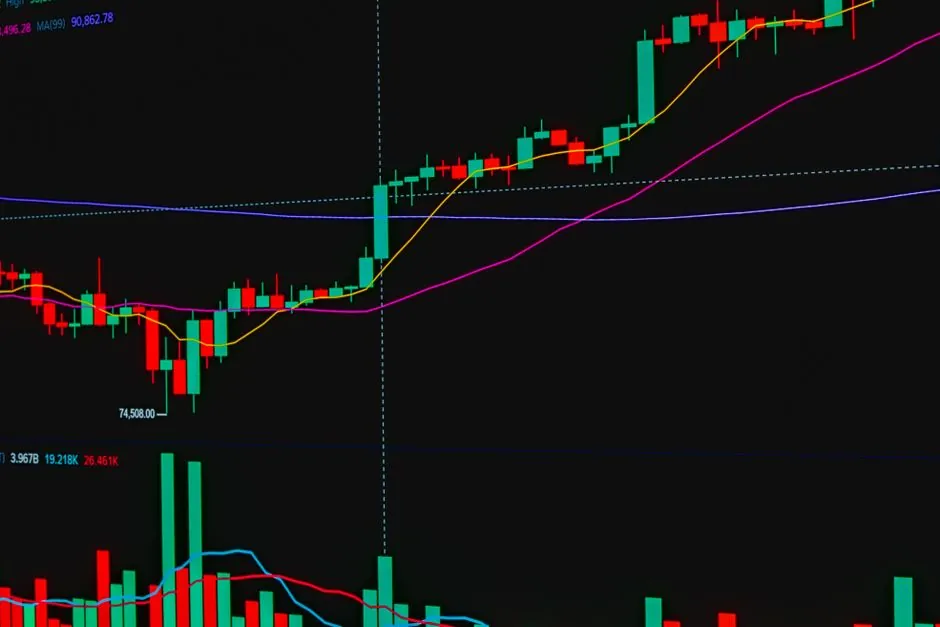
On September 4, 2026, the TrendForce daily DRAM table reported a DDR5 16Gb 4800/5600 session average near $54.067 with a reported intraday low of $38 and high of $67.50, while DDR4 8Gb 3200 averaged $45, both figures sitting well above where 2024 contract benchmarks had troughed [S2].
Three weeks later, the October 2026 cycle read shows the gap narrowing on the contract side, not the spot side: Q4 2026 conventional DRAM contract growth is now tracked at roughly +0-5% QoQ, against a Q3 2026 print close to the +13-18% TrendForce forecast, while spot indicators have not cracked and DDR4 8Gb 3200 set fresh records around $43-44 in late August [S3]. Procurement teams running multi-quarter bills of materials should treat that as a fork in the cycle, not a uniform upturn.
Spot vs Contract: Two Prices, Two Jobs
A spot price describes near-term market activity for a defined item and is the right tool for unplanned gaps, emergency buys, and sentiment reads, while a contract price is negotiated between supplier and customer for a defined period and embeds volume, qualification, allocation, payment terms, and warranty [S2]. The two should not be averaged, and they should not be quoted interchangeably in a budget line.
The September 4, 2026 session is a clean case study: quoted prices were elevated, but concluded transaction activity was subdued, with wide reported high-low ranges inside the same density and speed bucket (DDR5 16Gb high of $67.50 vs low of $38 on the same day) [S2]. That is a sign of thin liquidity at the top of the book, not a uniform clearing price that buyers can lift.
The Chip-Module Inversion as a Cycle Tell
TrendForce flagged an unusual condition in the current spot tape: DRAM chip quotes measured in USD per Gb have moved above assembled module quotes of equivalent capacity, with the gap described as substantial [S1]. Under normal conditions, modules trade at a premium to bare chips because assembly, test, and brand value are baked in; an inversion means raw wafers became scarcer than the finished good, usually because module houses are still digesting cheaper inventory.
Historically, this setup resolves with module prices repricing up to close the spread, typically over a two-to-four week window [S1]. The confirmation showed up in Kingston's spot-module price hike, which rippled through the channel [S1]. For a buyer holding DDR4 RDIMM or UDIMM quotes that look out of line with published chip prices, the inversion is the explanation: the module price has not yet caught up.
Where the 2026 Cycle Actually Is
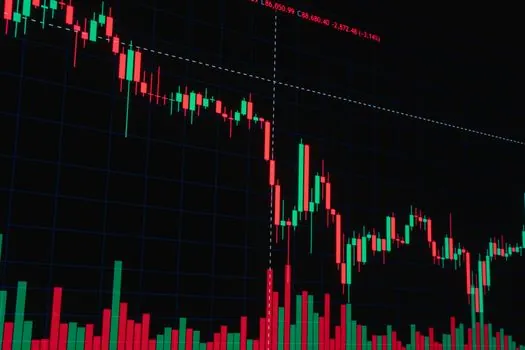
Conventional DRAM contract prices rose 13-18% QoQ in Q3 2026, server led, PC and mobile moderated as device affordability limits kicked in, and Q4 2026 is forecast at roughly +0-5% QoQ per TrendForce-linked analysis [S3][S4]. Samsung told investors on July 30, 2026 that the market would stay undersupplied through 2H 2026, and SK hynix's CEO has publicly called 2027 the industry's "worst year" for shortage [S4].
Spot, in contrast, has not rolled over. DDR4 8Gb 1Gx8 3200 climbed from about $36.54 in early July 2026 to roughly $42.50 on August 10 and $43-44 in late August, while mainstream DDR5 16Gb averaged about $24.80 on September 21 [S3]. There has been no two-week decline in mainstream parts and no clean contract/spot inversion on the buyer side, both of which would normally mark a local top [S3]. The picture is a bifurcated cycle: HBM and server DRAM remain tight, while conventional PC DRAM is approaching an affordability ceiling.
Comparison: Server, PC, Mobile, and HBM by Cycle Stage
Server DRAM contract growth ran near the top of the +13-18% Q3 2026 band, driven by hyperscaler long-term agreements and HBM pull-through, and is forecast at roughly +3-8% QoQ for Q4 2026 per TrendForce's July 3 survey [S3][S4]. PC DRAM contract increases moderated most sharply as OEMs hit price-elasticity walls, and mobile followed PC, with consumer channel checks described as weak [S3].
HBM is on a different curve: TrendForce raised its 2027 blended HBM ASP forecast to +121% YoY on September 29, 2026, HBM bit supply is projected to grow only 50-60% in 2027 against demand, and all three suppliers (SK hynix, Samsung, Micron) are qualified for Nvidia's Vera Rubin HBM4 [S3]. Samsung confirmed roughly 80% HBM4 yield in late August 2026, and SK hynix's HBM share slipped from about 58% to about 50% as Samsung took share, with Micron at roughly 18% [S3]. For a buyer deciding where to spend, the ranking is clear: server baseline and HBM-adjacent parts via contract, PC and mobile incremental via spot, DDR4 modules only on confirmed need.
Procurement Rules for the October 2026 Tape
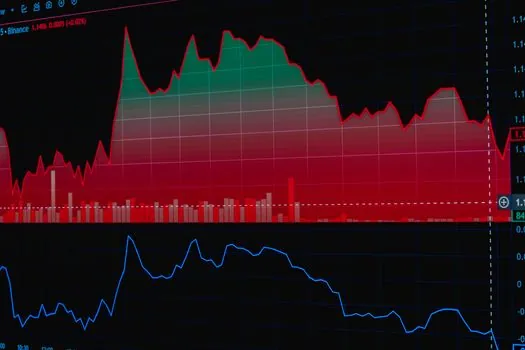
Lock server baseline demand on contract: large-volume, qualified, multi-quarter commits are still clearing at the low end of the Q3 band, and supplier allocation favors customers with a forecast and a take-or-pay structure [S2]. For PC and mobile, treat the chip-module inversion as a two-to-four week warning that module quotes will rise to meet chip prices; renegotiate framework agreements now rather than at the next spot print [S1].
Use spot only for a defined gap: an emergency line-down replacement, a small buffer above forecast, or a pre-build for a confirmed order, never for a speculative run. The September 4 wide intraday range on DDR5 16Gb ($38 to $67.50) is a reminder that published spot averages are not offer prices and that a single budget number copied off a screen misrepresents true transaction cost [S2]. DDR4 is not a safe budget escape either: manufacturers are winding down DDR4 production, and DDR4 8Gb 3200 spot hit record territory in August 2026 [S3][S4].
What to Watch Through Year-End 2026
Three signals will mark the next leg. First, the official TrendForce Q4 2026 contract settlement: a print at or above +5% QoQ would re-extend the upcycle, a print at or below 0% would confirm a conventional-DRAM peak and a re-rating toward the early-peak scenario [S3]. Second, two consecutive weeks of declining spot on mainstream DDR4 8Gb 3200 and DDR5 16Gb, which would be the first clean sign of a top in the spot tape [S3]. Third, HBM4e ramp timing in 2H 2027 and SK hynix/Samsung new-fab wafer output, both of which are the supply-side releases that determine whether 2027 cools or stays tight [S3][S4].
The earliest plausible window for sustained retail relief on conventional DRAM remains late 2027 into 2028, tied to new fab capacity, with some forecasts pushing full normalization to 2030 [S4]. For procurement now, the operative read is: contracts for server, spot for gaps, modules only on confirmed schedule, and a working assumption that the Q4 2026 contract tape will print at the low end of the forecast range. See how the related direct-to-chip cold plate bottleneck is shaping AI-server build costs, and review critical mineral stockpiling shifts for the wider commodity backdrop that frames 2026 memory pricing. For the supply side, distribution transformer price per kVA is a useful parallel read on hyperscaler capex absorption across electrical and memory line items.
Spec-level background on the components involved: checking and testing apparatus, construction machinery and equipment, and lamps and light fittings.