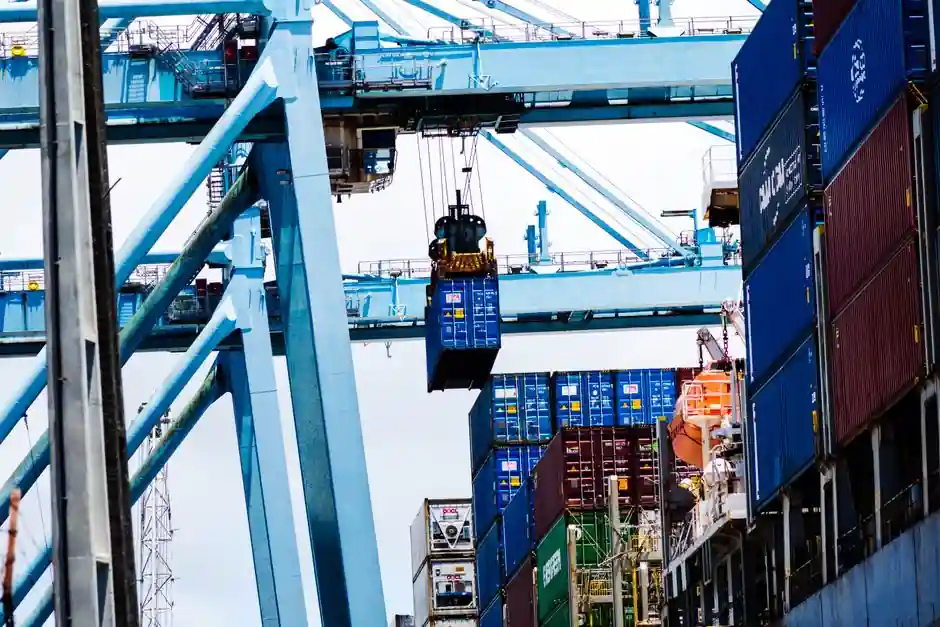
An automotive parts warehouse needs a stacker crane matched to its load unit: trilateral pallet cranes handle 1,000–1,500 kg Euro/industrial pallets in aisles compatible with the existing trilateral-forklift racking, while Miniload box cranes serve totes and cartons at heights up to 20 m in 800 mm aisles [S2][S3].
Selection hinges on four measurable inputs: load weight and unit dimensions, target throughput (cycles/h), ceiling clearance, and the temperature band of the facility, with cold-store-rated equipment specified for 0–40 °C operation where positive cold rooms are in scope [S2].
Load Unit and Physical Footprint Decide the Crane Family
Trilateral pallet stacker cranes are built for unit-load automation in conventional racking without aisle modification, with the forks rotating 180° to extract pallets from the front, left, or right of the aisle [S2]. This geometry removes the need for an upper guide base, freeing the full warehouse height for storage, and allows a direct drop-in replacement of trilateral forklifts in brownfield automotive parts hubs [S2]. For a more general overview of pallet-only material flow inside narrow aisles, see the pallet stacker reference.
Box stacker cranes (Miniload) target a different SKU profile: small parts in totes, bins, or cartons, with typical lift heights reaching 20 m in aisles as narrow as 800 mm [S3]. That footprint makes Miniload the default for high-density small-parts zones such as fastener aisles, electrical-component buffers, or service-parts micro-fulfilment cells, where a pallet crane would waste both volume and cycle budget on partial loads.
Height, Aisle Width, and Throughput Trade-offs
Trilateral pallet cranes are constrained to racking up to 15 m high in the standard catalogue configuration, which fits the majority of European automotive aftermarkets and Tier-1 supplier buffer warehouses [S2]. A taller build is possible but pushes the project into the gantry crane or custom AS/RS class and changes the structural-floor loading case.
Miniload cranes trade pallet mass for height density, lifting lighter totes to 20 m inside 800 mm aisles [S3]. The decision rule on the ground is straightforward: when the part weights stay below roughly 50 kg per unit and the SKU count runs into the thousands, Miniload wins on cube utilisation; when parts ship on Euro pallets above 300 kg, a trilateral pallet crane is the correct fit [S2][S3]. Throughput, expressed in combined single-cycle and dual-cycle moves per hour, is a function of the crane’s travel/hoist acceleration profile and the WMS pick-routing logic, and modern 24/7 autonomous operation is standard on both families [S2].
Temperature, Safety, and Integration Boundaries
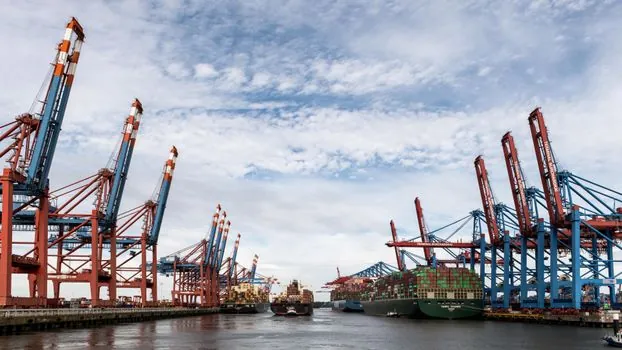
Trilateral pallet stacker cranes are catalogued for a 0–40 °C operating window, which covers positive cold rooms used for some paint, adhesive, and rubber-component inventories common in automotive spares logistics [S2]. Sub-zero frozen-food-grade operation is a different specification and needs explicit vendor confirmation, as lubrication, cable jackets, and encoder behaviour change at sustained temperatures below 0 °C.
Safety case for automotive parts sites is typically driven by EN ISO 3691-4 driverless industrial truck requirements and the machinery directive, with the crane replacing the forklift as the in-aisle hazard source. Removing manned forklifts from narrow aisles is the single largest occupational-safety uplift cited by integrators, and the mobile crane class is generally not used inside the storage envelope. The cited user testimony, “We’ve maximised both process efficiency and workplace safety in the warehouse,” is taken directly from a Mecalux trilateral stacker crane deployment note [S2].
Programming, WMS Hand-off, and Cycle-Time Realities
Mitsubishi Electric’s e-F@ctory stacker-crane FA solution positions the crane control platform as the integrator’s hub, with explicit goals of inbound/outbound cycle time reduction, enhanced safety, and shorter startup plus maintenance windows [S4]. In practical brownfield retrofits, the WMS-to-PLC hand-off and the pick-and-deposit (P&D) station conveyor interface are the two integration points that most often delay go-live, not the crane mechanics itself.
For automotive parts flows that combine pallet reserve storage with tote-level picking, the correct architecture is a trilateral pallet crane at the bulk zone feeding a Miniload at the small-parts buffer, both governed by a single WMS layer. Projects that try to force one crane family to handle both load classes typically lose 20–30% of effective cube because of the mixed-unit racking compromise, and the cycle-time penalty compounds at peak shifts [S2][S3].
Limitations and Failure Modes to Engineer Around
Trilateral stacker cranes are bound to the 15 m catalogue ceiling, so any new warehouse above that height must step up to a heavier AS/RS class with mast and top-rail guidance [S2]. Miniload cranes, conversely, are bounded by per-unit load; totes above roughly 50 kg either need a reinforced extractor or have to be re-routed to a pallet crane, and the 800 mm aisle width stops being a benefit if the tote is wider than the pick window [S3].
Failure modes observed in the field cluster around three nodes: encoder drift on the hoist (causing level-positioning faults at high bays), fork-rotation belt wear on trilateral heads, and P&D station conveyor mis-alignment that produces skewed pallet hand-offs. A 24/7 operating model is only realistic with a planned preventive maintenance slot of at least 4 h/week per crane, and a crawler crane-style redundancy plan does not exist for in-aisle AS/RS units; the spare-parts shelf and a hot-standby second crane are the two real options.
Sourcing Signals Worth Tracking
Watch for two signals over the rest of 2026: integrator release notes on WMS-agnostic stacker-crane controllers (Mitsubishi Electric’s e-F@ctory continues to position itself in that space [S4]), and cold-room extension catalogues above 0 °C, since automotive EV-battery component storage is pulling positive-cold demand upward. For teams cross-specifying handling equipment, the crane scale reference is the right starting point if in-aisle weight verification of battery modules is being added to the scope.
For related coverage, see Asphalt Paver Selection for Urban Infrastructure: Width, Mobility, and Emission Gates.