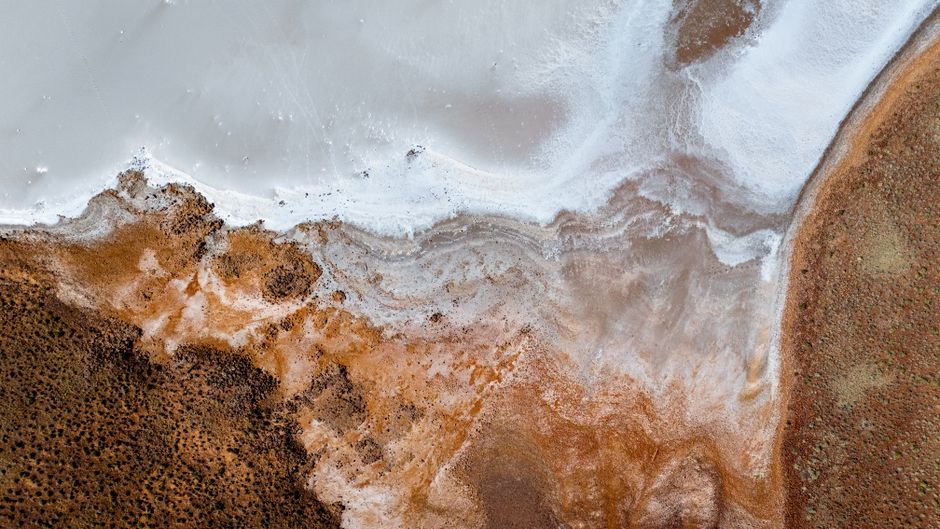
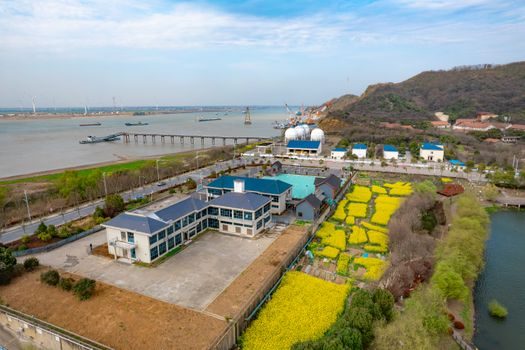
The 2024 ENR "Best Project Power/Industrial" went to Albemarle's 50,000-tonne-per-year lithium hydroxide monohydrate plant in Meishan, built by China National Chemical Engineering & Construction Corporation Seven — enough annual LiOH·H₂O output to equip more than 15 million electric vehicles and cut lifecycle CO₂ by over 100 million tonnes [S1]. The 1.5 km of on-site tank welds passed first-time NDT at 99.1%, the figure that EPCs now use to benchmark field-fabrication quality on LiOH converter trains [S1].
Upstream, the chain runs spodumene concentrate (≈6% Li₂O) or salt-brine → soda-leach or lime-roast conversion → Li₂CO₃ → Ca(OH)₂ causticisation → battery-grade LiOH·H₂O crystallisation → drying and packaging. Downstream splits into two diverging value pools: high-purity battery-grade material feeding NCM/NCA cathode synthesis (typical LiOH assay ≥ 99.0%, SO₄²⁻ ≤ 0.05%, Fe ≤ 0.005%) [S3][S4], and lower-spec industrial/technical grade feeding lubricating-grease thickeners, specialty glass-ceramic batches, alkaline-battery electrolyte, and lithium-bromide absorption-refrigeration fluid [S8][S10].
Grade boundaries: what separates battery, technical, and industrial LiOH
Battery-grade LiOH·H₂O is sold on a tight impurity envelope: Targray's high-purity grade targets LiOH ≥ 99.3%, Na ≤ 0.001%, K ≤ 0.001%, Cl⁻ ≤ 0.001%, SO₄²⁻ ≤ 0.002%, Ca ≤ 0.001%, Mg ≤ 0.0005%, Fe ≤ 0.0005%, Cu ≤ 0.001%, Pb ≤ 0.0005% [S5]. Pentachemicals' A.G. (analytical-grade) LiOH·H₂O is sold at assay min. 99.0%, Li₂CO₃ ≤ 1.0%, SO₄²⁻ ≤ 0.05%, Fe ≤ 0.005%, heavy metals (as Pb) ≤ 0.005% [S4]. Albemarle's "standard, typ. 55%" LiOH·H₂O (Product 401106) is the legacy industrial SKU used for lubricating-grease and electrolysis applications, with EC-No. 215-183-4 and REACH No. 01-2119560576-31 [S6].
Conformance for industrial-grade LiOH·H₂O is much looser: BassTech International's monohydrate (Product Code 4481) accepts LiOH > 56.5%, CO₂ < 0.35%, Cl⁻ < 0.01%, SO₄ < 0.05%, CaO < 0.03%, Fe₂O₃ < 0.003%, NaOH < 0.05%, insolubles < 0.01%, appearance white crystals [S3]. The single biggest decision driver is downstream sodium control: even 50–100 ppm residual Na in NCM811 cathode precursor cuts specific capacity measurably, so cathode makers will pay a 30–60% premium for battery-grade LiOH over industrial grade, according to the SNS Insider 2026–2035 outlook [S10]. Solubility in water is one of the few constants across all grades — 21.6 g/100g at 20°C rising to 29.6 g/100g at 100°C [S5].
Upstream feed: spodumene vs brine economics in 2026
Hard-rock spodumene (Australia, Africa) plus Chinese lepidolite and Chilean/Argentine brine remain the dominant feeds. The Meishan Albemarle converter sits downstream of spodumene conversion and was designed around modular tank prefabrication to keep field-weld NDT yield above 99% on thin-wall LiOH solution tanks [S1]. The construction standard for a LiOH battery-material plant is essentially the same as a chlor-alkali plant: SS316L for hot LiOH solution, rubber-lined steel for brine clarification, and FRP for low-temperature storage, with field-tank tolerances on the order of ±2 mm/m for the 1.5 km of welds that an ENR-tier project demands [S1].
The Ganfeng lithium product brief confirms LiOH·H₂O's role as "an important lithium chemical raw material… used to prepare lithium salts and lithium soaps, lithium battery cathode material and lithium-based grease" — language that mirrors the way Chinese producers split their LiOH train into a battery-grade crystalliser and a separate technical-grade evaporator [S8]. SNS Insider's 2026–2035 outlook expects industrial/technical grade LiOH to keep serving legacy grease, glass, and ceramic synthesis "at price points and purity specifications below battery grade whose lower value-add creates competitive pressure on industrial grade producers relative to battery grade converter economics" [S10].
Downstream #1: NCM/NCA cathode active material
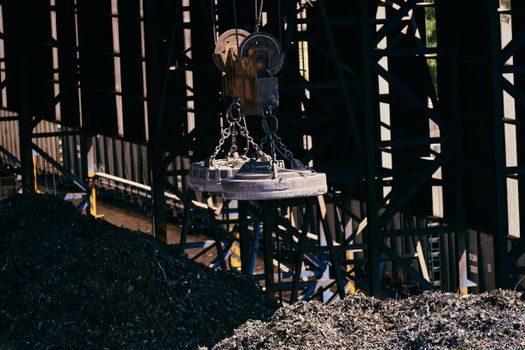
Battery-grade LiOH·H₂O is the non-substitutable lithium source for NCM811, NCA, and single-crystal high-nickel cathode synthesis, because Li₂CO₃ releases CO₂ during sintering and cannot reach the same residual-carbonate floor below 0.30% that the Targray high-purity spec demands [S5]. Co-precipitated Ni-Co-Mn hydroxide precursor is mixed with LiOH·H₂O at a Li/Me molar ratio typically between 1.02 and 1.05, then calcined in oxygen at 750–900°C. The CO₂ ceiling in the LiOH feed (≤ 0.35% per BassTech, ≤ 0.30% per Targray battery-grade) directly sets the upper bound on residual Li₂CO₃ in the finished cathode [S3][S5].
For a 50,000-tonne LiOH·H₂O plant, the implied downstream cathode-active-material output is on the order of 250,000–280,000 tonnes if fully routed to NCM811, which lines up with the 15-million-EV lifecycle claim that ENR recorded for the Meishan project [S1]. The Congruence Market Insights report explicitly segments the 2026 LiOH market into battery-grade, technical-grade, and industrial-grade product types, with battery-grade dominating volume and energy-storage applications growing fastest [S9].
Downstream #2: lubricating grease, glass, ceramics, refrigeration
Industrial/technical-grade LiOH·H₂O is saponified with 12-hydroxystearic acid to make lithium-12-hydroxystearate, the thickener in multi-purpose automotive and industrial greases. The 99.0% pure grade (Pentachemicals 15570) is the standard feedstock for that reaction, with Li₂CO₃ capped at 1.0% and SO₄²⁻ at 0.05% [S4]. Albemarle's standard 55% LiOH·H₂O (Product 401106) is explicitly marketed for lubricating-grease manufacture and electrolysis [S6].
Other downstream uses confirmed across the research: LiOH·H₂O is used in petroleum, chemical, light industry, nuclear, metallurgy, glass, ceramics, alkaline-battery electrolyte, lithium-bromide absorption-refrigeration fluid, analytical reagents, and photographic developers [S8]. Carl Roth's safety data sheet classifies spent LiOH as HP 4 (skin/eye irritant), HP 6 (acute toxicity), and HP 8 (corrosive), which forces waste segregation by EWC code and dictates double-lined storage and neutralisation in any downstream plant handling process liquor [S7]. For buyers specifying instruments on LiOH crystalliser outlets, pressure transmitter selection is governed by hot LiOH solution's corrosivity, not just by static line pressure.
Selection criteria for procurement teams
Procurement should pre-qualify LiOH·H₂O on six specs in this order: (1) LiOH assay (≥ 99.3% for cathode precursor, ≥ 99.0% pure for grease, ≥ 56.5% for industrial where LiOH is not the active reagent) [S3][S4][S5]; (2) sodium and potassium ceilings — the Targray high-purity spec is the benchmark at Na ≤ 0.001%, K ≤ 0.001% [S5]; (3) sulphate — the spread is 0.002% (battery) to 0.05% (industrial) [S3][S5]; (4) heavy metals (Pb, Cu, Fe) at low single-digit ppm for battery [S5]; (5) CO₂ as a proxy for Li₂CO₃ residue (0.30–0.35% battery, no limit typical for industrial) [S3][S5]; (6) documentation — REACH registration (Albemarle REACH 01-2119560576-31) and an SDS that flags HP 4/6/8 codes for downstream waste handling [S6][S7].
Buyers pulling on the same upstream flow meter train across multiple LiOH service lines should note that hot LiOH solution above 80°C is materially more aggressive than at 20°C — the solubility jump from 25.6 to 29.6 g/100g between 80°C and 100°C concentrates impurities in the mother liquor and forces tighter pressure sensor metallurgy than the static datasheet rating would suggest [S5].
Market structure and 2026 signals
The 2026–2035 SNS Insider outlook frames the market as a two-tier structure: a battery-grade converter tier with premium pricing, and an industrial-grade tier with "competitive pressure on industrial grade producers relative to battery grade converter economics" [S10]. The Congruence report slices the same market by grade, application, end-user, and geography, and names energy storage as the fastest-growing downstream application [S9]. The Chinese-language Sogou Baike entry confirms LiOH·H₂O sits under national standard project 20110653-T-610, with a long-standing use in metallurgy, petroleum, glass, and ceramics alongside its newer battery role [S2].
Trackable signals worth watching in 2026: (a) follow-on ENR-tier converter projects modelled on the 50KT/A Meishan reference plant [S1]; (b) tightening of the Targray-style battery-grade ceiling (LiOH ≥ 99.3%, SO₄²⁻ ≤ 0.002%) as more cathode makers specify single-crystal high-nickel recipes [S5]; (c) the spread between REACH-registered Albemarle 55% standard grade and unbranded industrial-grade LiOH·H₂O on the spot market, which is the cleanest read on grease-segment demand [S6]. On the automation side, expect new converter lines to specify PLC architectures that can switch between battery-grade and industrial-grade crystalliser recipes without manual reconfiguration, and industrial valve trim upgrades to alloy C-276 on hot LiOH solution letdown stations above 80°C. For buyers cross-checking lubricating-grease saponification capacity, the servo-motor duty on grease kettle agitators is a useful proxy for downstream LiOH pull — a relevant datapoint for the modular PLC selection build-out at a grease plant.