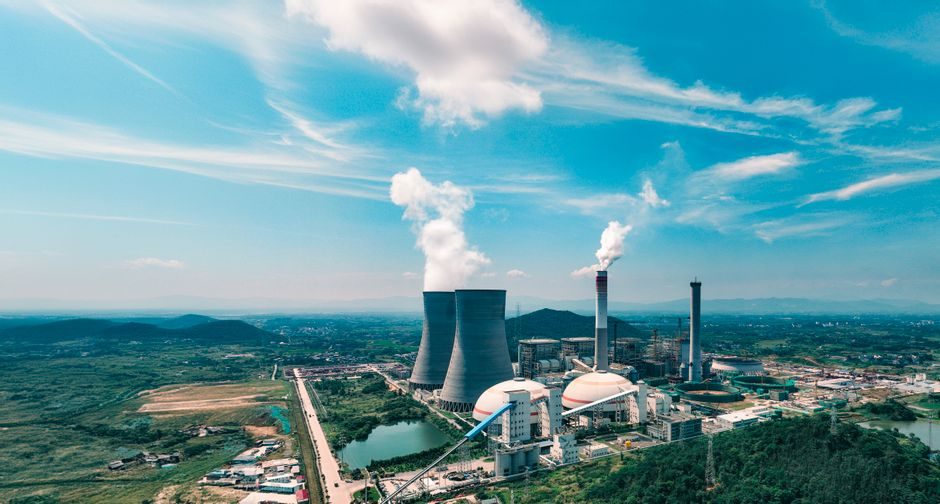
The 2026 nuclear-power supply chain is consolidating around four spec-driven product families: ASME/ASTM nuclear-grade steel forgings [S1], elastomer and metallic sealing stacks for reactor coolant pumps and valve stems [S3], radiographic and ultrasonic calibration test blocks (NDT reference standards) [S2], and reactor-coolant main-pump assemblies that integrate the above [S7].
China remains the single most active buyer of these categories: the operating reference fleet named on supplier track records covers Qinshan, Daya Bay, Ling'ao, Tianwan, Sanmen (Zhejiang), Hongyanhe (Liaoning) and Fuqing (Fujian) — a list that materially shapes the bill-of-materials every Chinese mill and machine shop quotes against [S2].
ASME/ASTM Nuclear Forgings: the Steel Side of the Bill of Materials
ASME SA-182, SA-336, SA-508 and companion ASTM A182/A336/A508 grades are the working horse of nuclear pressure-boundary forging procurement, with Energy Steel among the dedicated mills that publish an explicit nuclear-industry catalogue aimed at flanges, nozzles, valve bodies and steam-generator channel heads [S1]. Buyers should expect to see SA-182 F304/F316 stainless, SA-508 Grade 3 Class 1 / Class 2 low-alloy reactor-vessel forging, and SA-336 F11/F22 chromium-moly variants on most RFQs for Class 1 piping and valve bodies.
Traceability is the first spec gate: every heat needs a mill test certificate that ties the heat number to the actual chemistry, mechanical properties and the original ingot, and the documentation stack is heavier than for conventional power-plant forgings [S1]. For spec-driven buyers, the practical checklist is grade designation + class (1/2/3) + impact-test temperature (typically -29 °C for LWR Class 1) + NDT scope (UT per ASME V, surface MT/PT) rather than just nominal bore or pressure class.
Sealing Stacks: Where Elastomer and Metallic Tech Split
Reactor-coolant pump and primary-loop valve seals operate in the high-temperature, high-pressure, strong-radiation envelope that no single material family covers end-to-end, so the bill of materials splits between elastomer O-rings / lip seals for ancillary and spent-fuel-pool service and metallic (graphite, spiral-wound, metal-jacketed gaskets) for the primary loop [S3]. EPDM and FKM (Viton-class) fluorocarbon dominate the polymer side; graphite laminate and flexible graphite with stainless tang/inlet are the typical metallic workhorses on flanges above the O-ring temperature ceiling.
The selection gate is not "rubber vs metal" but the dose + temperature + pressure window: the polymer side is preferred where radiation dose and peak temperature stay inside the elastomer envelope, the metallic side takes over once either limit is breached, and a typical packing set for a primary-side valve stacks graphite braid against a metallic gland to ride out thermal cycling [S3]. For buyers, the lever that actually moves cost and lead time is the irradiation-resistant compound specification plus the Q-list / safety-class designation, not the nominal ID.
NDT Calibration Blocks: the Small Part that Locks Down the Inspection
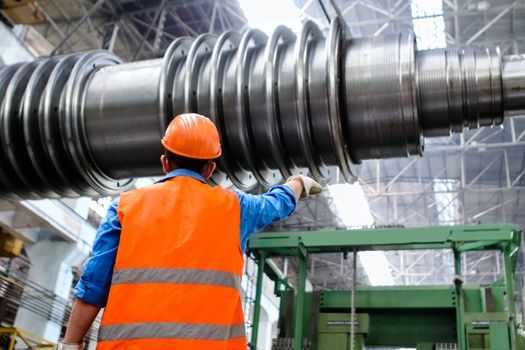
Non-destructive testing on a nuclear component is only as trustworthy as the reference block in the technician's pocket, which is why Shandong Ruixiang's published track record names seven Chinese nuclear plants — Qinshan, Daya Bay, Ling'ao, Lianyuan (Tianwan), Sanmen, Hongyanhe and Fuqing — as cumulative users of its NDT blocks [S2]. These blocks are typically flat or curved plates containing drilled holes, notches and side-drilled holes that calibrate ultrasonic thickness, shear-wave and angle-beam probes, and radiographic IQI sensitivity per ASME V / ASTM E164 / E1416 type procedures.
Procurement levers on this category are material match (the block should be the same or similar alloy as the component under test, e.g. austenitic stainless for cladding, low-alloy for RPV), flaw-size precision (tolerances commonly held to ±0.05 mm on hole diameter), and traceability documentation including a calibration certificate tied to national metrology [S2]. Because the block itself is consumable-grade hardware, the RFQ is specification-heavy and machining-tolerance-heavy, not dimensional-heavy in the catalog sense.
Reactor Coolant Pump Skids: where Forging + Seal + NDT Converge
The main pump is the assembly that ties the three categories above together: a reactor-coolant pump typically combines a forged SA-182 / SA-508 casing, a metallic or graphite seal stack, and ultrasonic / penetrant inspection of every critical surface, all of which are inside the supply scope of integrated nuclear-pump makers such as Zhefu Holding [S7]. Zhefu publishes an explicit nuclear-power R&D organisation — 70+ full-time engineers split across product design, performance demonstration, process research and test verification — with a stated track record of in-house development of the main pump [S7].
For procurement teams, the gate on a pump skid is the qualification dossier, not the catalog curve: the supplier has to demonstrate a full type-test report, a manufacturing-process qualification, a nuclear-grade QA programme (typically aligned to ASME NQA-1 or the Chinese equivalent HAD 003 / HAF 003 series), and a documented supply chain for the forgings and seals above. Lead time on the integrated skid is therefore the bottleneck, not lead time on the individual forging, which is why integrated OEMs with their own forging and seal partners are favoured over assembly shops that source these parts on the open market [S7].
Comparison: Forgings vs Seals vs NDT Blocks vs Pump Skids
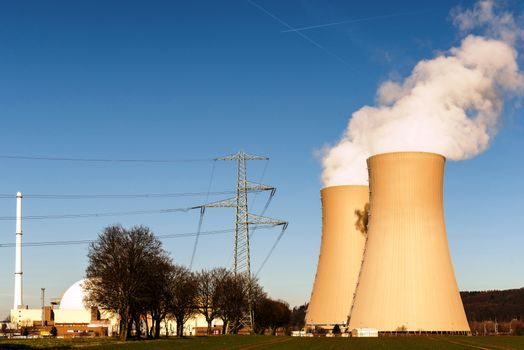
For a spec-driven buyer, the four families line up against four decision criteria as follows. Standards anchor: forgings sit on ASME SA-182/336/508, seals on ASME B16.20/B16.21 plus the elastomer compound spec, NDT blocks on ASME V / ASTM E164/E1416, and pump skids on the full ASME III / NQA-1 stack [S1][S2][S3][S7]. Lead time: forgings and pump skids are the long pole (months to a year), seals are typically weeks, NDT blocks are off-the-shelf once the alloy and flaw geometry are pinned [S1][S2][S3][S7]. Critical spec lever: forging grade/class, seal irradiation-resistant compound, block flaw-size tolerance, pump type-test report [S1][S2][S3][S7]. Typical buyer: EPCs and OEMs for forgings, maintenance contractors for seals, in-house NDT teams for blocks, and nuclear-utility engineering for pump skids [S1][S2][S3][S7].
Where these families interact with general industrial procurement, the same alloy / tolerance / QA discipline that governs nuclear forgings also drives sourcing of adjacent equipment such as a DC power supply specified for I&C cabinets, while the calibration-rigour applied to NDT blocks is the same rigour that should be applied when qualifying a power meter on the plant's electrical side.
Supply-Chain Reality: Lead Time, MOQ, and Sourcing Signals
Made-in-China marketplace data shows nuclear-power and adjacent training-equipment SKUs posted in MOQ-of-1 / 1-piece lots, which is consistent with the project-driven, low-volume, high-mix nature of the segment rather than a stock-and-flow industrial catalogue [S5]. Sourcing signals worth tracking: the publication of a nuclear-grade forging catalogue, the addition of a new seal compound to a published portfolio, the release of a new NDT-block geometry for a specific reactor type, and the announcement of an in-house pump type-test report [S1][S2][S3][S7].
The 2026 buying pattern is therefore not about chasing headline installed-capacity numbers but about qualifying suppliers on the four documentation gates above. For a project that has to ship in 2026, the realistic next node is locking the forging and seal qualification dossiers 9–12 months ahead of the pump skid delivery, and pinning the NDT-block geometry at the same time. Tracking the offshore wind 2026 capacity build-out is also useful because the same heavy-forging and QA-documentation discipline is now migrating across the two sectors and reshaping shared suppliers.
For component-level specifications, see power cable.