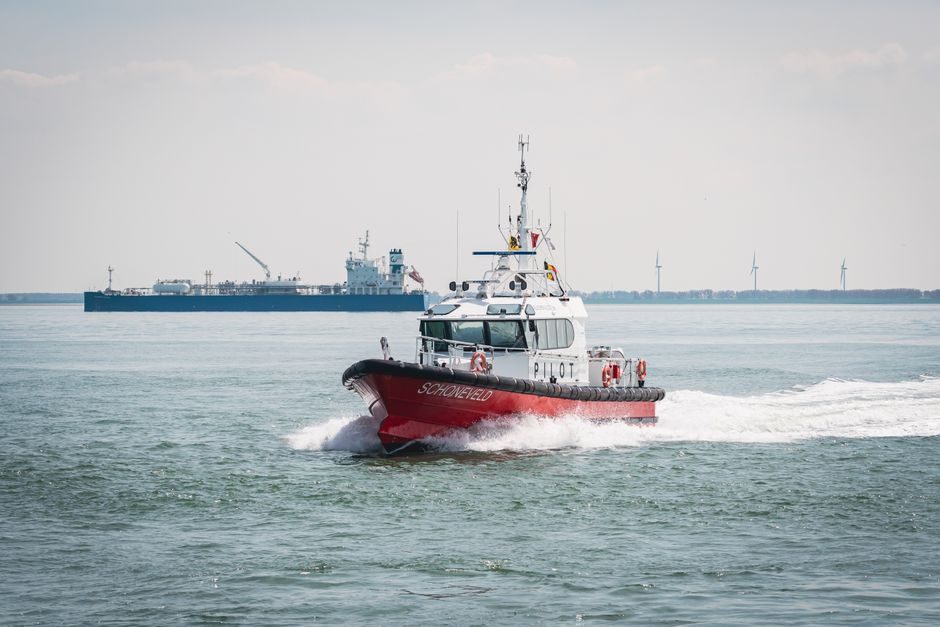
Offshore wind in 2026 is defined by scale: 96.8 MW commissioned sites such as Aberdeen Bay (EOWDC) operate as reference benchmarks, while North Sea consortia and Norwegian floating pilots push the technology frontier [S4].
The sector is no longer a curiosity — it is a multi-gigawatt industrial build-out with dedicated awards programmes, ~300-member industry clusters, and 50+ yearly events scheduled through 2026 [S2]. Process engineers and procurement teams now treat offshore wind components (towers, subsea cables, pressure transmitters, flow meters, industrial valves) as standard line items rather than specialty items.
Reference Plant: Aberdeen EOWDC, 96.8 MW Commissioned Baseline
Aberdeen Bay (EOWDC) sits at 96.8 MW fully commissioned in UK waters and remains a working data point for new developers evaluating wake steering, jacket foundations, and 66 kV array cabling [S4]. A scheduled national-grid maintenance window from 25/05/2026 08:00 to 29/05/2026 16:00 will de-energise the WTGs, with navigational aids potentially disrupted — a reminder that even fully commissioned sites are subject to multi-day grid-coordinated outages [S4].
For specifiers, EOWDC's envelope — nameplate capacity, WTG count, and grid-side interface — is the benchmark smaller developers quote when sizing nacelle auxiliaries, SCADA I/O, and condition-monitoring pressure sensors on neighbouring sites [S4]. The 96.8 MW figure also frames the procurement logic: orders for instrumentation now batch by 80–100 MW blocks, not single turbines.
Industry Pulse: Awards, Conferences and Cluster Activity in 2026
Offshore Wind Connections 2026 runs as a two-day conference at the DoubleTree by Hilton, Hull, opening the evening of 29 April 2026 — its thirteenth year — confirming the UK's Humber cluster as a recurring procurement touchpoint for OEM and tier-2 suppliers [S3]. The Dutch Offshore Wind Innovators programme opened 2025 registrations at €100K project funding and is staging its 2025 jury through the second half of 2025 ahead of 2026 OEEC activities [S2].
Norwegian Offshore Wind reports ~300 member companies, 50+ yearly events, and 17 working groups — a coordination density that mirrors an industry scaling from prototype to serial deployment. Cross-cluster intelligence, including Germany's 30 June 2026 onshore wind tender at an average 5.06 ct/kWh award price, bleeds directly into offshore PPA negotiations.
Contract Frameworks: What AR 6 Did and What AR 7 Must Do
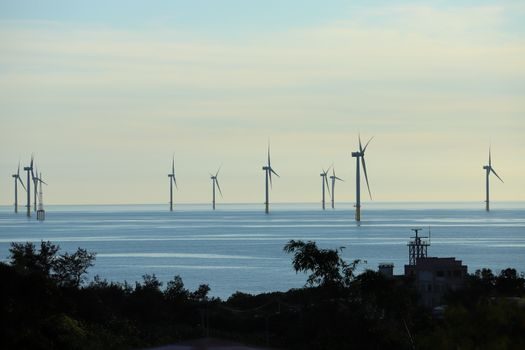
UK Contracts for Difference (CfD) allocation round dynamics remain the single largest swing factor for project IRR. Following the 2023 AR5 outcome that triggered industry calls for "immediate assurance" on future price support, suppliers have hardened bid envelopes around strike prices, build-out milestones, and indexation clauses [S5].
Pinsent Masons' 2023 commentary — that the UK government "must give the offshore wind industry immediate assurance" on future price support — still frames the 2026 contract discourse, with developers now pricing in longer supply-chain lead times for HV switchgear, array cables, and PLCs used in nacelle pitch and yaw control [S5]. The result: AR 7 (and analogous EU, Norwegian, and German two-sided CfD instruments) is being watched as a make-or-break signal for 2027–2030 capacity additions.
Comparison: UK Fixed-Bottom, Norwegian Floating, German Onshore Reference
Comparing the three primary European offshore-relevant deployment lanes by four decision criteria clarifies where each excels: (1) CapEx per MW, (2) water-depth envelope, (3) supply-chain maturity, and (4) contract-framework maturity. [S1]
UK fixed-bottom (Aberdeen EOWDC, 96.8 MW) scores best on supply-chain maturity and contract-framework maturity, mid-tier on CapEx per MW given jacket-foundation cost, and is capped at roughly 60 m water depth in most lease areas [S4][S5]. Norwegian floating scores best on water-depth envelope (suitable for 200 m+ sites) and contract-framework maturity via the Norwegian Offshore Wind association's 17 working groups, but is mid-to-low on CapEx per MW and supply-chain maturity given semisubmersor/submersor tow-out logistics. German onshore (May 2026 tender at 5.06 ct/kWh) provides the price benchmark for PPA indexation but is not an offshore modality — its relevance is purely as a floor reference for CfD strike-price modelling.
Where Offshore Wind 2026 Is NOT the Right Answer
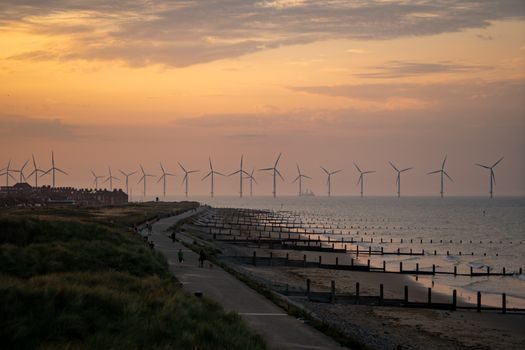
Offshore wind is the wrong choice for grid-constrained, shallow-water, or sub-50 MW demand profiles: onshore solar-plus-storage and onshore wind typically deliver lower LCOE where cable export and foundation costs are disproportionate to capacity. Sites with no nearby 132 kV or 220 kV offtake, or those subject to shipping-lane exclusion zones larger than 4 nm², generally fail feasibility on export-CapEx alone [S1].
Buyers sourcing servo motors for nacelle yaw drives, or pressure transmitters for hydraulic pitch systems, should also note that offshore spec windows (IP66 minimum, salt-fog IEC 60068-2-52, vibration up to 4 g RMS) are not interchangeable with onshore industrial ratings — sourcing on a generic industrial catalog line frequently fails FAT at the marshalling yard.
Limits, Failure Modes and Trackable Signals
Three failure modes dominate 2026 OPEX discussions: (1) array-cable faults driven by thermal cycling and burial-depth variance, (2) gearbox bearing wear in next-generation 15+ MW direct-drive turbines, and (3) grid-side curtailment during scheduled outage windows such as the 25/05/2026–29/05/2026 EOWDC event [S4]. Each drives a distinct MRO supply chain — HV joints, condition-monitoring sensors, and flow meters for cooling-water circuits.
Trackable signals into Q3–Q4 2026: AR 7 strike-price range, Norwegian floating pilot FID announcements through the Norwegian Offshore Wind working-group channel, and the next German two-sided CfD outcome — each will reset the bid envelopes for HV equipment, substation industrial valves, and pitch-control PLCs on the 2027–2028 procurement cycle. For reference points on spec-driven sourcing at this scale, see circuit breaker selection criteria for 2026 buyers.