A correctly specified linear module for a packaging line is a function of four intersecting constraints: drive type, stroke length, IP rating, and repeatability, with cycle rate as the tie-breaker between belt, ball-screw, and linear-motor architectures [S1].
For most primary and secondary packaging cells running 30-120 cycles per minute, integrated modules with strokes of 50-2000 mm, IP54 or IP65 sealing, and belt or ball-screw drives are the dominant configuration referenced in current vendor and integrator literature [S1][S2][S3].
Drive architecture comparison: belt vs ball-screw vs linear motor
Belt-driven linear modules are the most common pick in long-stroke, high-speed transfer sections because they reach 2-5 m/sec and stroke lengths above 2 m at lower cost, but their positioning repeatability typically sits in the +/-0.1 mm range and they are not rated for continuous holding force [S1][S6].
Ball-screw modules trade speed for stiffness and repeatability around +/-0.01 mm, making them the default for vertical cartoning, labeling, and volumetric dosing axes where reaction force on the screw matters [S1][S4].
Linear-motor modules (direct-drive, no mechanical transmission) push repeatability into the +/-0.005-0.02 mm band and stroke cycle rates past 200 cycles per minute, and the same architecture supports configurable MagSpring counterbalance cartridges for vertical Z axes [S3].
Stroke, payload, and the packaging duty cycle
For pick-and-place heads feeding a wrapper, stroke commonly lands between 200 mm and 600 mm, while case-packing and tray-loading cells push strokes to 800-2000 mm to clear the upstream conveyor and downstream closer station [S1][S2].
Packaging-line linear modules are routinely engineered for 5-50 kg horizontal payloads, and IP65 sealed versions with stainless-steel carriage covers are now the explicit spec for food, beverage, and pharma cells where daily washdown is mandated [S2].
A useful floor for sizing: for a horizontal 10 kg payload at 1 m/sec on a 500 mm stroke, a 25 mm-bore ball-screw at 10 mm lead is the conservative baseline, and undersizing the screw diameter is the most frequent root cause of premature failure cited by integrators [S1][S4].
IP rating, materials, and washdown reality
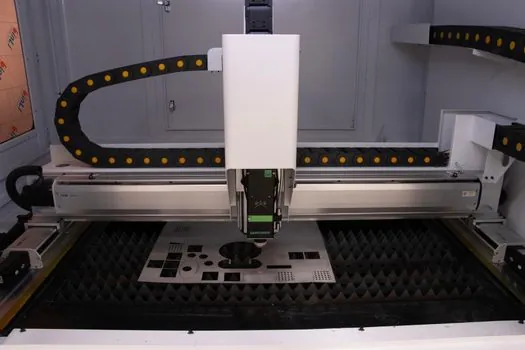
IP65 is the minimum ingress rating most OEMs now list for any linear module intended to live on a food, beverage, or pharma packaging line, with stainless steel carriage covers and sealed bearing blocks treated as baseline rather than optional [S2].
For higher-hygiene zones (clean-in-place, daily chemical foam), IP67-rated linear modules with full stainless housings and food-grade lubricants are the documented next step, and an ATEX-rated P01 stainless linear motor series is referenced for solvent- or dust-rich packaging rooms [S3].
Material choices cascade: anodized aluminum profile bodies suit dry FMCG lines, while stainless end caps and scraper seals are added wherever product splash or condensation reaches the bearing rail. linear module selection literature treats sealing and surface finish as a single combined spec, not two separate items [S1][S2].
Application mapping: which axis gets which module
Horizontal transfer in a cartoning cell: belt-driven module, 1-2 m stroke, IP54, 2-3 m/sec, typically 0.5-1.0 kW servo, mounted on a structural base frame above the conveyor [S1][S6].
Vertical Z axis on a top-loading case packer: ball-screw or rack-and-pinion module with a counterbalance (spring or pneumatic), 400-800 mm stroke, IP65 if washdown is required [S1][S3].
Pick-and-place head feeding a flow wrapper: linear-motor or belt module on the long axis paired with a short-stroke pneumatic or electric gripper, repeatability target +/-0.05 mm at 60-120 picks per minute [S1][S5].
Cross-belt sorter or outfeed: multiple short-stroke belt modules (200-400 mm) ganged on a common rail, each driven by an independent servo, used for metering and lane shifting [S6].
Integration pitfalls specific to packaging cells
Three failure modes show up repeatedly in integrator post-mortems: undersized ball-screw diameter for vertical loads, missed cable management on long-stroke belt modules, and IP rating that meets spec at the rail but fails at the bearing block or bellows joints [S4].
Fieldbus selection matters for line-side controllers: most current packaging PLCs default to PROFINET or EtherNet/IP, so servo drives without those protocols force a gateway that adds latency and a documented 2-5 ms per cycle penalty on high-rate cells [S3][S9].
For a washdown cell, specifying IP65 on the carriage but using a standard bellows cover on the screw or belt is the single most common spec gap, and vendors now sell full stainless bellows kits as a line item rather than a custom ask [S2][S4].
Selection checklist before issuing the PO
Confirm stroke (mm), payload (kg), speed (m/sec), repeatability (mm), and duty cycle (cycles/min) on a single datasheet line before model selection, and reject any candidate module that cannot meet all five with a 20% margin on speed and 50% margin on payload [S1][S4].
Lock IP rating to the zone: IP54 for dry FMCG, IP65 for washdown zones, IP67 for CIP, and add a material-of-construction line (anodized aluminum, stainless 304, stainless 316) tied to the cleaning chemistry [S2][S3].
Validate cable exit, lubrication interval, and replacement-belt or -screw part numbers at PO, not at commissioning, because a 6-month lead-time on a spare ball-screw nut will stop a packaging line inside one fiscal year [S4]. For cross-line context on duty and material trade-offs in heavy-dust environments, see the cement plant spec map (Linear Module Selection for Cement Plants), and for washdown specifics in food, the dedicated spec map (Food-Grade Linear Module Selection) carries a matched material-and-seal reference table.
For a process line that already routes product through a packaging machine cell, the linear module spec should be reviewed alongside the linear actuator used on the dosing or sealing head, because the two share servo sizing rules and cabling standards even when sourced from different vendors.