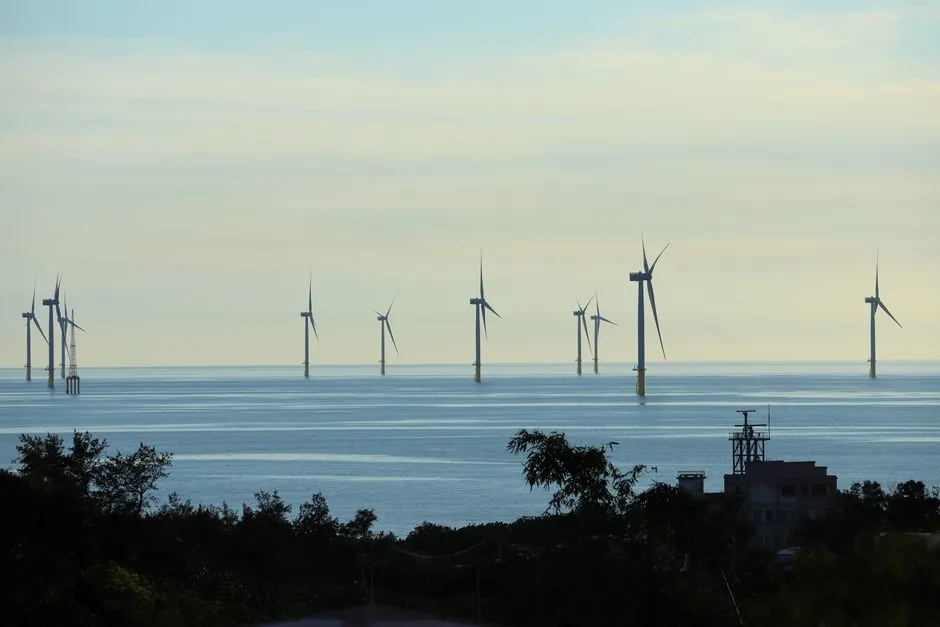
Offshore wind foundation components absorb roughly 30% of total project capex, and a single detained shipment at EU, UK, or US customs can push turbine installation back 8-12 weeks [S4]. With commercial turbines now above 15 MW and over 75 GW of new capacity planned through 2030, the manufacturing quality baseline has shifted from generic structural steel practice to a tight stack of ISO 19902, EN 1090, ISO 12944 C5-M, and NORSOK M-501 [S4][S1].
Buyers specifying monopiles, jackets, and floating semisubmersible foundations are pushing for documented weld traceability, factory-applied coating systems, and third-party design verification, because the 25-year design life in splash, tidal, and submerged zones leaves no room for fabrication shortcuts [S2][S4]. The shift is concrete: coating systems without ISO 12944 C5-M or NORSOK M-501 documentation are being rejected at port, and weld maps without 100% volumetric inspection records are triggering full re-inspection.
ISO 19902 and EN 1090 set the structural steel baseline
ISO 19902 (fixed steel offshore structures) and EN 1090 (execution of steel structures) are the two codes that procurement teams cite first when qualifying a foundation fabricator [S4]. EN 1090 in particular requires a factory-level Factory Production Control (FPC) system, weld procedure qualification records, and traceability from raw plate certificate to finished component, and not every supplier in Asia or Eastern Europe can produce that paperwork on demand [S4].
For floating concepts, third-party certification bodies such as ABS Group run a parallel project certification methodology that confirms the design, the manufacturing quality, and the installation/commissioning steps against standards drawn from offshore oil and gas, shipbuilding, and offshore wind [S2]. The semisubmersible platform project ABS Group verified in the UK is a working example: the client demanded an independent certification body to assess safety and quality in accordance with applicable standards and regulations, because the concept recombined technologies from multiple industries [S2].
Weld quality and 100% volumetric inspection on primary joints
Cyclic loading from waves, currents, and rotor thrust drives millions of stress cycles per year into the foundation, and poor weld quality is the dominant initiator of fatigue cracks at critical joints [S4]. Ultrasonic testing (UT) and magnetic particle inspection (MPI) are the standard NDT methods called out for primary structural welds, and one Chinese tier-1 fabricator now advertises 100% volumetric inspection on every primary joint, exceeding minimum code requirements and giving buyers documented evidence for customs audits [S4].
APQP4Wind, the quality framework published in 2017 and still in active use across major OEMs, pushes quality assurance upstream into the production process so production-related defects are caught before towers and foundations leave the shop [S6]. On the design side, Ribeiro et al. (2025) show that AI-driven optimization of offshore wind turbine towers now operates on top of the same ISO/IEC code stack, with digital twin models used to monitor fatigue in service [S3]. For the foundation vehicle load path, the same digital twin chain is starting to feed back into weld inspection planning on the shop floor.
Corrosion protection: ISO 12944 C5-M, NORSOK M-501, and the 0.3 mm/year splash zone
Unprotected splash-zone steel corrodes at rates that frequently exceed 0.3 mm/year, and over a 25-year design life that single zone can eat through 7.5 mm of section thickness if the coating system fails [S4]. The two specifications that procurement and corrosion engineers treat as non-negotiable are ISO 12944 C5-M (atmospheric corrosivity category for marine environments) and NORSOK M-501 (surface preparation and protective coating for offshore structures), with surface preparation to Sa 2.5 as the standard floor [S4].
Factory-applied multi-layer coating systems outperform field-applied coats because humidity, dust, and temperature are controlled in the shop, and the inspection records (DFT readings, holiday detection, adhesion tests) are taken under those controlled conditions [S4]. Coating suppliers such as Hempel and tower/fabrication players such as Haizea Bilbao are positioned by Hempel's wind foundations program as drivers of efficiency and quality in this segment, with VGB cited as the corrosion-protection standard of reference for offshore wind structures in the German/European market [S5]. Galvanic and cathodic-protection design for the submerged zone sits downstream of the coating system and is not interchangeable with it.
Scour, geotechnical risk, and the floating-platform exception
Scour around monopile and jacket foundations can undermine stability within months of installation if the protection design ignores local sediment characteristics and current velocities, which is why scour-protection design is a buyer-spec item, not a contractor option [S4]. For floating semisubmersibles, the scour problem largely disappears, but mooring-system fabrication quality and the integrity of the hull welds take its place, and that is where the project-certification methodology borrowed from oil and gas is applied [S2].
Quality risk management during construction, modeled by Wang (2026), frames the issue as a probabilistic problem: each fabrication step has a measurable defect rate, and the construction-quality target is set by balancing defect probability against the cost of rework [S7]. In practice, this means buyers asking for FAI (first article inspection) reports, dimensional inspection reports, and a documented weld map before ship release are aligning their procurement with the same model [S4][S7].
Comparison of the three reference standards buyers cite
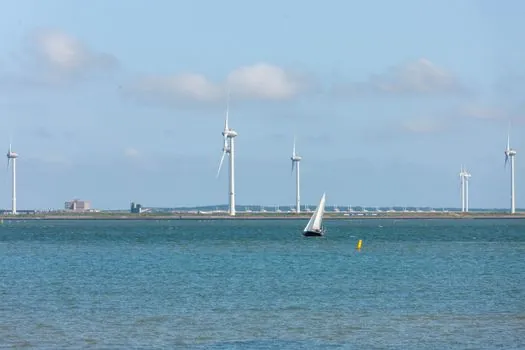
Four codes dominate foundation manufacturing specifications. ISO 19902 governs fixed steel offshore structures and is the primary structural design reference [S4]. EN 1090 governs execution (fabrication, welding, FPC, traceability) and is the document customs authorities ask for at port [S4]. ISO 12944 C5-M governs coating system selection for marine atmospheric exposure, with NORSOK M-501 acting as the offshore-specific companion for surface preparation and coating application [S4][S5].
On the three decision criteria that drive acceptance or rejection, EN 1090 leads on documentation traceability (mill cert to finished part), ISO 12944 C5-M / NORSOK M-501 lead on corrosion protection in the splash and tidal zones, and ISO 19902 leads on global structural design loads and fatigue analysis [S4]. A supplier that holds all three is qualified for serial foundation production; a supplier that holds only one is typically relegated to sub-component or secondary-structure work [S4].
Who this is for, and who should not use it
Buyers sourcing monopile, jacket, or floating foundation substructures for 15 MW+ turbines, owners' engineers writing technical specifications for fabrication tenders, and QA/QC leads auditing tier-2 suppliers are the audience for the ISO 19902 + EN 1090 + ISO 12944 C5-M + NORSOK M-501 stack [S4][S1]. APQP4Wind is the right upstream framework when the same buyer is also procuring towers and nacelles, because it aligns tower and foundation QA under one methodology [S6].
Buyers sourcing only secondary steelwork (boat landings, J-tubes, internal platforms) or manufacturers whose products never enter the splash or tidal zone do not need the full C5-M/NORSOK M-501 coating stack, and applying it drives cost without benefit [S4]. For comparison, the same logic of matching protection to environment is used in hydraulic accumulator TCO decisions and in disc coupling selection for wind turbine drivetrains, where over-specification adds cost without lifting reliability. The same project-certification logic used for floating wind platforms [S2] is documented for excavator commissioning, where FAT-to-handover records close the same documentation gap.
Trackable signals to watch in the next 6 months
Two signals are worth tracking. First, watch whether EU and UK customs authorities move from spot-checks of mill certificates to mandatory pre-shipment FPC audits at the fabricator's shop, because that would change the lead-time model for any supplier still running on mill-cert-only documentation [S4]. Second, watch whether the additive manufacturing material supply chain starts producing certified weld wire and powder batches for offshore foundation fabrication, because that would shift the traceability baseline from mill cert to batch-level chemistry and is currently absent from public code language [S7].
Spec-level background on the components involved: air quality monitor.