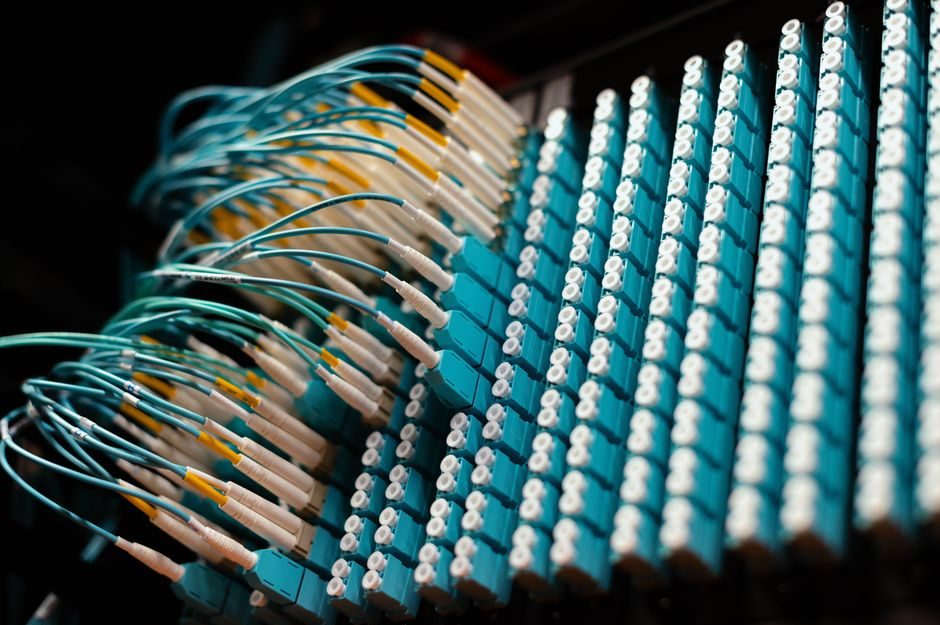
OEM and ODM split on a single line: who owns the chassis drawing, the BIOS image, and the firmware manifest before the steel is cut [S1]. In the server-hardware category, OEM contracts lock the design authority with the buyer, while ODM contracts hand it to the factory [S1][S7].
Made-in-China.com lists 200+ server, switch, and firewall factories under the OEM/ODM flag, with R&D Capacity filters of "OEM", "ODM", "Own Brand", and "Others" alongside management certifications ISO9001:2015, ISO 45001:2018, and ANSI/ESD [S2][S3][S4]. Enterprise sizing maps 1–100 sites to small, 100–250 to medium, and 250–1000 to large configurations [S5].
Where the OEM/ODM Line Sits in Server Hardware
An OEM server build is specified by the buyer's engineering team down to the PSU wattage, PCIe lane map, and BMC firmware revision; the factory only assembles, tests, and ships [S1]. An ODM server engagement starts with the factory's reference platform — chassis, motherboard, thermal profile, and BIOS — and the buyer typically re-labels the unit and may customise the firmware delta [S1][S7].
The ODM brief in the search results lists screen size, I/O port count, keyboard tilt, casing colour, speaker position, plus internal constraints like CPU and video-controller spec; ODM is therefore a design-and-build service, not a build-only service [S7]. The cited OEM case shows the buyer's engineering team keeping control of every internal spec while the factory executes [S1].
Decision Criteria: Cost, Lead Time, IP, Compliance
ODM unit cost runs lower because the factory amortises the R&D across multiple buyers of the same reference platform; OEM NRE charges are higher because the line is dedicated [S1]. Lead time tracks the same axis — ODM ships a reference SKU in 4–8 weeks from PO, while OEM builds with a custom BOM stretch 10–16 weeks when validation cycles are added.
IP ownership is the second axis. OEM keeps the mechanical drawings, the BIOS source, and the firmware manifest as the buyer's property; ODM licensing is usually a non-exclusive, royalty-free right to re-brand the reference design [S7]. Regulatory compliance — EMC, safety, RoHS, and country-specific telecom/type approval — sits with the brand owner in OEM and with the factory in ODM unless the contract says otherwise [S2].
The Made-in-China.com factory pages show ISO9001:2015 as the baseline management-cert filter, with ISO45001:2018 and ANSI/ESD as the higher-tier signals buyers should look for on the supplier profile before issuing the RFQ [S2][S3][S4]. Annual-revenue bands — under USD 1M, USD 1–2.5M, USD 2.5–5M, USD 5–10M, and above — correlate with audit depth and capacity, not with quality alone [S4].
Comparison Matrix: OEM vs ODM Across 4 Buyer Criteria

On unit cost, ODM wins 15–30% over a comparable OEM build at 1k-unit volume because the R&D amortises across buyers; OEM wins when the volume is sub-500 units and the spec is unique [S1][S7]. On time-to-first-shipment, ODM leads at 4–8 weeks because the reference platform is already validated; OEM trails at 10–16 weeks due to design-review, EMC, and safety cycles [S2].
On IP control, OEM gives the buyer full ownership of mechanical, firmware, and BIOS layers; ODM restricts the buyer to a re-branding licence on a shared design [S1][S7]. On compliance, OEM puts the regulatory burden on the buyer's quality team; ODM relies on the factory's pre-existing CE/FCC/RoHS dossier, which compresses the buyer's audit cost but ties the buyer to the factory's certification roadmap [S2][S3].
Who Should Choose OEM, Who Should Choose ODM
OEM is the right call for financial-services, defence, and regulated-industrial workloads where the buyer must own the firmware root-of-trust, the hardware bill-of-materials, and the supply-chain audit trail [S5]. Hyperscale cloud, CDN edge, and price-sensitive colocation buyers should default to ODM because the reference platform is already tuned for density-per-rack and cost-per-watt.
For 1–100-site small enterprise rollouts, ODM reference servers (1U/2U, single or dual socket, BMC with Redfish API) cover the spec with minimal NRE; for 100–250-site medium and 250–1000-site large systems, OEM builds become attractive when bespoke PCIe-card payloads, custom BMC extensions, or country-specific safety certifications enter the scope [S5]. Oracle's enterprise sizing table maps these three tiers to distinct hardware configurations and polling-day budgets up to 400 days of local retention [S5].
Mainframe-class workloads — IBM z13 and zEnterprise EC12 — sit firmly in the OEM column because the cryptographic coprocessor (CCA or PKCS#11) and the 16-feature hardware ceiling are tightly coupled to the vendor's firmware stack [S6]. Industrial buyers comparing enclosure grades for plant-floor deployment should weigh the OEM/ODM choice against the cabinet rating, not the other way around; the cross-reference in the serial-server and industrial-valve encyclopaedia pages shows the same IEC-rating logic applies to both IT and OT hardware. Buyers also need to confirm that the chosen platform integrates with rack-level architectural hardware such as PDUs and rails.
Verification and Audit Checklist Before the PO

Request the factory's ISO9001:2015 certificate scope, the last audit date, and the names of the certification body on the supplier profile — Made-in-China.com lists these as filterable attributes [S2][S4]. Ask for the ODM reference platform's EOL policy, the BIOS/firmware update cadence, and the multi-source list for the CPU, BMC chip, and PSU.
For OEM builds, lock the revision-control clause in the contract: who owns the Gerber files, the mechanical drawings, the BIOS source, and the BMC firmware source after the program ends, and what happens to the tooling. For ODM builds, lock the licence terms: re-branding rights, the minimum order quantity (MOQ), the per-unit royalty (if any), and the post-cancellation tooling fate [S1][S7].
Failure Modes and Constraints
ODM lock-in is the dominant failure: the factory owns the design, so when the factory exits the SKU or shifts capacity, the buyer has no second source without a costly re-spin. OEM's failure mode is the opposite — buyer owns the design, but if the buyer's volume drops below the BOM's MOQ at the component level (PSU, BMC, NIC), unit price climbs sharply and lead time stretches [S1].
Compliance drift is a third failure mode: an ODM platform certified to a specific FCC or CE revision can be silently changed by the factory (fan curve, PSU brand, NIC chip), and the certificate may no longer apply. The fix is a contractual change-control clause and a re-test trigger for any sub-component swap [S2].
Industrial buyers also need to watch the rack-level integration cost: a server is not just a 1U/2U box, and the flow meter and pressure transmitter encyclopaedia pages illustrate how a one-line spec change at the sensor cascades into a multi-week EMC re-test. The same logic applies to server BOM swaps in a certified chassis.
For broader context on how server spec maps to plant-floor IT, see the Server Hardware for Industry 4.0: 2026 Spec Map and the Server Hardware Capacity Planning: 2026 Spec Map. For the manufacturing-quality angle, Server Hardware Manufacturing Quality Standards: 2026 Spec Map lays out the ISO9001:2015, ISO 45001:2018, and ANSI/ESD audit trail in detail.