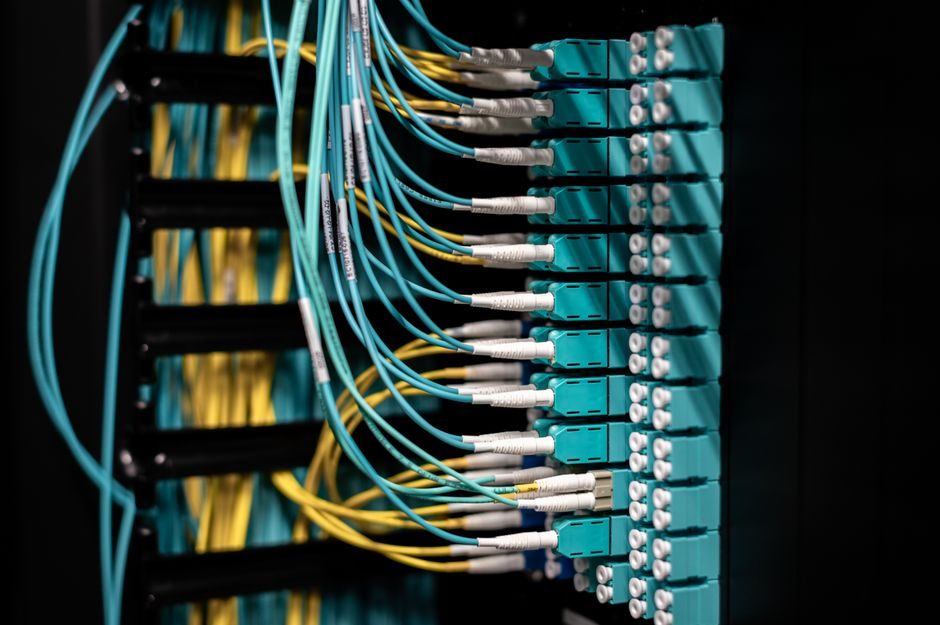
Industry 4.0 server hardware in 2026 is sized for two distinct workloads that share the same chassis: deterministic industrial protocol termination (OPC UA, PROFINET, EtherNet/IP) and AI/ML training/inference on near-real-time shop-floor data, as documented in a 2024 Springer paper on AI/ML metamodeling for ductile iron sand casting [S3].
Unlike enterprise IT, the server now sits between a pressure transmitter or flow meter on the plant floor and a cloud historian; the hardware choice therefore has to meet both IEC 61131-style latency budgets and IT-grade cybersecurity patching cycles. The current industry direction is consolidating these onto industrial edge servers with IEC 62443 zones, rather than running them on generic office PCs [S1].
Workload split: deterministic protocol plane vs AI/ML plane
Two physical or virtual planes now coexist on a single Industry 4.0 server: a protocol-terminating plane handling PROFINET, EtherNet/IP, and OPC UA Pub/Sub, and an analytics plane running AI/ML metamodels for process control, exactly the architecture demonstrated for high-performance ductile iron sand casting where predictive and prescriptive metamodels are deployed in near real time [S3].
Specifiers should isolate these planes using hypervisors, container runtimes, or separate NICs; the protocol plane must keep hard-real-time scheduling under heavy analytics load, otherwise deterministic bus cycles slip and field devices like a pressure sensor drop frames. Resource pinning (CPU isolation, SR-IOV, dedicated VLANs) is the standard remedy, not overprovisioning RAM alone [S1].
Compute and memory sizing for AI/ML workloads
AI/ML metamodel training in a foundry context ingests historical production data plus selective design-of-experiments data and retrains continuously, which means the server must support GPU or accelerator cards, ECC memory, and NVMe storage with high random-write IOPS [S3].
A practical 2026 baseline for an edge AI node is a multi-core x86 server (8 to 16 physical cores, 64 to 128 GB ECC RAM, 1 to 2 TB NVMe in RAID 1, and a T4/L4 class GPU for inference); the historic enterprise-sizing example of 3.2 GHz Pentium 4 with 2 to 4 GB RAM for 100 to 1000 managed sites [S2] is no longer adequate for any workload that runs shop-floor inference. Hyper-V-based industrial hosts remain a viable virtualization layer because each VM gets an independent OS image, dedicated CPU and RAM allocation, and isolated restart semantics, which is critical when one tenant hosts the historian and another the OPC UA server [S5].
Storage, RAID, and historian resilience
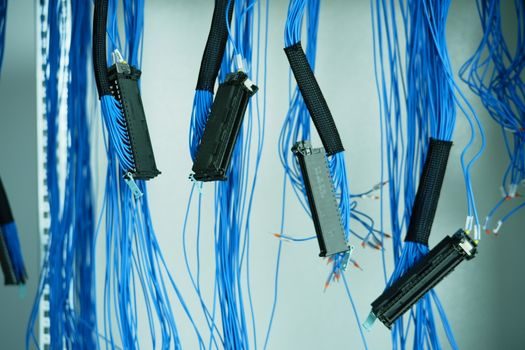
Storage design follows the same RAID 5 single-parity-plus-resilience rule used in enterprise sizing, with hardware-controller RAID mandated rather than OS-software RAID [S2], but the capacity and IOPS targets scale up two orders of magnitude for Industry 4.0 because raw 1 kHz vibration, image, and pressure transmitter streams are buffered locally before downsampling.
RAID 1 or RAID 10 on enterprise NVMe is the typical 2026 minimum for the historian volume, with a separate RAID 5 or RAID 6 array for cold archival; battery-backed write cache on the hardware controller remains the recommended pattern to survive power loss without corrupting the in-flight tag database. Hypervisor-side features such as Hyper-V Replica or VMware vSAN extend this to cross-site resilience, but the underlying hardware RAID still has to meet the IEC 62443 zone requirements for the cell it serves [S1][S5].
Network interfaces and time synchronization
An Industry 4.0 server needs at minimum three logical network paths: a deterministic field network (PROFINET/EtherNet/IP) on a dedicated NIC, a buffered process-data VLAN carrying OPC UA Pub/Sub, and a northbound IT/DMZ link for the cloud historian and ERP, with PTP or IEEE 1588 grandmaster clocks bound to the field NIC for sub-microsecond synchronization [S1].
The 10/100/1000 NIC tier that was once the enterprise baseline [S2] is now the floor, not the ceiling, because a single 4K machine-vision stream or a 1 kHz vibration array from multiple flow meter channels can saturate 1 GbE; 10 GbE uplinks with TSN capability are the de-facto 2026 spec for new builds. Hard real-time capable NICs from vendors such as Intel, Hirschmann, or CC-Link partner families are required where PROFINET IRT or EtherNet/IP DLR rings are in use, and they must be pinned to the protocol-plane VM or container.
Operating environment, security, and IEC 62443 zones
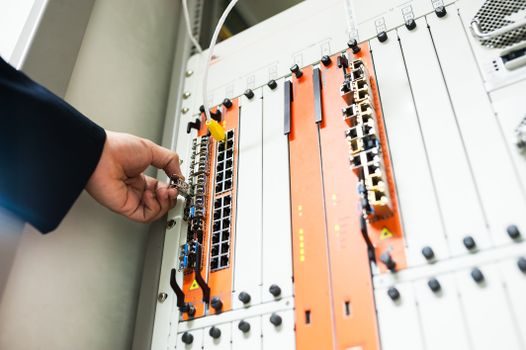
Industrial servers now ship in extended-temperature, fanless, or hardened form factors (typically 0 to 55 °C operating, IP20 to IP40, vibration-tested to IEC 60068-2-6) and are deployed inside industrial valve and MCC cabinets rather than 19-inch server rooms, with the cybersecurity baseline defined by IEC 62443-3-3 SL-2 or SL-3 depending on zone [S1].
Hypervisor choice directly affects patching discipline: Hyper-V, VMware ESXi, and KVM-based industrial hypervisors all support live migration and snapshotting, but only hardened industrial distributions receive the long-term security patches a 15-to-20-year plant expects [S5]. Windows Server, the OS family cited in classical enterprise sizing [S2], is increasingly replaced by Linux-based industrial distros for the protocol plane while Windows remains common for SCADA and historian HMI tiers, so dual-OS or dual-hypervisor designs are now routine in 2026.
Reference architecture and deployment patterns
A representative 2026 deployment stacks a rugged edge server at cell level (handling PROFINET termination and OPC UA aggregation), a plant-level historian server (RAID 6, 10 GbE, 64 to 256 GB RAM), and a central AI/ML training server (multi-GPU, NVMe fabric) in the control room, with the edge node streaming directly into both the historian and the training cluster. Foundries running ductile iron process control report measurable scrap reduction by feeding the metamodel live rather than batch-retraining on a corporate server, which only works if the edge node meets the latency budget [S3].
Specifiers should treat the cell-level edge server as the new PLC-adjacent device: it is mounted, grounded, and documented with the same discipline as a pressure sensor, and its failure mode is a hard plant stop, not a slow IT degradation. Procurement specs in 2026 typically cite IEC 62443-4-2 device certification, UL 508A or IEC 61439 panel compliance for the cabinet, and a five-to-seven-year vendor support contract, with server hardware capacity planning run as a recurring annual exercise rather than a one-off project [S1].
Two signals worth tracking over the next two quarters: IEC 62443-4-2 certification lists for industrial servers (quarterly updates, see [UL and TÜV registries](https://www.ul.com)), and the TSN-PROFINET-EtherNet/IP interoperability plugfest results published by PI, ODVA, and the OPC Foundation. Cross-reference procurement decisions against the latest server hardware manufacturing quality standards guide and the server hardware in process control 2026 spec map before locking a chassis, because OS image support and cybersecurity patch windows change more quickly than the hardware itself [S2][S3].