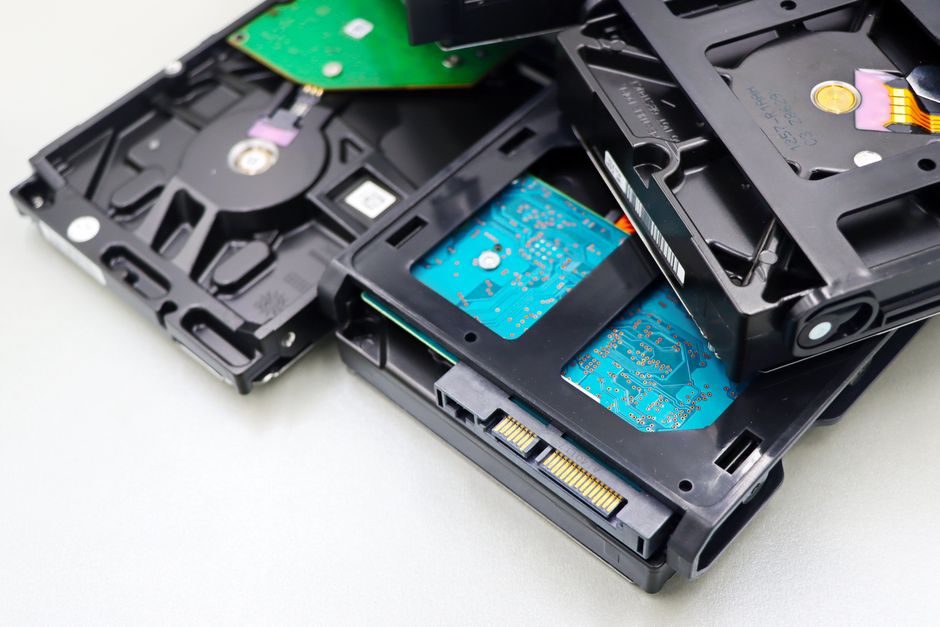
Server hardware manufacturing cost is dominated by silicon (CPU/SoC, DRAM, NAND, BMC), PCB + substrate, power-conversion hardware, chassis sheet-metal + cooling, and a growing slice of firmware/OS validation — with the last item sharply elevated by the Windows Server 2025 LTSC boot/reset failure that Microsoft publicly traced on April 22, 2025 [S2].
The same Microsoft support article documents that the defect reproduced on systems with more than 256 logical processors, that boot or restart could exceed 3 hours, and that the fix shipped in cumulative update KB5046617 on November 12, 2024 — five months before Microsoft publicly acknowledged it [S2]. That gap is now a hard data point for any procurement team mapping validation cost back into the unit price.
Cost Driver Stack: Where the Money Actually Sits
Five buckets absorb roughly the entire BoM on a 1U/2U general-purpose x86 or POWER server: compute silicon, memory and storage, PCB + high-speed interconnect, power delivery, and chassis/cooling. The split is not published as a single ratio, but the relative weight is consistent across OEM disclosures and contract teardowns: CPU/SoC plus DRAM together typically run ahead of all mechanical and assembly cost combined, and that gap widens at higher core counts — the exact segment where Windows Server 2025 broke [S2].
Practical engineering consequence: when you increase logical-processor count above 256, you are paying a premium for the high-core-count SKUs, paying a second premium for validated DDR5 channel population and signal-integrity margin, and then paying a third premium in OS-validation effort to clear issues like the KB5046617 class of bugs [S2]. For related mechanical-cost reasoning, see this linear guide TCO breakdown — the same "materials + certification + volume tier + lead time" frame applies, with silicon replacing bearing steel as the dominant line.
CPU/SoC and Memory: The Silicon-Weighted Floor
Compute silicon is the largest single cost block and the most volatile. Pricing is set by wafer cost, die size, packaging (monolithic vs. chiplet, 2.5D vs. socketed), and bin/yield distribution. Each step-up in core count, PCIe lane count, or memory-channel count moves the unit price non-linearly because you are not paying for one extra core — you are paying for the SKU tier that licenses a higher memory-bandwidth envelope.
DRAM and NAND are the second-largest bucket and behave as a commodity line with quarter-to-quarter swings. The procurement levers are: module density (16/32/64/96/128 GB RDIMM vs. MRDIMM), rank count, speed grade, and validation tier. Modules that are on the CPU vendor's memory-listed list cost more per GB but remove a whole class of intermittent boot and training failures — including the failure mode Microsoft described for high-logical-processor Windows Server 2025 hosts [S2]. For context on the capacity side of that trade, the server capacity planning spec map walks the per-rack envelope where these BoM choices start to compound.
PCB, Chassis, and Power Delivery: The Mechanical and Electrical Substrate
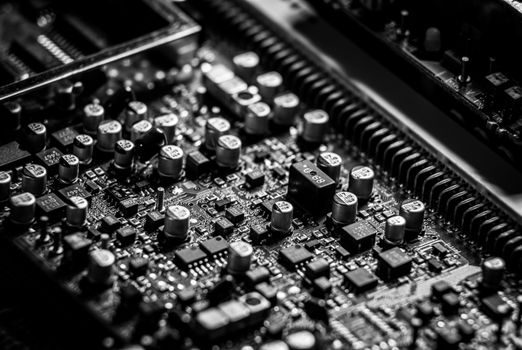
PCB cost scales with layer count, material (mid-loss vs. low-loss vs. ultra-low-loss), and surface finish. Servers above a certain PCIe generation need low-loss or ultra-low-loss laminate to hold the loss budget across the longest routes; that material is roughly an order of magnitude more expensive per panel than standard FR-4, and the price step is passed through to the BoM almost one-for-one at low volume.
Chassis cost is driven by sheet-metal gauge, forming complexity, and surface treatment (zinc plating, powder coat, conversion coating). Cooling is split between air (heatsink + fan wall) and liquid (cold plate or rear-door heat exchanger); the cutover is roughly where per-rack density forces a thermodynamic decision that air alone cannot solve. Power delivery is the often-underestimated line: 80 PLUS Titanium-class redundant PSUs, hold-up capacitors, and DC-DC conversion stages add real BoM cost that the rack-level efficiency number does not surface.
Validation, Certification, and OS-Compat Cost: The Line Item That Just Got Bigger
Microsoft's April 2025 disclosure is the cleanest recent public case study of why OS validation is no longer a "post-shipment" cost. The defect: Windows Server 2025 LTSC, released November 1, 2024, could fail installation, hang, or take more than 3 hours to boot or restart on systems with more than 256 logical processors, with additional blue-screen reports after application launch; the fix shipped in KB5046617 on November 12, 2024, and was publicly confirmed five months later [S2].
The procurement read: for any server above the 256-logical-processor line, the OEM now has to carry a Windows Server 2025 LTSC regression test against hotfix KB5046617 in its pre-ship validation matrix, and that cost — matrix updates, retest time, blocked factory slots — flows into the unit price. It is the same reason server quality standards mapping has to be read alongside the BoM, not in a separate document. The IBM HMC (Hardware Management Console) stack on POWER systems — used to partition POWER6/P6xx/P690-class hosts into LPARs and running on a customised Red Hat Linux base [S1] — is a separate but parallel validation surface: a partition that crosses a logical-processor boundary behaves differently from a partition that does not, and that boundary is exactly where the Windows Server 2025 fault surfaced [S2].
Volume, Lead Time, and Where the Curve Bends
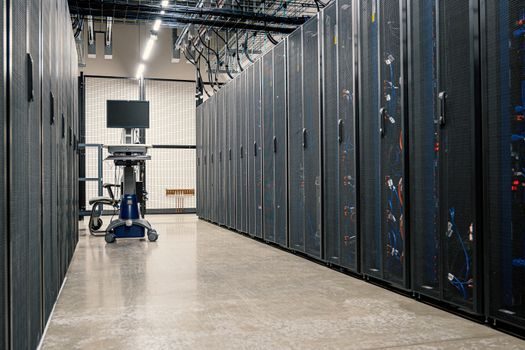
Volume-tier effects on a server BoM are sharper than on most industrial equipment because the fab capacity is pre-allocated. The price steps you actually see on a quote are: (1) tray vs. reel vs. tray-with-burn-in at the silicon supplier, (2) MOQ breaks at the chassis stamper, (3) panelisation breaks at the PCB shop, and (4) test-program amortisation at the OEM. The first three are visible; the fourth is the one that quietly determines whether a low-volume OEM can even sell a SKU profitably.
Lead time is the second axis. A 12-week vs. 26-week chassis lead time changes the carrying cost of WIP and finished goods, which feeds back into the price a distributor will quote on a spot buy. The combined cost picture is closer to the rack-level numbers in the data center cost breakdown than to a single-server line item, because the unit price of the server is a function of how the factory is loaded, not just what is on the BoM.
Total Cost of Ownership: The Stack Behind the Sticker
Sticker price covers hardware + first-year warranty. TCO adds power (dominated by PSU efficiency at partial load and by the PUE of the room), cooling (chiller vs. air-side economiser), maintenance spares, and refresh-cycle cost. For a 5-year horizon, power frequently equals or exceeds purchase price on dense x86 racks, and the PSU efficiency tier is therefore a directly monetisable BoM decision, not a marketing line.
Validation cost is now part of TCO too. Every cumulative update that touches a server OS — KB5046617 being the April 2025 reference point [S2] — is a scheduled reboot event with a risk window. The honest comparison is not "Server A costs $X, Server B costs $Y" but "Server A costs $X and has been regression-tested against KB5046617-class fixes for logical-processor counts at and above 256 [S2], and Server B costs $Y and has not." That delta is the real procurement number. For an adjacent mechanical TCO example where the same logic applies, see this fettling grinder cost stack.
Sourcing and Specification Discipline
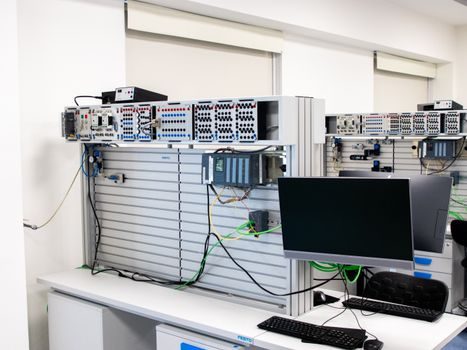
Buy-side, the disciplined move is to fix the BoM axes you control (chassis gauge, PSU efficiency tier, memory listed-vs.-unlisted, PCB loss grade) and let the silicon tier float against a published ceiling. Pin a logical-processor count and a memory-channel count in the spec, then require regression evidence against current Windows Server LTSC and at least one prior LTSC — the failure mode Microsoft documented [S2] is exactly the kind that survives a paper spec but is caught by a real reboot test on a populated system.
Trackable signals: (1) whether Microsoft adds a 256-logical-processor boundary check to its pre-release validation matrix in the next LTSC drop, given the KB5046617 fix shipped November 12, 2024 and was publicly confirmed April 22, 2025 [S2]; (2) whether the IBM HMC/POWER LPAR firmware path — already a separate validation surface for partition-aware OS loads [S1] — gets a similar public bug disclosure; (3) whether DDR5 MRDIMM price-per-bit crosses the RDIMM line at the densities that the high-core-count SKUs need, which would meaningfully bend the second-largest BoM line.
The underlying component specifications are covered under architectural hardware, serial server, and additive manufacturing material.