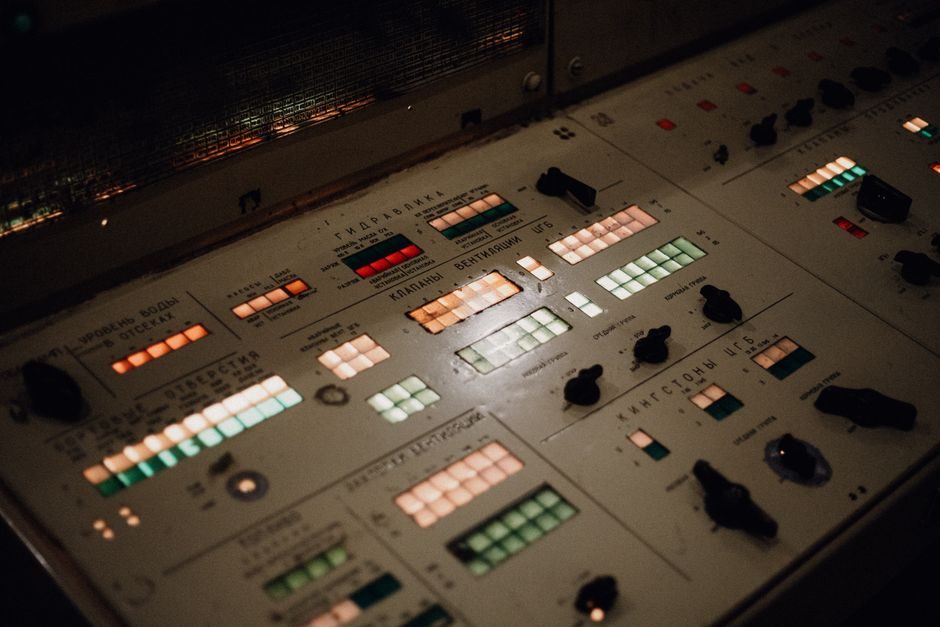
Industrial server platforms specified for 2026 process-control builds are required to combine operator interface, archiving, batch, and controller functions on a single PC where system size permits, with the OS stack explicitly supporting Microsoft Windows 7/2008 Server and Windows 10/2012 Server families [S1].
The same Siemens-authored Process Automation System specification (v9) calls for state-of-the-art PC hardware, industrial Ethernet communications, decentralized architecture, 1:1 controller redundancy, online configuration changes, and spare capacity for 20%+ expansion across all subsystems [S1].
Where Industrial Servers Sit in a Control Loop
A process-control loop is a closed signal chain: sensor → transmitter → controller → final element, with the server (operator interface, historian, batch server) sitting one level above as supervisory, not as the control element itself [S3]. In a typical 4-20 mA analog loop, the field device powers itself from the loop current; the HART protocol layers a 1200 bps FSK signal on top of the same two wires, so a single twisted pair carries both the analog variable and digital diagnostics, a fact that constrains how servers poll valves and transmitters [S5]. A digital valve controller on HART will report stem travel, friction band, and cycle counts back to a handheld or asset-management host, so a server-grade workstation must run HART-IP, Modbus TCP, or Foundation Fieldbus HSE stacks in parallel with OPC UA for full asset visibility [S5].
For hazardous-area plants, the server hardware is rarely installed in Zone 1; it sits in a control room with purged cabinets, and only the I/O marshalling, barriers, and field devices go into the classified area. This separation is what allows standard commercial PCs to be deployed as operator stations, while the controller tier carries the ATEX/IECEx-rated responsibility [S1][S2].
Controller Tier: 1:1 Redundancy, Hot-Swap, and Failover
Process automation specifications call out 1:1 redundant controllers, redundant power supplies, and redundant communication modules, with switchover transparent to the controlled process and bumpless on PID output [S1]. Hot-standby pairing uses synchronized RAM between primary and backup so the secondary can take over without a process bump; the spec also mandates online engineering changes, meaning a control block can be edited while the loop is live, with the change downloaded without stopping the controller [S1].
Spare capacity is a contractual number, not a hope: the spec requires 20% spare I/O points, 20% spare memory, and 20% spare communication bandwidth in the as-delivered system, with all expansion slots and tag licenses already licensed, not held for future purchase [S1]. For water and wastewater utilities, the same pattern appears in the I&C general spec (HSS0009 v4.0, June 2023), which mandates dedicated PLC and RTU panels, distinct cubicles for power supplies, surge protection, and hazardous-area termination, and a hardware-failure contact that opens on any internal fault [S2].
Failsafe Alarms, Contact Outputs, and the I/O Boundary
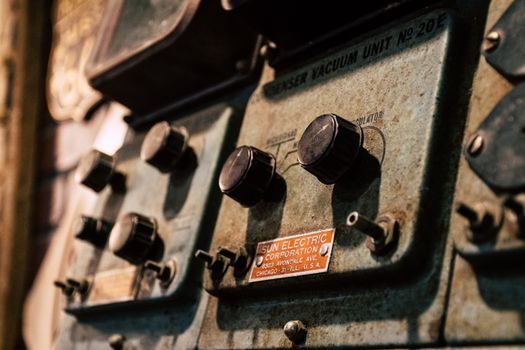
The Sydney Water HSS0009 specification requires voltage-free, failsafe alarm contact outputs: one high and one very-high alarm per channel, one common gas alarm contact, and one common hardware-failure contact, all opening on alarm so a wire break also raises the alarm rather than masking it [S2]. This is the de-energize-to-trip pattern familiar from ISA-84 / IEC 61508 SIL implementations, and it forces the I/O module to actively drive the relay coil in the safe state, not just in the alarm state.
On the digital side, the same spec defines the RTU/PLC interface down to the loop-number and cable-number level (Appendices 8 and 9), so every server-hosted HMI tag maps to a unique field loop number, a discipline that prevents the most common cause of incident investigations: ambiguous tag-to-physical mapping [S2]. PLC, OIT, network switch, cellular radio, and UPS are all bundled into the RTU scope, and the integrator is contractually required to provide PLC, VFD, network, and HMI programming as a complete functional deliverable, not a hardware-only supply [S4].
Selection Criteria: Industrial PC vs PLC vs RTU Server
For 2026 builds, the three server-class options line up against decision criteria as follows. An industrial PC (IP65 panel mount, fanless, -20 to +60 °C) suits operator-interface and historian roles but cannot be the safety controller; it pairs with a separate SIL-rated PLC. A PLC-based control server (e.g. Siemens S7-1500, Allen-Bradley ControlLogix, Schneider M580) carries the runtime, supports 1:1 redundancy, and runs the PID loops; it can host a small HMI but is not optimised for thousands of tags. An RTU server (DNP3/IP, Modbus, serial gateways, cellular telemetry) fits remote, unmanned sites and pairs with a SCADA host; the spec bundles UPS and cellular radio in the same panel to ride out power and comms loss [S2][S4].
The PC platform itself is required to use standard PC technology, current-generation CPUs, and a Microsoft Windows OS family that explicitly includes Windows 7/2008 Server and Windows 10/2012 Server, with industrial Ethernet as the plant backbone; a parallel controller tier handles real-time I/O scan, typically 10-100 ms deterministic, independent of the server OS [S1]. Sites that need deterministic motion or sub-10 ms loop time keep the safety and motion controllers on dedicated hardware, not on the supervisory server.
Diagnostics, HART, and the Asset-Management Server
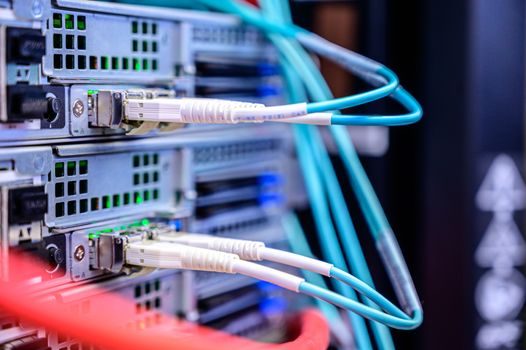
Digital valve controllers and smart transmitters expose device-level diagnostics over HART, and the asset-management server aggregates these into a single health dashboard, alerting when valve friction, dead band, or cycle count crosses a configured threshold [S5]. A HART handheld communicator performs the same role locally: when connected to a digital valve controller, it enables user-configured alerts and alarms for the current state and historical trend, so a field tech can confirm a problem before escalating to a server-side work order [S5].
This is why the spec mandates HART I/O cards (or HART-IP gateways) on the controller tier, not just analog-only I/O: the 4-20 mA signal alone tells you the process variable, but only the HART layer tells you the valve is sticking, the sensor is drifting, or the device has not been calibrated in 18 months. The data center and OT sides are converging here, and the server hardware manufacturing quality standards map for 2026 applies similar component-burn-in and MTBF discipline to the control-room server fleet as to hyperscale IT.
Environmental, EMC, and Power Constraints
Process-control server hardware must meet indoor temperature, humidity, and EMC limits defined in the spec's environmental clause, with separate - and stricter - criteria for outdoor cabinets, unconditioned plant areas, and hazardous-area enclosures [S1]. Power supplies are 24 VDC or 120/230 VAC with redundant feeds, surge protection on incoming lines, and a dedicated UPS sized for at least 30 minutes of full-load operation so a brownout does not corrupt the historian database mid-write [S1][S2].
EMC immunity is a contractual line item: the cabinet, cable routing, and grounding must keep the server within industrial EN 61000-6-2 immunity levels, and signal cables must be segregated from VFD power cables by at least 200 mm or by a grounded divider, per typical I&C cubicle practice. Earthing follows the same discipline, with a single-point ground bar, insulated gland plates, and surge arrestors on every field cable entering the hazardous-area cubicle [S2].
Who Server-Grade Control Hardware Is For — and Who It Is Not For
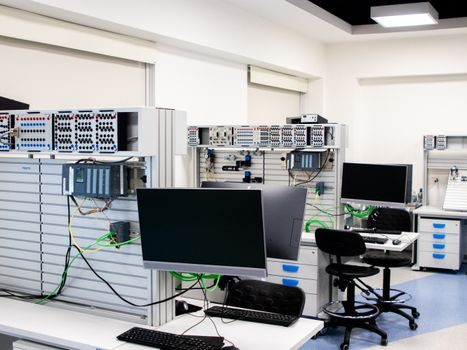
This hardware class fits continuous-process plants (chemicals, water, power, oil and gas, pulp and paper) with hundreds to tens of thousands of I/O, where 1:1 redundancy, failsafe outputs, and digital-valve diagnostics are mandated by safety case or regulatory licence [S1][S2]. It also fits skid-based batch and OEM machine builders who need a documented, auditable control platform with HART, Modbus, and OPC UA stacks ready out of the box [S4].
It is not for low-volume, non-critical monitoring: a single-board computer running open-source SCADA on a non-redundant power supply is fine for a pump-station level indicator, but it does not meet the HSS0009 failsafe-contact, dual-alarm, and hardware-failure spec that a utility operator expects [S2]. It is also not a substitute for a SIL-rated safety PLC on burner management, emergency shutdown, or fire and gas systems: the supervisory server is one network segment removed from the safety I/O, and a network storm must not be able to disable a safety function. The architectural hardware reference covers the cabinet and enclosure details, and the serial server reference covers the Modbus/DF1 gateways that sit between legacy RTUs and the modern control server.
Trackable Signals for the Next Spec Cycle
Two signals to watch in the next six months: the IEC 62443 industrial-cybersecurity clause being added to more utility I&C specs (driving the move from Windows 7/2012 to Windows 10 LTSC 2019/2022 and hardened OS images), and the ISA-95 / OPC UA convergence on a single naming convention for control-server tag hierarchies, which would finally retire the per-vendor tag-prefix schemes still in service today [S1][S2]. On the operations side, watch for HSS0009 v5 to extend the failsafe-contact rule to fire and gas detectors and to require dual Ethernet ports with PRP or HSR redundancy on every new RTU.
Component reference pages worth checking: multifunction process calibrator.