
Wind turbine gearboxes are sourced under two structurally different manufacturing relationships, and the choice changes who holds the design IP and who carries certification liability [S2][S3]. In an OEM setup, the turbine maker owns the gearbox design, drawings, BOM and performance spec, and a contract manufacturer builds to that package [S2]. In an ODM setup, the gearbox maker itself authors the design, and the wind OEM rebrands and integrates the unit, sometimes with cosmetic or interface changes [S2][S4].
For wind-class drivetrains the practical difference is that OEM relationships keep gearbox geometry, gear ratios and bearing selection locked to the turbine integrator's platform, while ODM relationships let an asset owner or repowering contractor standardise gearboxes across mixed fleets faster [S4][S6]. Midwest Power Products, for example, lists aftermarket replacement gearboxes built to original OEM specification for Sumitomo, Falk and other brands, which is a downstream symptom of how these IP relationships were first set [S6].
How the Two Models Differ on Design, IP and Certification
In the OEM model the brand owner retains the gear geometry, the housing drawings, the gear material spec, the bearing part numbers, and the test protocol, while the supplier runs only the production process [S2][S3]. IP ownership stays with the turbine integrator, which makes it easier to migrate production or to enforce design changes across suppliers [S2]. The Wevolver technical guide frames OEM as a model where the client controls R&D, engineering drawings, performance criteria and BOM, with the manufacturer executing against those specifications (2025-05) [S3].
In the ODM model the gearbox supplier owns the underlying design, and the wind OEM typically only adjusts cosmetics, ratings windows, or mounting interfaces before rebrand [S2][S4]. IP usually stays with the ODM, which limits exclusivity but lets the buyer skip most of the upfront engineering investment [S2]. APMC's 2026-03-04 write-up of ODMs in industrial gearboxes underlines that ODMs handle both design and manufacture, with the buyer specifying performance rather than geometry [S4]. For wind applications this matters because a design locked at the ODM may not be re-sold or re-licensed to a competing turbine maker without the ODM's consent.
Decision Criteria: Cost, Time, Differentiation, and Liability
The four decision criteria that consistently show up in OEM vs ODM guides are upfront cost, time to market, differentiation, and long-term control, and they apply directly to wind gearbox sourcing [S2][S5][S7]. SOS Inventory's pros-and-cons breakdown lists ODM as cheaper and faster, while OEM is the path for buyers that need brand or spec control (2023-11) [S5]. Importivity's 2026-03-30 piece repeats the same framework: OEM when the buyer leads design, ODM when the supplier leads design and the buyer wants speed [S7].
On cost, ODM removes the full R&D and tooling burden because the platform already exists; OEM demands engineering, R&D, tooling, test and certification spend up front [S2]. On time, ODM shortens development dramatically because the core design is already in production, while OEM runs on a from-scratch timeline [S2]. On differentiation, OEM allows full customisation of ratios, bearing arrangements, lubrication circuits and condition-monitoring interfaces; ODM is limited to predefined options [S2]. On control, OEM keeps the product roadmap and lifecycle decisions in the integrator's hands; ODM leaves the supplier able to evolve the design in ways the buyer may not control [S2][S5].
Direct Comparison: OEM vs ODM for Wind Gearbox Sourcing

The table below lines the two models up against the four criteria that matter to a wind procurement or repowering team, drawn from the OEM vs ODM guides and the wind-specific sources [S2][S4][S5][S6][S7].
Upfront cost: ODM is lower, because R&D, tooling and certification amortise across the ODM's existing platform; OEM is higher, since the turbine maker funds the design and the test campaign [S2][S5]. Time to market: ODM is faster, with a platform gearbox already in serial production; OEM runs on a longer development clock and typically needs prototype dyno testing before fleet release [S2][S7]. Differentiation: OEM wins, because gear ratios, bearing sizes, housing geometry and sensor ports can all be specified; ODM is constrained to the supplier's predefined frame sizes and ratio families [S2][S4]. Long-term control and IP: OEM keeps IP and the right to move production; ODM keeps IP at the supplier, which constrains exclusivity and second-source flexibility [S2][S3][S5].
For a wind operator comparing these trade-offs in 2026, OEM tends to fit new turbine development where the gearbox is part of a proprietary drivetrain, while ODM tends to fit repowering, aftermarket replacement, or standardised fleet upgrades where speed and cost dominate [S4][S6]. Readers comparing industrial gearbox sourcing in adjacent drivetrain categories can look at how a similar spec-first decision plays out for truck-mounted lifting equipment in the truck crane TCO analysis, where OEM vs aftermarket part sourcing has a comparable cost-versus-control trade-off.
Wind-Specific Risk and Fire-Safety Overlap
Wind gearbox sourcing also intersects with fire-safety responsibility, which is largely pinned to the OEM of the turbine, not the gearbox sub-supplier [S1]. Per Renewable Energy Loss Adjusters, most nacelle fires start in converter and capacitor cabinets and, because the nacelle can sit more than 300 ft above ground where firefighting gear cannot reach, around 90% of nacelle fires destroy the turbine completely [S1]. The nacelle brake sits behind the gearbox, and the high-friction stop events on that brake are themselves a documented ignition source, which is why the OEM of record is held accountable for the fire-protection package, not the gearbox-only vendor [S1].
Operationally that means an ODM gearbox that drops into a turbine still sits inside an OEM-certified nacelle, and the fire-suppression, arc-flash detection and brake-heat mitigation remain the turbine integrator's deliverables [S1]. Specifying teams should therefore treat gearbox sourcing as a drivetrain decision, while keeping the fire-safety scope of supply pinned to the turbine OEM of record, not to the gearbox maker [S1]. For a broader view on how sub-tier parts and liability flow through heavy equipment, the rough terrain crane vs truck crane spec comparison walks through a similar OEM-versus-component-supplier line.
Who Should Pick OEM, Who Should Pick ODM
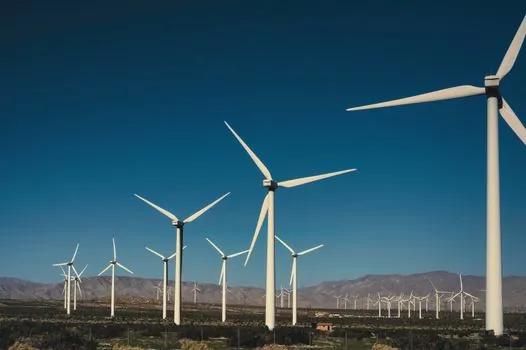
OEM fits turbine makers and large fleet owners that need a proprietary drivetrain, want full control of gear geometry, bearing spec and sensor ports, and are willing to fund the upfront R&D and certification work [S2][S3]. It also fits integrators that plan long product lifecycles and want to keep the option to dual-source or move production later [S2]. ODM fits aftermarket replacement, repowering, and standardised fleet upgrades where the buyer wants a proven platform gearbox at lower cost and shorter lead time, and where differentiation is less important than availability [S2][S4][S6].
A pure OEM path is the wrong call for a small developer that only needs a handful of gearboxes and cannot fund a from-scratch design [S2][S5]. A pure ODM path is the wrong call where the gearbox has to match a turbine maker's proprietary hub, shaft, or bedplate interface and where the ODM catalogue does not have a matching frame size [S2][S4]. A hybrid path, where the ODM does the gearbox design and the turbine maker still owns nacelle-level integration, is a documented option and is in fact the default for most non-OEM turbine integrators [S2][S4]. For buyers building a more complete plant specification, the industrial gearbox encyclopedia entry covers the standard ratio families, mounting formats and API/AGMA-class references that any wind gearbox spec has to live inside.
Trackable Signals to Watch Through 2026
Three signals will tell procurement teams whether the OEM vs ODM split for wind gearboxes is moving. First, watch how often new turbine platforms publish fully owned drivetrain specs versus re-using a third-party ODM frame, which is visible in new-model press releases and [S4] market commentary. Second, watch aftermarket and repowering RFP language, where ODM and OEM-rebuild options are increasingly bid side by side, as documented by independent rebuilders [S6]. Third, watch wind OEM fire-safety disclosures, where the nacelle fire accountability line is shifting further onto the OEM of record, raising the cost of any gearbox-sourcing decision that leaves the fire scope ambiguous [S1].
For the relevant spec sheets and selection criteria, see additive manufacturing material, and turbine flowmeter.