The 2026 inflection in enterprise AI is economic, not technical: on-premises GPU infrastructure now reaches payback against hyperscaler APIs in under four months at sustained utilization, with a measured 10–18× cost advantage per million tokens once amortized over a 5-year lifecycle [S1][S5].
For infrastructure architects, the decision has shifted from "cloud-first by default" to a workload-routed hybrid: cloud APIs handle bursty experimentation and frontier-model access, while owned GPU clusters absorb the steady, high-volume inference load that now dominates production LLM traffic. Choosing the wrong side of that line is the most expensive procurement mistake a CIO can make in 2026.
Decision Criteria: Five Variables That Move the Answer
Five workload variables decide the deployment call, and each maps to a numeric threshold that procurement can score against [S3][S5].
First, sustained GPU utilization. Cloud wins below roughly 20% sustained utilization; on-prem breaks even in 4–6 months at >20%, and pulls decisively ahead above 60% [S5]. Second, monthly token volume. Workloads under 1 billion tokens/month are cheaper on cloud APIs; sustained volumes above that magnitude invert the math because the API bill is linear while amortized hardware is not [S4][S5]. Third, data sovereignty. Finance, healthcare, government, and defense deployments favor on-prem because prompts, retrieved context, and tool activity never leave the enterprise boundary [S2][S3]. Fourth, time-to-first-inference. Cloud APIs ship in minutes via SDK; an 8× H100 on-prem cluster requires 4–12 weeks of procurement and rack-and-stack [S5]. Fifth, latency. On-prem removes the network hop for real-time trading, manufacturing control, and in-line document automation, where every 50 ms compounds at scale [S3].
2026 Cost Reference: Cloud GPU vs Owned GPU Per Million Tokens
Concrete pricing tiers from 2026 sourcing, anchored to H100-class silicon and Blackwell follow-ons, frame the comparison directly [S4][S1].
Cloud H100 on-demand from hyperscalers runs $4.00–$8.00 per GPU-hour; specialized GPU cloud providers price reserved H100 access from $2.10 per GPU-hour, a 3–4× spread for the same silicon [S4]. A mid-size enterprise processing 10 billion tokens per month faces $45,000–$1,000,000 per month in API cost alone, depending on model and provider, with a linear monthly curve that never amortizes [S4]. On the owned-hardware side, an 8× H100 server lands above $250,000 in Year 1 CapEx, but cost per million tokens drops 80%+ after Year 1 amortization, settling 10–18× below the cloud API rate at >60% sustained utilization [S5]. The Lenovo 2026 TCO paper pegs the same advantage at up to 17× against Model-as-a-Service APIs over a 5-year horizon, using a "Token Economics" framework that converts amortized hardware cost into a per-million-token unit [S1]. Datacouch's 2026 write-up cites an 18× ceiling under the same methodology, the gap between the two numbers reflecting model mix and utilization assumptions rather than disagreement on direction [S4].
Where the Hardware Market Actually Is in 2026
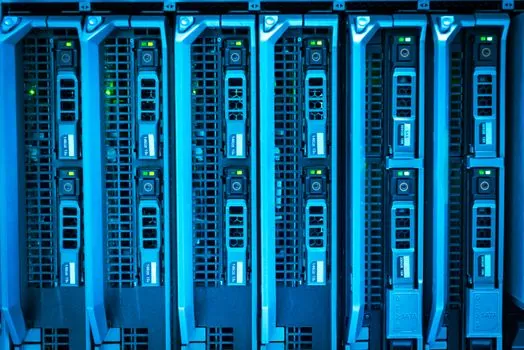
GPU supply normalized between 2025 and 2026 as TSMC capacity expanded, removing the scarcity premium that distorted earlier TCO models and forcing both options to compete on unit economics rather than availability [S4].
H100 pricing settled from the $35,000–$40,000 range of 2023 down to $25,000–$30,000 in 2026; A100s trade at $8,000–$12,000; Blackwell B200 and B300 parts introduce a new efficiency ceiling that compresses the physical footprint required for trillion-parameter inference [S4][S1]. Cloud GPU spot pricing fell as much as 88% in some regions between 2024 and 2025 on the same supply wave, which is why the 2026 decision is "more nuanced, more workload-specific, and more consequential than at any point before" [S4]. The newer benchmark unit, Tokens Per Second per Dollar (TPS/$), replaces hourly GPU cost as the comparable axis because a cheaper GPU that is slower per token ends up more expensive at scale [S4].
Side-by-Side Comparison: On-Prem vs Cloud Across Six Decision Axes
The matrix below condenses the 2026 evidence into procurement-actionable scoring, drawn from the TCO models in [S1], [S4], and [S5].
Year 1 cash outlay: cloud wins. A 5-year amortized owned cluster demands $250,000+ up front for an 8× H100 baseline, while an API key is free and a reserved cloud instance is a line item [S5]. Cost at sustained volume: on-prem wins. Cloud TCO is linear month-over-month with no declining cost over time, while owned hardware drops 80%+ after Year 1 amortization [S4][S5]. Time to first inference: cloud wins by 4–12 weeks. Data sovereignty: on-prem wins outright because no prompts, retrieved context, metadata, tool calls, or outputs traverse third-party infrastructure [S2][S3]. Latency for real-time control loops: on-prem wins by removing the WAN hop [S3]. Model freshness and frontier access: cloud wins, because owned clusters run fixed model weights on a refresh cycle, while API endpoints track the vendor's frontier release cadence [S3]. The right architecture in 2026 routes each workload to the side that wins on its dominant axis rather than picking one column for the whole enterprise [S5].
Who Should Choose What in 2026

The deployment choice is workload-by-workload, not company-by-company, and three procurement archetypes cover the majority of 2026 enterprise cases [S2][S3][S5].
Pick on-prem (or owned private cloud) when the workload is sustained inference above 60% GPU utilization, when the data is regulated PII / PHI / financial, when latency budgets are sub-100 ms, or when finance demands a predictable amortized line item rather than a volatile usage bill [S3][S5]. Pick cloud APIs when the workload is bursty experimentation, when a frontier closed-source model is the deliverable, when time-to-production is measured in days, or when monthly token volume is below the 1 billion break-even line [S3][S4]. Pick hybrid when the enterprise runs a mix, which in 2026 is most of them: 84% of organizations per the IDC CIO Playbook 2026 commissioned by Lenovo expect to run AI across on-premises or edge environments alongside cloud, not as a replacement for it [S6]. For a useful parallel on capex-heavy industrial procurement, see transformer sourcing direct vs through an EPC, where lead-time and ownership boundaries drive the same kind of make-vs-buy logic.
Limits, Failure Modes, and What the 2026 Numbers Don't Tell You
Every on-prem TCO number assumes a 5-year amortization and sustained utilization; miss either assumption and the case collapses back to cloud [S1][S4].
Underutilization is the silent failure mode. An 8× H100 cluster sitting at 15% utilization earns nothing while depreciating, and the breakeven math inverts to a multi-year payback rather than the headline 4-month figure [S4][S5]. Frontier-model churn is the second limit: owned clusters freeze model weights on a refresh cycle, and any competitive edge tied to the latest closed-source release lives only in the API tier [S3]. Operations cost is the third, often omitted line item. On-prem demands power, cooling, rack space, and a staffed AI infrastructure team; the Lenovo paper and Datacouch analysis both fold facility cost into the 5-year TCO, but a buyer running that math against their own PUE and local kWh will land on a different number [S1][S4]. For an adjacent read on operations-driven capex, see the acoustic enclosure vs safety fence spec guide, where site constraints reshape the procurement decision the same way data-center constraints reshape GPU TCO.
Sourcing, Standards, and Trackable 2026 Signals
The 2026 TCO evidence base is unusually concentrated: the Lenovo Press 2026 Generative AI TCO paper (updated 2026-07-24) is the primary anchor, with Datacouch, iFactory, Zylon, Worqlo, and Allganize layering deployment-side interpretation on top [S1][S2][S3][S4][S5][S7].
Two trackable signals will move the answer through 2027. First, NVIDIA Blackwell B200 and B300 volume pricing, which is still in early-curve territory and will compress the on-prem cost-per-million-tokens figure further as supply normalizes [S1][S4]. Second, hyperscaler on-demand GPU pricing, which fell up to 88% in some regions between 2024 and 2025 and has not yet fully stabilized for 2027 contracts [S4]. Watch both in tandem: if Blackwell rack prices drop faster than cloud on-demand rates, the breakeven threshold drops from 20% sustained utilization toward 15%, pulling more workloads on-prem. If cloud on-demand rates fall faster, the threshold rises and the hybrid routing leans harder toward APIs. For a related read on engineering capacity constraints that shape who can actually run an owned cluster, see engineering talent shortage 2026: power and semiconductors.
For component-level specifications, see serial server, pressure transmitter, and flow meter.