
Deloitte forecasts more than 1 million additional skilled workers will be required by the global semiconductor industry by 2030, against a 2021 baseline of roughly 2 million direct employees, equating to over 100,000 net new hires per year [S1]. The US contributes only about 1,500 new semiconductor engineers annually (≈3% of engineering graduates), while demand is projected to reach 88,000 engineers and 75,000 technicians by 2029, opening a combined gap of 59,000–146,000 workers by the end of the decade [S2].
Power generation, grid equipment, and clean-energy hardware vendors are pulling from the same electrical, process, and instrumentation engineering pool, so the semiconductor build-out is no longer a side story for plant specifiers sourcing power cable or medium-voltage switchgear: it is the dominant demand shock on the labour market those specs depend on.
Headline numbers and what they actually mean for hiring
The 80%+ industry-revenue growth between 2021 (≈$550 billion) and 2030 (>$1 trillion) is the load the workforce has to carry, not a forecast of headcount in isolation [S1]. On the demand side, the US is expected to scale from 9,000 to 17,000 engineer hires per year and from 7,000 to 14,000 technician hires, peaking around 2027 at roughly 20,000 engineers and 17,000 technicians needed annually [S2]. The combined engineer-plus-technician shortfall cited in that same outlook (59,000–146,000 workers) reflects a cumulative build, not an annual figure, which is why fab HR teams are now writing 3–5 year apprenticeship pipelines rather than seasonal hiring plans [S2].
A separate 2025 study places the unfilled US semiconductor job count at around 67,000 by 2030, which is consistent in order of magnitude with the Deloitte/KPMG range once different scopes (engineers only vs all roles) are normalised [S6]. Cross-industry competition is the multiplier: KPMG data referenced in the 2026 Cielo analysis shows more than 80% of semiconductor executives now rank workforce shortages in their top three business risks, up from a previous cycle where capex risk dominated [S4].
Where the gap is concentrated: fab, ATP, and advanced packaging
About 80% of chip wafers and over 90% of assembly-test-packaging (ATP) capacity sits in four East Asian countries, which is why 2021's per-worker revenue of ~$275,000 looked so healthy before recent supply shocks [S1]. The CHIPS Act in the US and the EU Chips Act are moving more than $100 billion of new fab construction into regions where the local talent pipeline is one-tenth the size of the Asian clusters being replicated [S1].
The hardest sub-skill to fill is advanced packaging, because thermal management and heterogeneous integration sit at the boundary of mechanical, electrical, and materials engineering, a profile that traditional EE or CS degree pipelines do not produce [S4]. Europe is expected to lose nearly 30% of its current semiconductor workforce to retirement by 2030, which removes decades of process know-how at exactly the moment the EU is targeting a sub-10% to ~20% domestic share [S1][S4]. Fab-side instrumentation roles (process control, checking and testing apparatus, RF and plasma metrology) are particularly exposed because they require hands-on ATP and cleanroom experience that university curricula do not cover.
Power and clean-energy exposure to the same talent pool

Semiconductor fabs are now the largest single new source of demand for medium-voltage power cable, switchgear, and process-cooling equipment, and each new fab needs a workforce that overlaps ~60–70% with utility-scale solar, BESS, and electrolyser projects (process engineers, EPC PMs, HV electricians, I&C techs). When the same engineer can choose between a fab instrumentation role at a premium wage and a renewables EPC, the renewable build-out loses on cycle time even when its own pipeline is healthy, which is why distribution transformer lead times and 2–3 MW genset allocations are tightening in parallel with fab ground-breakings. [S2]
The 2026 HBS analysis links the same labour squeeze to climate-firm execution risk: semiconductor fabs and clean-energy hardware both depend on electrical engineers, materials scientists, and high-voltage technicians, and a constrained supply of those roles pushes project commissioning windows out by 3–6 months across both sectors [S5]. For construction machinery and equipment buyers, the practical signal is that labour-constrained sites extend crane, generator, and HVAC rental windows, which in turn compresses OEM lead-time slots into shorter booking windows.
Pipeline mechanics: training, immigration, and AI tooling
Between 2018 and 2022, semiconductor technical-role postings in the EU and US grew at a CAGR above 75%, against fewer than 100,000 annual US graduates in EE and CS combined, so the supply curve is structural rather than cyclical [S2]. Roughly one-third of the current US semiconductor workforce is within retirement window, and the US domestic manufacturing workforce has already dropped 43% from its 2000 peak, which is why emerging-talent programs (apprenticeships, fast-track certifications, community-college pipelines) are now showing up in fab capex line items rather than CSR budgets [S2].
Vendor-side tooling is being repositioned as a partial substitute: Synopsys' June 2026 framing of AI-driven EDA as a way to multiply the effective output of each engineer is explicitly tied to hitting the $1 trillion 2030 revenue path with the current headcount, not a larger one [S3]. That approach works for design-side roles but does not close the technician gap in lamps and light fittings assembly, cleanroom maintenance, or HV panel build, which is why the 2026 Cielo study recommends skills-based hiring and vocational pipelines alongside AI tooling rather than as a replacement [S4].
Comparison: semiconductor vs power-and-clean-energy talent dynamics
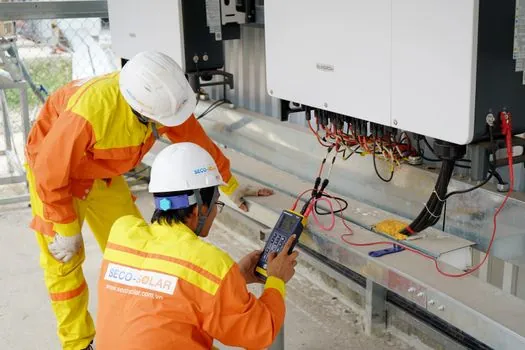
Decision criteria for plant specifiers assessing where the labour squeeze will hit next: (1) Wage inflation, where semiconductor fabs currently outbid renewables EPC for process and I&C engineers; (2) Retirement exposure, where Europe loses ~30% of semiconductor staff by 2030 versus ~20% for grid utilities over the same window [S4]; (3) Pipeline elasticity, where apprenticeships and community-college programs can ramp technician supply in 18–24 months but engineer supply in 4–6 years; (4) Cross-sector mobility, where ~60–70% of fab instrumentation roles can be filled from power/process backgrounds, but the reverse is not symmetric [S4][S5].
Trackable signals to watch through 2026–2027
Three concrete signals will confirm whether the labour squeeze is easing or tightening: (1) the US Bureau of Labor Statistics' quarterly counts of EE and computer-engineering graduates versus fab job postings, since the gap has been widening since 2018 [S2]; (2) fab commissioning slip announcements at CHIPS-funded sites, because a 3–6 month slip on a single megafab absorbs the same technician pool as 5–10 mid-sized grid projects [S5]; (3) OEM apprenticeship enrollment numbers, where a 20%+ year-on-year increase in 2026 would be the first sign of pipeline elasticity, and a flat line would extend the labour premium through 2028 [S4].